

Definition of copper strip
A copper strip is a long strip of metal material made of high-purity copper as raw material through a rolling process. Its processing forms include copper coils and cut copper strips, which are ideal raw materials for stamping parts processing.
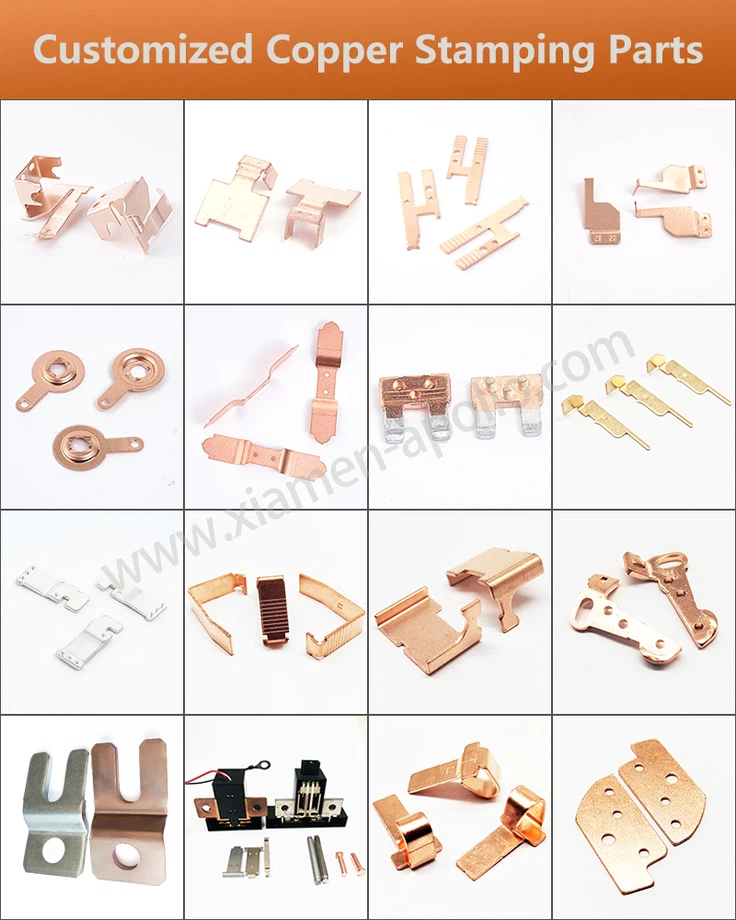
Introduction to T2Y2 copper
T2Y2 copper stamp belongs to the high-purity electrical copper material in the national standard (GB/T 5231), with a copper content of ≥99.90%, and has good electrical conductivity and ductility. Y2 indicates that its state is medium-hard (semi-hard), which is suitable for processing scenarios that require certain strength and good plasticity.
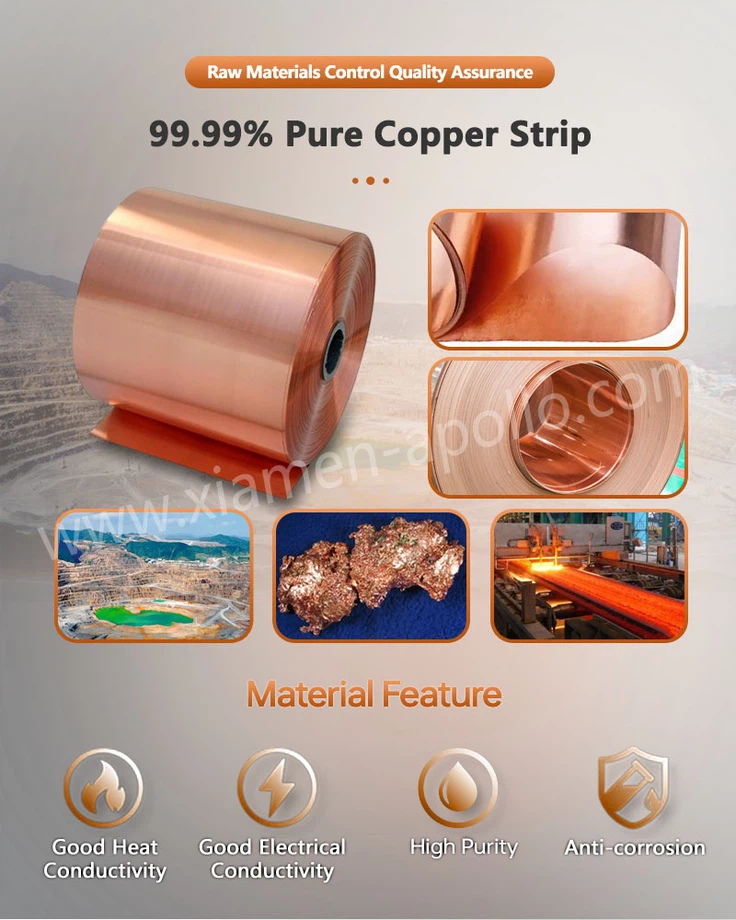
International comparison table of T2Y2 copper grades
| Country/Standard Organization | Copper Grade | Description |
| China (GB) | T2, T2Y2 | High-purity electrical copper for Electrical Copper Stamping Parts, Y2 is medium-hard |
| USA (ASTM) | C11000 | Electrolytic Tough Pitch (ETP) |
| Germany (DIN) | E-Cu58 | Copper content ≥99.9% |
| Europe (EN) | CW004A | Electrolytic copper standard for Custom Copper Stamping, widely adopted by the EU |
| Japan (JIS) | C1100 | Highly conductive copper |
| International Standard (ISO) | Cu-ETP | International general representation of electrolytic copper |
Technical parameters and performance indicators
1. Basic technical parameters
| Item | Index range | Description |
| Copper content (Cu) | ≥99.90% | High conductivity basis |
| Tensile strength (MPa) | 245\~345 | Excellent mechanical properties in medium-hard state |
| Elongation (%) | ≥25 | Good forming and bending performance |
| Hardness (HV) | 40\~110 (depending on the state) | Soft, medium-hard, hard state optional |
| Electrical conductivity (%IACS) | ≥97% | Extremely high current carrying capacity |
| Density | 8.93 g/cm³ | The standard density of copper material for Copper Stamping Parts |
| Thermal conductivity (W/m·K) | ≥380 | High-efficiency heat dissipation performance |
Electrical performance advantages
The red Copper Strip Stamping has significant advantages in electrical performance:
1. High conductivity: The electrical conductivity is close to that of pure silver, suitable for high-efficiency circuits;
2. Low resistance loss: Reduce energy loss during power transmission;
3. Heat resistance and stability: Good temperature rise control during conduction;
4. Good weldability and bonding: Can be firmly bonded with silver contacts and electroplating layers.
Processing methods and surface treatment
1. Stamping process
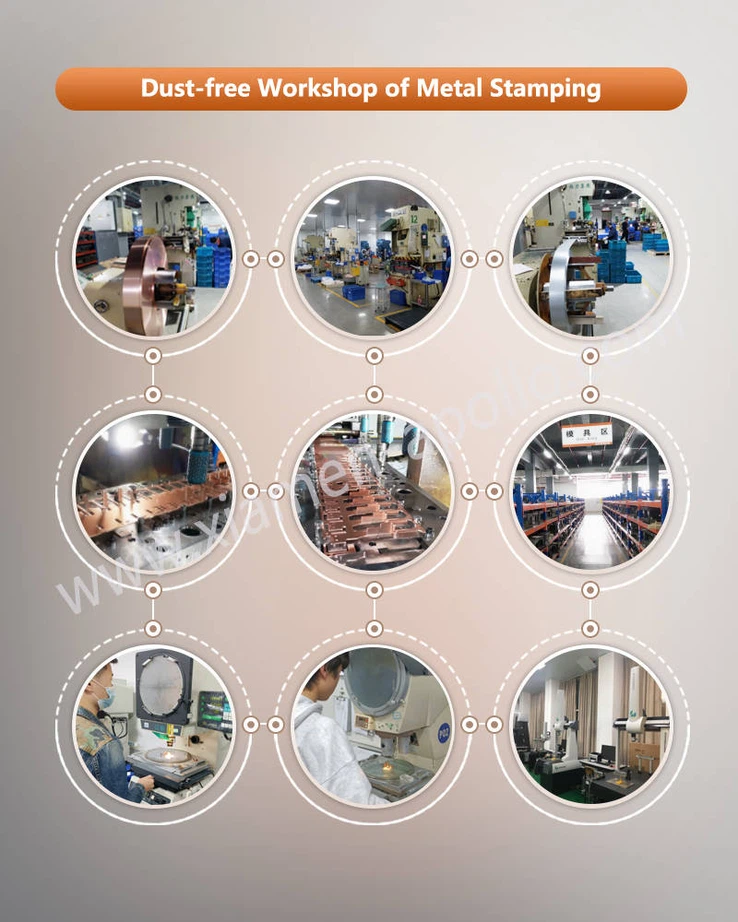
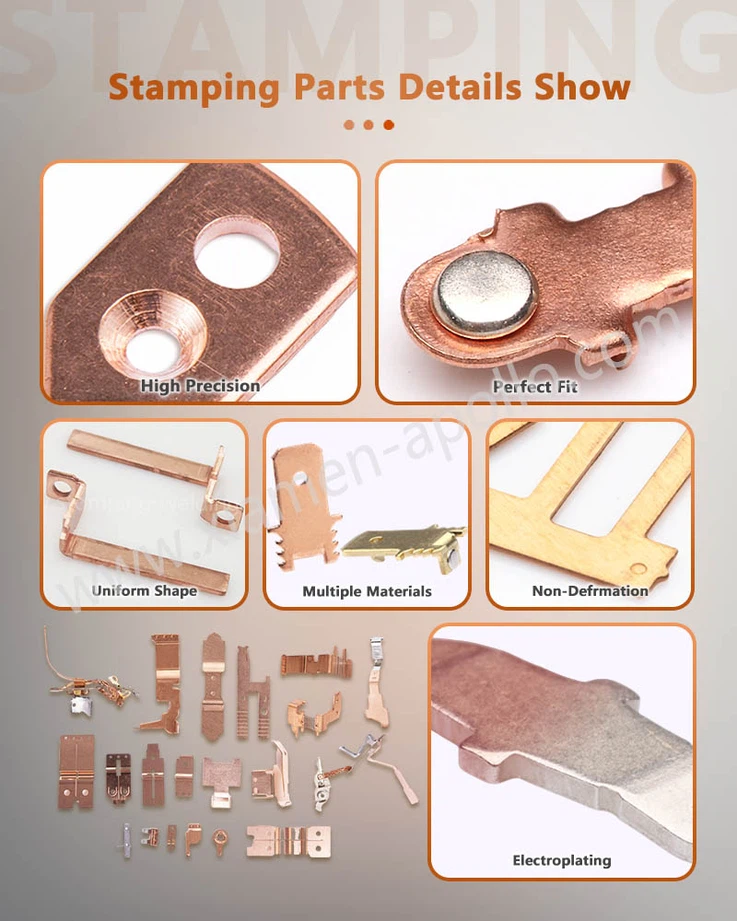
Red copper strip is often processed into red copper stamping parts through continuous die stamping, which has the following characteristics:
(1). High-speed stamping: Suitable for automated mass production;
(2). High precision: Suitable for micro terminals and connection structures;
(3). Strong mold adaptability: Suitable for a variety of molds and structural forms.
2. Common surface treatment methods
To improve the performance of Copper Stamped Components, the following surface treatment methods are often used:
| Surface treatment method | Function and effect |
| Electroplating tin (Sn) | Enhance weldability, prevent oxidation, suitable for welding terminals |
| Electroplating silver (Ag) | Improve conductivity and wear resistance, often used in high frequency/high current occasions |
| Electroplating nickel (Ni) | Improve oxidation resistance and hardness, suitable for connectors in harsh environments |
| Electroplating gold (Au) | Suitable for high-end electronic products, improves contact performance and corrosion resistance |
| Phosphating treatment | Improve adhesion or serve as an intermediate layer, often used for subsequent coating treatment |
| Spraying protective layer | Increase insulation or anti-corrosion function, suitable for outdoor or sealed electrical equipment |
These treatment methods are selected according to the usage scenario, required functions, and cost requirements to improve the overall electrical reliability and service life of the Copper Stamped.
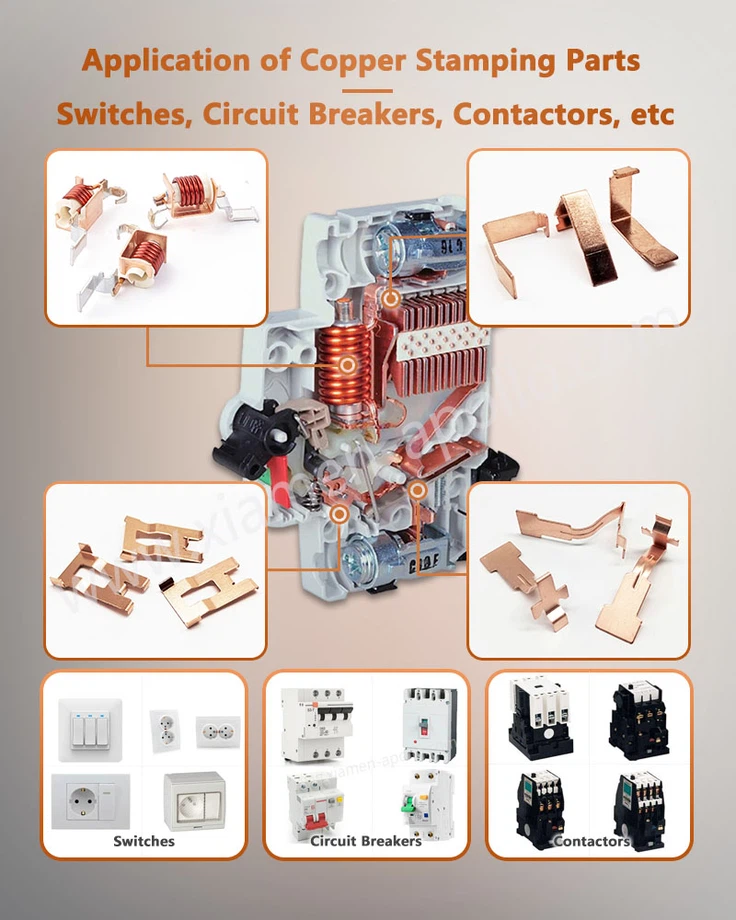
Wide application areas
Wide application areas
Traditional low-voltage electrical appliances
Relay: copper sheet stamping actuating contacts and coil lead-out terminals;
Circuit breaker/contactor: as a current-carrying bridge or connecting bar;
Thermostat/time controller: used for conductive switch structure.
New energy electrical system
New energy vehicle fuse: used for high current connection structure;
Energy storage cabinet: copper bar stamping and connectors ensure low internal resistance and high conductivity;
Film capacitor: as pin terminal to ensure high-frequency performance;
Cloud service data cabinet: copper terminals are used for connection and isolation of server power modules.
Other fields
Railway transportation, power tools, power control modules
Aerospace controllers, industrial automation systems
Quality control and development trends
The key points of copper strip stamping quality control include:
(1). Material detection: Confirm copper purity through a spectrometer;
(2). Thickness tolerance control: Normally controlled at ±0.01 mm;
(3). Surface quality detection: Ensure no oxidation, cracks, or scratches;
(4). Conductivity and mechanical properties testing: Ensure consistency and reliability.
Material development trends:
(1). Promote the development of ultra-thin copper strips (≤0.05 mm);
(2). Develop composite copper materials with strong oxidation resistance and high-temperature resistance;
(3). Realize the integration of multifunctional coatings to meet the needs of high-end electronic connections;
(3). Environmentally friendly lead-free plating gradually replaces traditional electroplating technology.
T2Y2 copper strip and copper stampings formed by its processing have been widely used in core components of electrical connections due to their excellent conductivity, processability, and stability. Through scientific surface treatment and precision processing technology, copper terminals not only meet the needs of traditional low-voltage electrical appliances, but also continue to adapt to the application of high-tech fields such as new energy vehicles, new energy storage, and data centers. In the future, with the further improvement of processing technology and material performance, copper strip stamping will continue to play a key role in the electrical industry.
contact us
