



A Comprehensive Guide to Our Welding Silver Contact Product Line
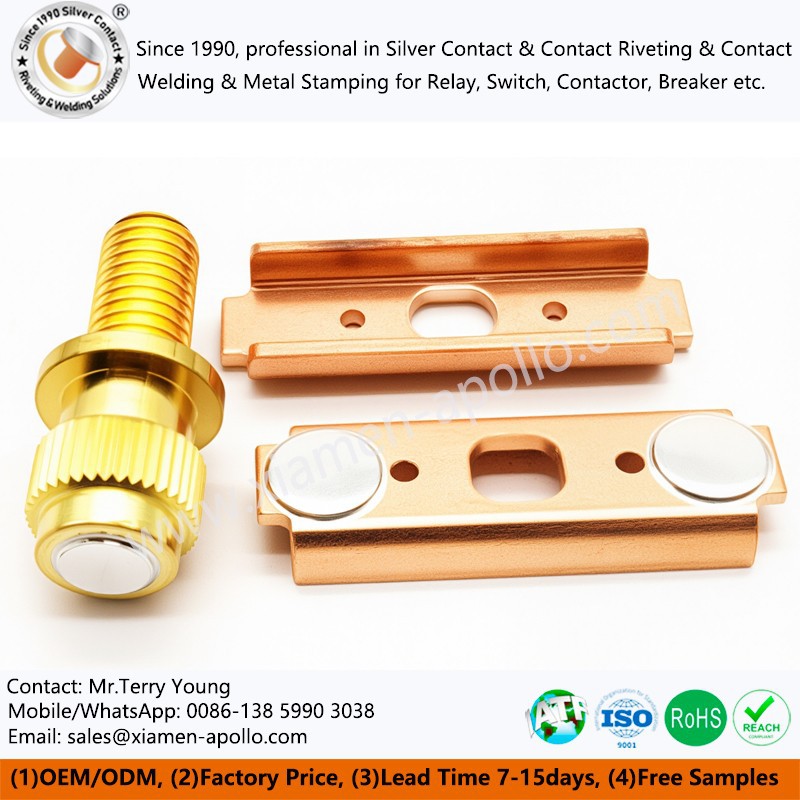
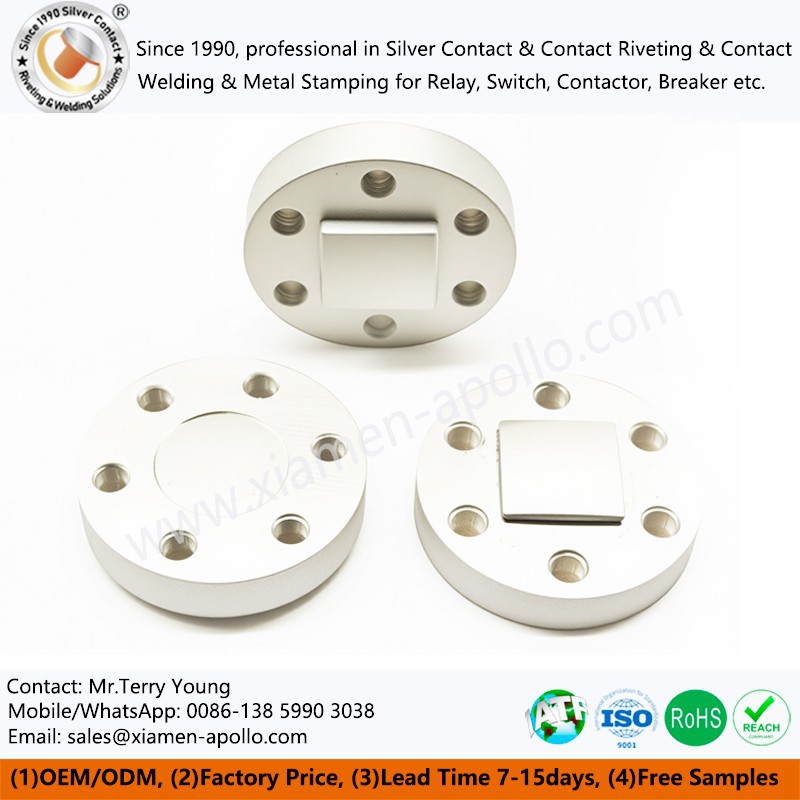
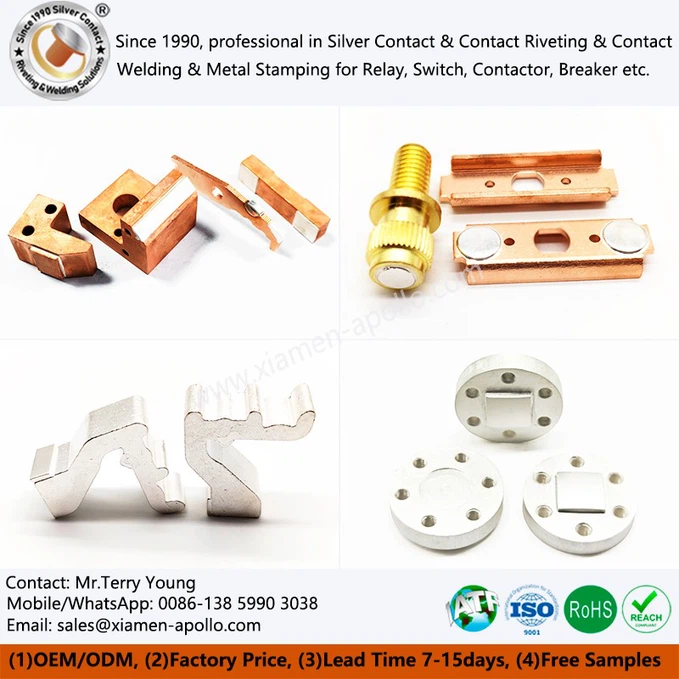
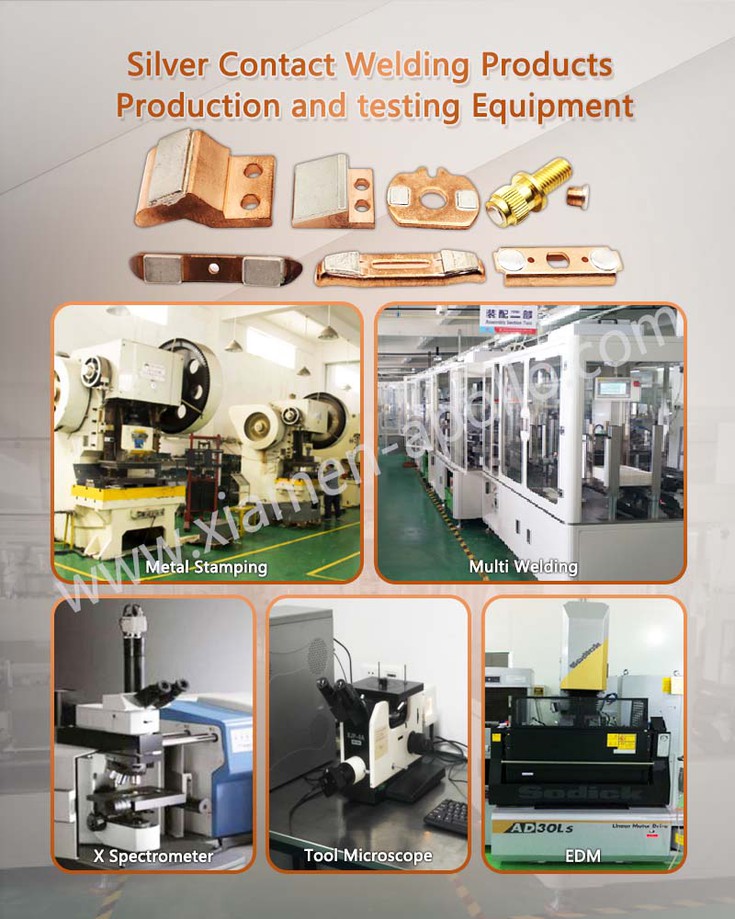
Our company focuses on the research, development, and production of Copper Welding Contact Assembly, Brass Welding Contact Assembly; Contactor Welding Contact Assembly; and Circuit Breaker Welding Contact Assembly. These Brazed Contact Assembly meet the needs of multiple fields, such as power, new energy, and industrial equipment.
Silver (Ag), renowned for its exceptional electrical and thermal conductivity-exhibiting a resistivity as low as 1.59×10⁻⁸ Ω·m-serves as a pivotal contact material in low-voltage electrical devices. Depending on operational environments, silver contacts are typically employed in the form of pure Ag or silver-based alloys, such as AgNi, AgCdO, AgSnO₂, and AgZnO. Each variant offers distinct properties:
Pure silver contacts boast unmatched conductivity but suffer from low hardness, proneness to welding, and limited arc resistance, making them suitable for low-current, low-load scenarios.
AgCdO contacts excel in arc erosion resistance and anti-welding performance, ideal for high-frequency switching applications.
AgSnO₂ and AgNi alloys, as environmentally friendly alternatives, balance mechanical strength and welding resistance, fitting for switches and contactors.
Irrespective of the material, the welding process must establish a high-strength, low-resistance, and long-term stable connection between the silver contact and the electrical terminal or carrier.
Welding methods and process analysis
The welding methods of silver contacts usually include the following:
1. Resistance welding (electric hot pressing welding)
This method leverages contact resistance to generate heat when current passes through the metal interface, causing melting or plastic deformation at the joint. The silver contact is thereby fused to substrates like copper terminals. Key advantages include rapid welding speed, minimal heat-affected zones, high connection reliability, and compatibility with automated assembly lines.
1. Application in relays: Micro relays demand precise welding with low resistance. Pulse resistance welding is often utilized to control weld size and minimize thermal deformation.
2. Key control factors: Welding current, applied pressure, energization time, and cooling duration require experimental optimization to eliminate cracks 3. and pores in welds, ensuring robust resistance to electrical corrosion.
2. High-frequency welding
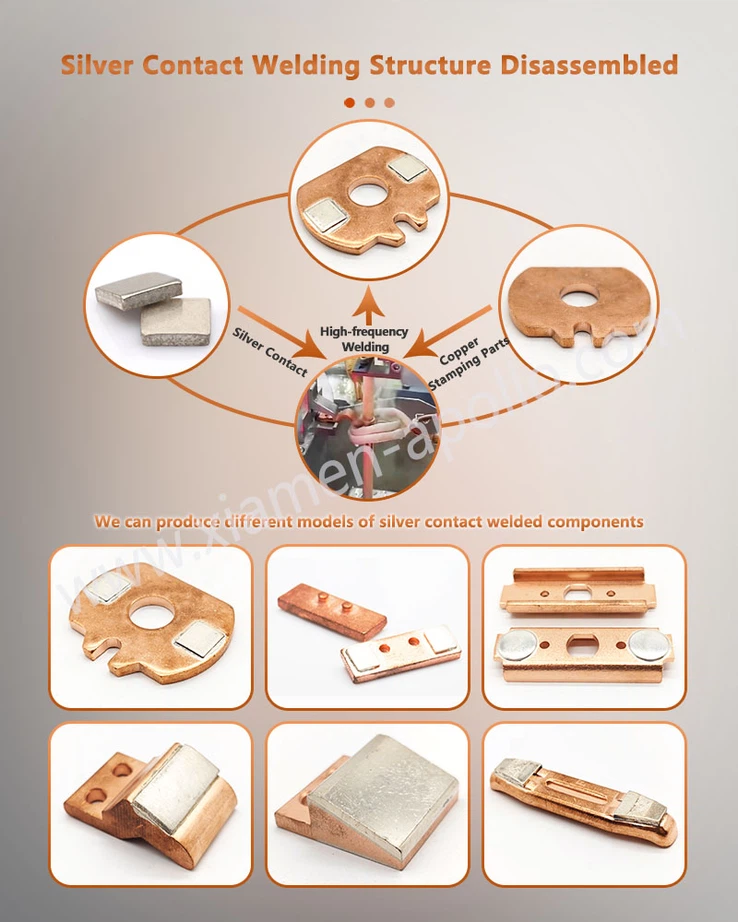
A solid-phase joining technology, high-frequency welding utilizes the skin and proximity effects of high-frequency currents (100–400kHz) to induce localized heating at the contact surface. This approach offers uniform solder joints with minimal thermal impact, widely adopted in precision components like small relays, micro switches, and contactors.
1. Welding frequency: Higher frequencies (e.g., 400kHz) concentrate heat effectively, suitable for miniaturized silver contacts.
2. Power control: Output power (2–10kW) is tailored to contact size, balancing energy input and material integrity.
3. Pressure method: Pneumatic or servo-driven heads apply 0.5–2.0MPa pressure to ensure intimate contact between the silver point and terminal.
4. Time control: Heating durations of 50–300ms are critical; overheating may ablate silver material, while insufficient time leads to weak bonds.
5. Cooling system: Water or air cooling maintains equipment stability and prevents thermal degradation of solder joints.
3. Brazing (such as silver brazing)
This technique employs silver-based filler metals to bond contacts to substrates by melting the braze alloy to fill gaps. It is preferred for composite or high-power contacts, such as main contacts in contactors, due to its ability to enhance mechanical strength and conductive efficiency.
1. Application in contactors: Large contractors handling hundreds of amperes rely on silver brazing to create vibration-resistant, high-temperature joints with uniform brazing seams.
2. Precautions: The melting point of the braze material, heating temperature, and dwell time must be strictly controlled to avoid structural embrittlement or over-burning of silver contacts.
Application scenarios of silver contact welding in typical electrical appliances
1. Relays
Relay contacts manage low-to-medium currents, demanding rapid on-off capabilities. Welding technologies here must deliver:
1. Mechanical Robustness: Resistance to desoldering from vibration, crucial for micro and power relays.
2. Low Contact Resistance: Minimizing coil drive power consumption through precise joint integrity.
3. Long-Term Stability: Prevention of oxidation or melting during extended operation, vital for high-end relays where welding quality directly impacts contact lifespan and reliability. Resistance welding and laser welding are dominant due to their precision.
2. Switches (such as wall switches and micro switches)
Frequent operation subjects switch contacts to repeated arc shocks and mechanical wear. Key welding requirements include:
1. Secure Spot Welding: Resistance to loosening from vibration or abrasion, ensuring consistent mechanical performance.
2. Anti-Fusion Capability: Mitigation of silver point adhesion, a common failure mode in high-use switches.
3. Thermal Stability: Resistance to localized overheating that could corrode metal structures. Multi-layer silver alloy composites paired with precision resistance welding enhance consistency and durability.
3. Contactors
Designed for high-power control, contactor main contacts endure severe voltage and current surges. Welding solutions here prioritize:
1. High-Strength Bonds: Resistance to detachment under prolonged electromagnetic forces, essential for industrial-grade devices.
2. Large Contact Areas: Low-resistance joints to reduce joule heating and energy losses during high-current conduction.
3. Oxidation Resistance: Protective interfaces to maintain stable conductivity in harsh environments, with silver brazing and multi-point resistance welding commonly employed.
4. The impact of welding quality on electrical performance
Superior silver contact welding enhances component functionality through:
1. Reduced Contact Resistance: Optimized joint interfaces lower conductive losses, improving energy efficiency and heat dissipation.
2. Enhanced Mechanical Reliability: Resistance to vibration and thermal cycling, ensuring stability in complex industrial settings.
3. Extended Service Life: Mitigation of arc erosion and wear, delaying failure mechanisms like material transfer or surface degradation.
4. Improved Safety: Secure joints eliminate risks of arcing, burning, or catastrophic failure caused by weak welds, cracks, or misalignments.
Conversely, subpar welding-manifested as insufficient bonding, structural flaws, or positional errors-can lead to intermittent operation, premature degradation, and even safety hazards, underscoring the critical role of process optimization in manufacturing high-reliability electrical devices.

contact us

Hot Tags: brazed contact assembly, China brazed contact assembly manufacturers, suppliers, factory, Brazing Silver Contacts To Copper Bars, Welded Contact CNC Machining Parts Assembly, Electrical Silver Contact Welding, Brazed Rivet Electrical Contacts, Welding Electrical Silver Contact Tip Assembly, Silver Contact Welded For Truck Power Switch


