


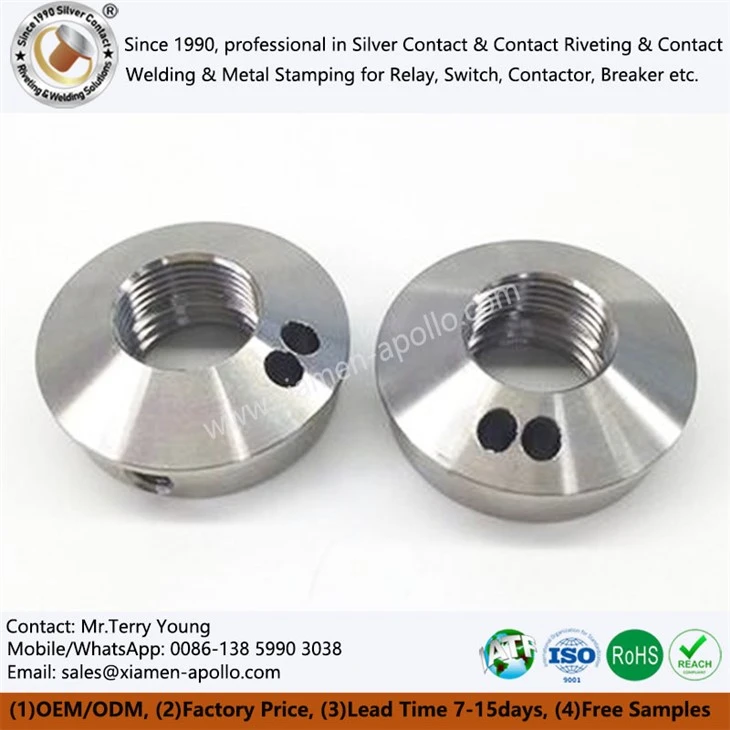


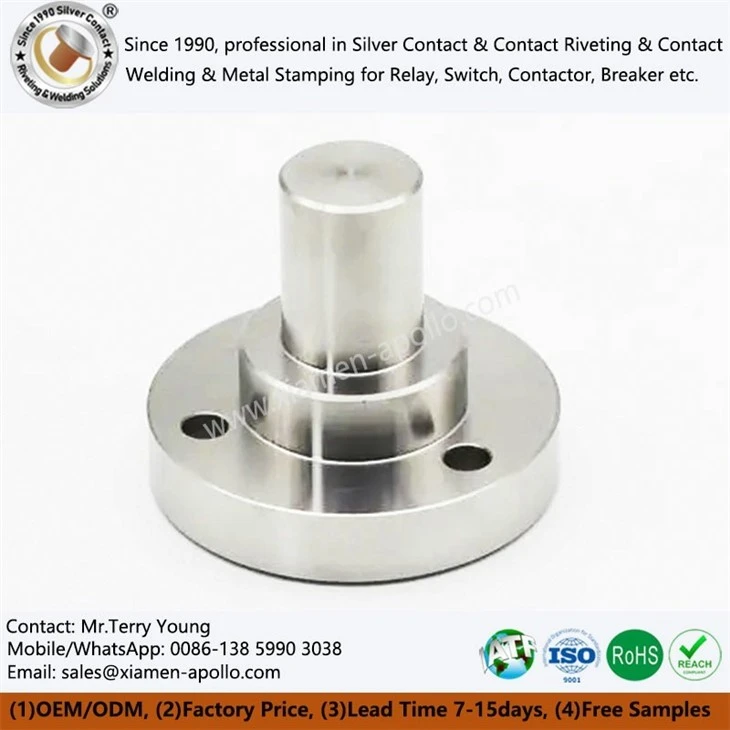
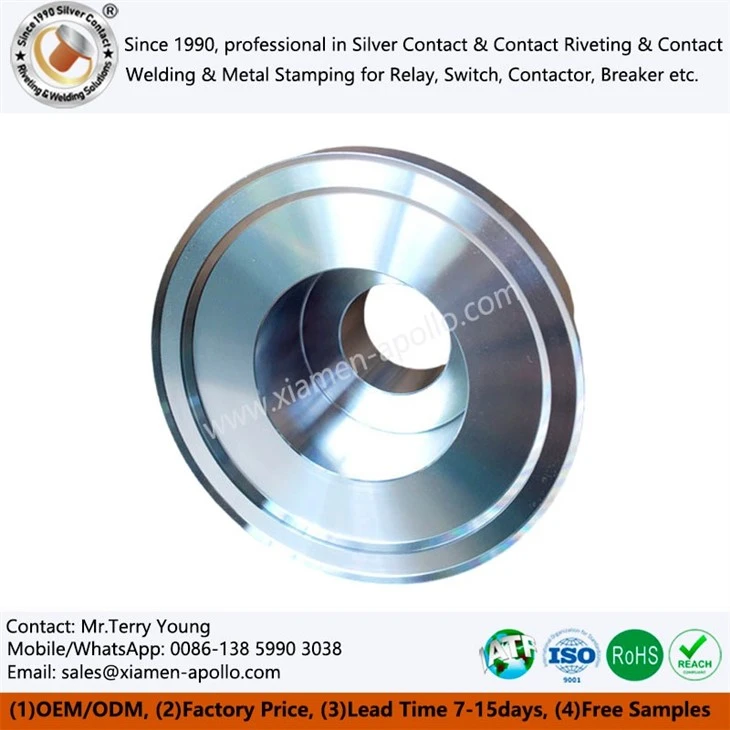
What are Milling 304 Stainless Steel Parts?

Milling 304 Stainless Steel Parts are CNC-machined components designed for accurate positioning, fastening and mechanical integration within industrial equipment and electrical assemblies. Mounting-hole locations, reference surfaces, slot dimensions and threaded interfaces determine whether each component fits its mating parts without additional adjustment. CNC milling processes are arranged around the approved 2D drawings or 3D CAD models to control these assembly interfaces. Custom manufacturing supports prototype evaluation, repeat orders and wholesale production, with dimensional inspection based on specified drawing tolerances.
Material Advantages of Milling Precision Parts
Chemical Composition of 304 Stainless Steel
Chromium content ranges between 18.00 to 20.00 percent for oxidation resistance. Nickel content is maintained strictly at 8.00 to 10.50 percent for a stable austenitic structure. Carbon content is capped at a maximum of 0.08 percent to prevent carbide precipitation. Minor alloying elements include manganese, silicon, phosphorus, and sulfur within standard limits.
Mechanical Properties and Hardness
Tensile strength reaches a minimum of 515 MPa for robust structural load-bearing capacity. Yield strength is maintained at a minimum of 205 MPa at standard room temperature. Brinell hardness rating averages approximately 201 HB maximum for optimal machinability. Elongation rate exceeds 40 percent, ensuring superior ductility during secondary fabrication.

Typical Applications of CNC Milling Precision Parts
Electrical Equipment Mounting and Mechanical Interfaces
304 stainless steel milled components can serve as mounting plates, mechanical support blocks, fixing brackets and positioning elements in electrical equipment. Hole spacing, fastening interfaces and reference surfaces must match the equipment housing and adjoining components. Material thickness and corrosion exposure are considered during drawing review.
Industrial Automation Fixtures and Positioning Assemblies
CNC-milled 304 stainless steel parts are used in machine fixtures, locating blocks, guide supports and equipment mounting structures. Their assembly function depends on hole coordinates, flatness, slot dimensions and positional relationships. These features are defined through the fixture drawing and inspected before integration.
Industrial Instrument Housings and Connector Supports
Machined 304 stainless steel components can be used as structural supports, mounting interfaces and mechanical connection blocks in industrial instrumentation. CNC milling produces the required flat surfaces, fastening holes and clearance features. Material selection must consider cleaning agents, moisture exposure and contact with adjacent materials.
Fluid Equipment and Stainless Steel Mechanical Assemblies
304 stainless steel milled parts can be integrated into equipment frames, mounting structures and non-pressure-bearing mechanical interfaces used around fluid systems. For components directly exposed to aggressive fluids, material compatibility must be assessed separately against chemical concentration, temperature and operating conditions.

Frequently Asked Questions about Custom CNC Milled Parts
Why is 304 stainless steel suitable for CNC milled mounting components?
SUS304 combines a chromium-nickel alloy composition with corrosion resistance for many general industrial environments. Its machinability requires attention to work hardening and heat accumulation.
Can 304 stainless steel milled parts be manufactured with counterbores and tapped holes?
Yes. CNC machining supports counterbores, countersinks, tapped holes, and multiple mounting interfaces. Thread dimensions, screw engagement depth and counterbore geometry must be specified in the drawing.
Which inspection equipment is used for CNC steel parts?
Inspection equipment includes CMM systems for positional and geometric measurements, vernier calipers and micrometers for dimensional checks, optical projectors for profile inspection, and microscopes for surface and edge examination. Equipment selection depends on the drawing tolerance and feature geometry.
Can passivation be performed after CNC milling?
Yes. Passivation can be carried out following the machining and cleaning stages to improve the condition of the stainless steel surface. Before proceeding with this treatment, it is essential to remove any machining residues and embedded iron contaminantsand to ensure proper surface preparation.

Contact us
Partner with our expert engineering team to source high-precision Milling 304 Stainless Steel Parts tailored to your exact industrial specifications.

Hot Tags: 304 Stainless Steel CNC Milling, Custom 304 Stainless Steel Parts, CNC Milled Stainless Steel Components, Precision Stainless Steel Milling, Stainless Steel Machining Factory, OEM 304 CNC Parts, Stainless Steel CNC Parts, steel cnc part, CNC Stainless Steel Parts, CNC Steel Parts, Stainless Steel Machining Parts, Stainless Steel CNC Turning Parts


