


What is the Manganin Shunt Resistor with Copper?
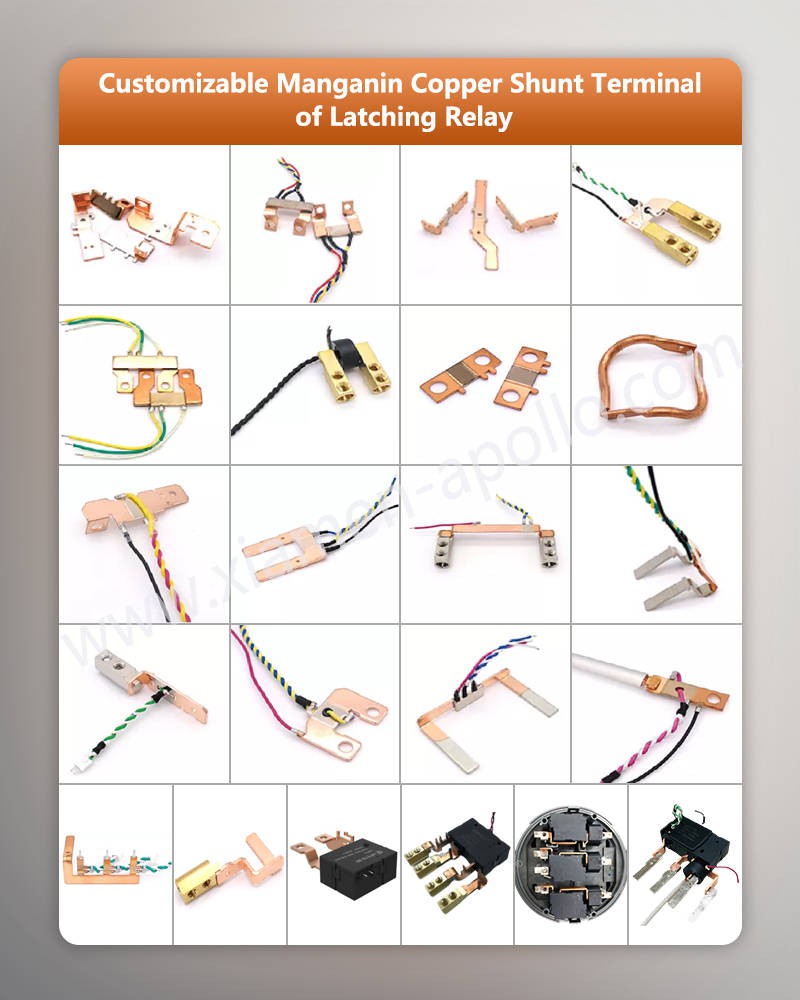
This Manganin Shunt Resistor with Copper is a passive current‑sensing component built into magnetic latching relays. A manganin‑alloy sensing element is combined with copper terminals through precision stamping and spot‑welding, delivering low temperature coefficient of resistance (TCR) and stable voltage output proportional to the operating current. The shunt feeds the real‑time current signal to the relay control board, where overload detection and protection logic are executed. Rated current, terminal geometry, and mounting hole layout can be customized to match your relay housing drawing.

What Is an Electrical Meter Shunt Used for in a Magnetic Latching Relay?
Precise current monitoring
The Electrical Meter Shunt converts the relay's operating current into a measurable millivolt‑level voltage signal for the main control circuit.
Energy consumption calculation
The system derives power and energy data from the Relay Resistor Shunt sampling signal for metering and billing applications.
Action characteristic analysis
Pull‑in and release current curves are captured through the shunt during relay commissioning and life testing.
Overload pre‑warning
The shunt supplies the sampling signal; the external control circuit detects abnormal current and triggers the protection sequence. The shunt itself contains no active protection circuit.

What Specifications Does This Relay Resistor Shunt Meet?
| Item | Parameter |
|---|---|
| Core Material | Manganin alloy (6J13) sensing element + copper terminal |
| Bonding Process | Integrated stamping or spot‑welded copper‑manganin joint |
| TCR (Temperature Coefficient of Resistance) | Low TCR, typical ±20 ppm/°C within operating range |
| Operating Temperature | -55°C to +125°C |

Why Choose Manganese Copper Stamping Construction?
Low‑TCR Alloy for Accurate Current Sensing
Manganin Copper Shunt uses Manganin alloy (Cu86Mn12Ni2) featuring ultra‑low TCR and low thermal‑EMF vs copper. Within ‑55°C to +125°C, resistance drift stays minimal, delivering stable, repeatable current readings for relay control boards during cold‑start and continuous‑load operation.
High Current Withstanding by Integrated Stamping Structure
Copper Manganin Shunt adopts integral stamping or spot‑welding with controlled nugget size to bond copper terminals and manganin elements. Sufficient joint area handles continuous and inrush current without local overheating; short‑term surge current at relay pull‑in will not cause permanent resistance change.
Stable Terminal Connection for Relay Assembly
Energy Meter Shunts come with stamped copper terminals matching relay housing footprint, removing extra bending work on customer assembly lines. Reliable terminal flatness and hole‑position tolerance enable high‑volume automatic relay assembly and anti‑vibration performance for industrial and automotive applications.

What Customization Options of Energy Meter Shunts Are Available?
Rated current and resistance value of Manganese Copper Shunts adjusted to your relay design.
Terminal geometry: flat, L‑bent, Z‑bent, with or without mounting holes, based on your housing drawing.
Surface finish: bare copper, tin‑plated or nickel‑plated terminals.
Lead wire or connector integration for sampling signal output (optional).
Packaging: bulk, tray or tape‑and‑reel for automated assembly.
contact us
We stamp Manganin Shunt Resistor With Copper for magnetic latching relay OEMs worldwide. Send your relay drawing or sample to our engineering team for a custom design review and quotation. Free samples are available for evaluation.

Hot Tags: Manganin Shunt Resistor With Copper, Copper‑Manganin Shunt, Latching Relay Shunt, Stamped Manganin Shunt, Resistor For Magnetic Latching Relay, Custom Manganin Shunt Supplier, Low TCR Shunt Resistor, Relay Current Sensing Shunt, Manganin Stamping Component, OEM Manganin Shunt, Copper Manganin Shunt Stampings, latching relay shunt terminal, Magnetic Shunt for Latching Relay, Manganese Copper Shunts, Manganin Shunt For Single Phase Latching Relay, Primary Wire Manganin Shunt


