


Products Description
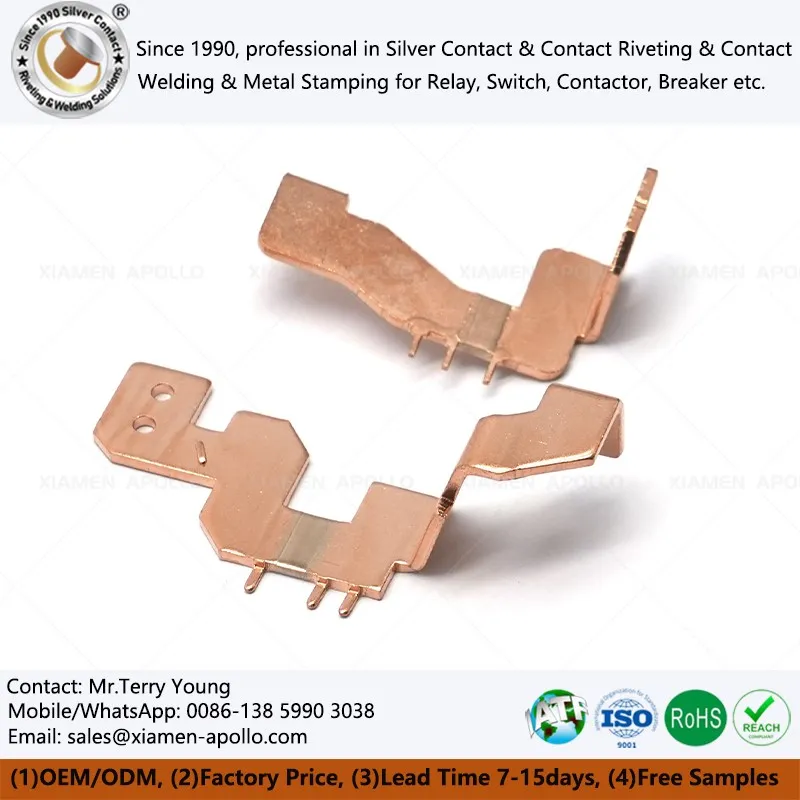
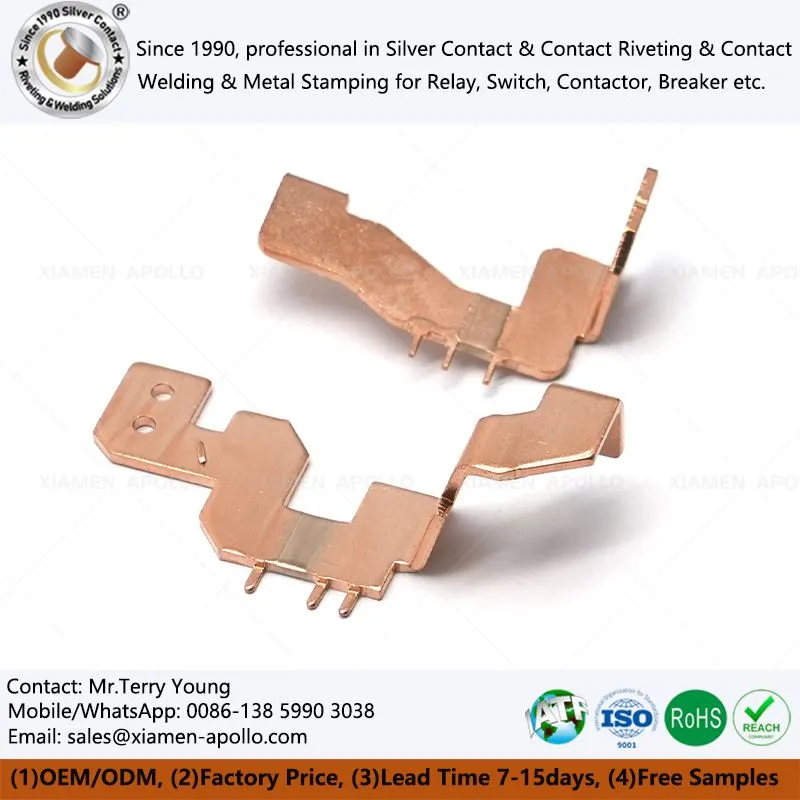
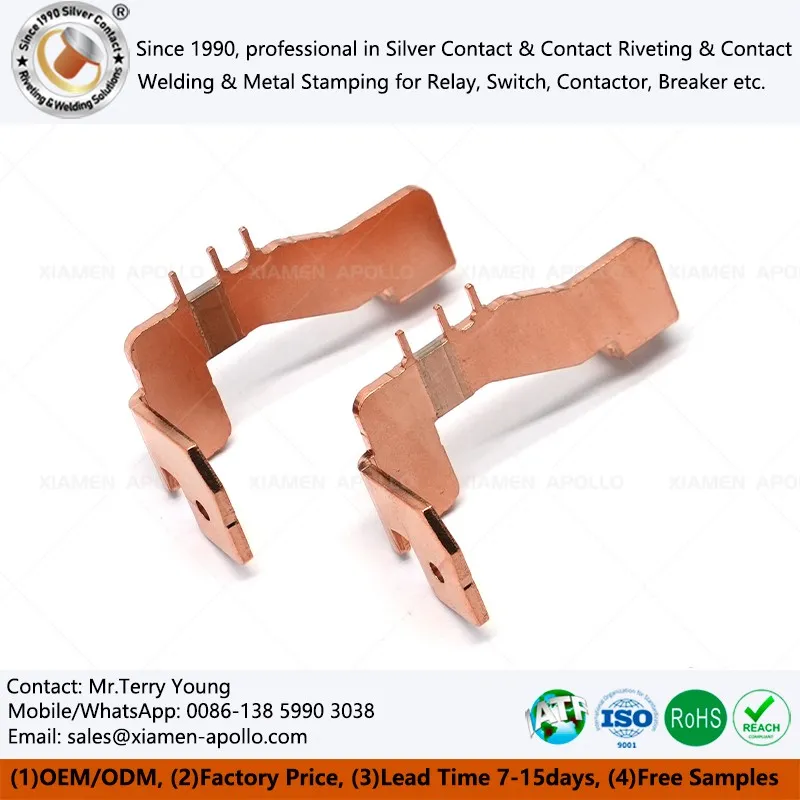
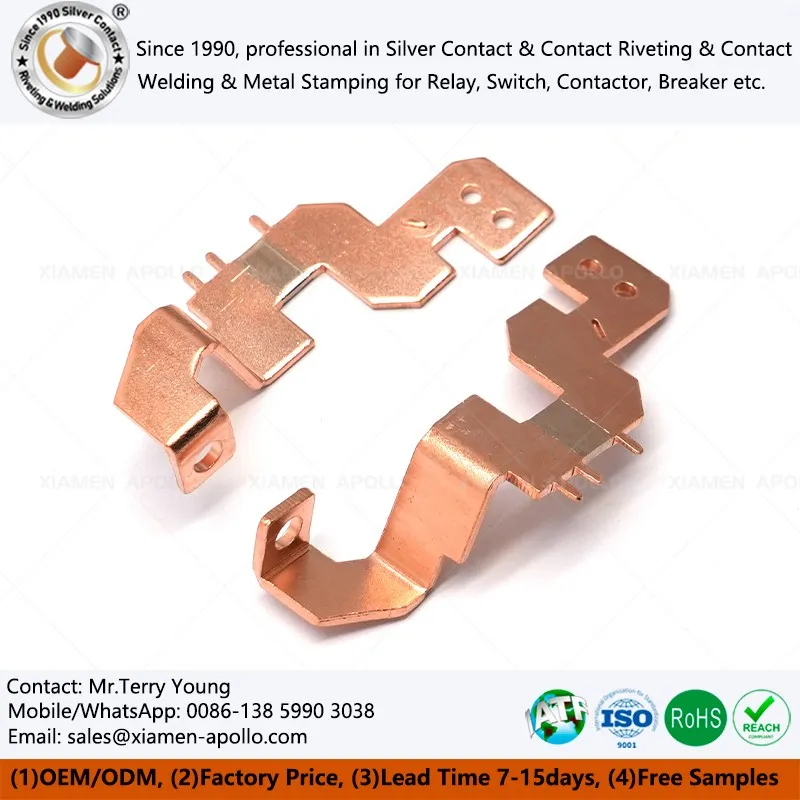
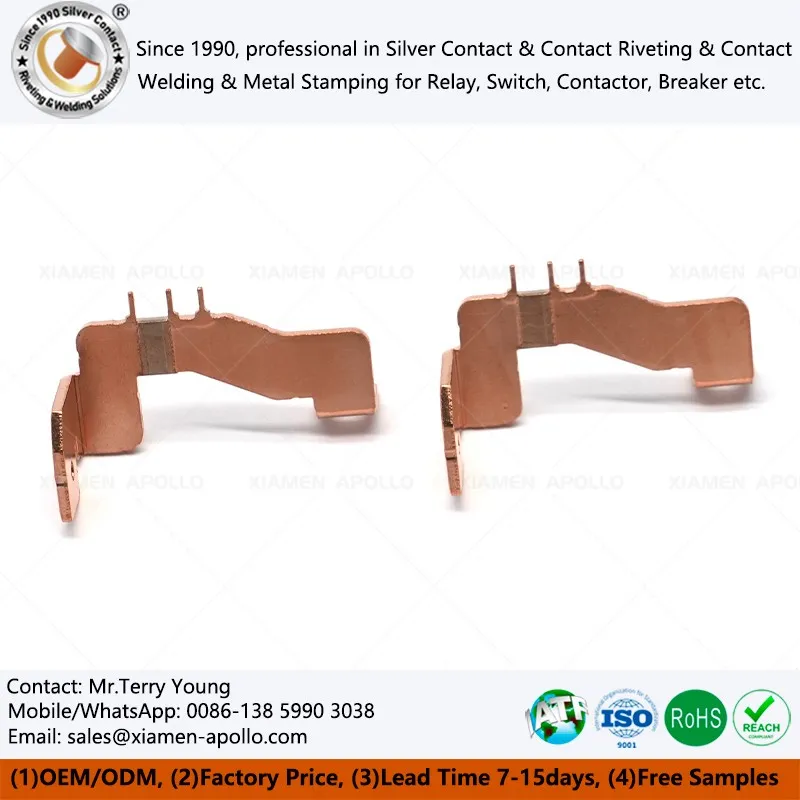
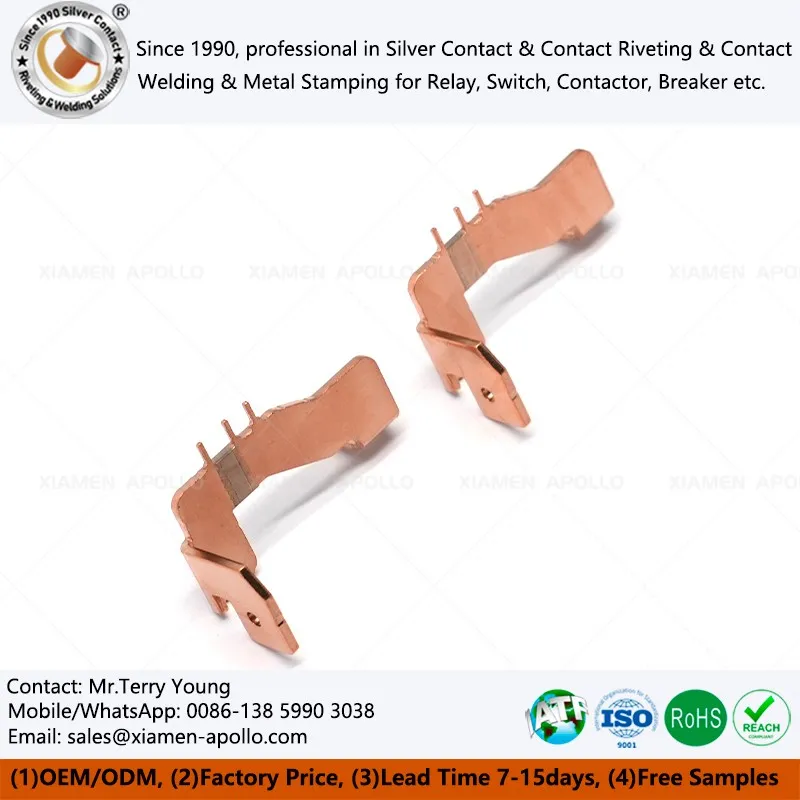
The Mangnetic Latching Relay Shunt is a key functional component that integrates current detection, current-carrying connection, and relay control. It is widely used in smart meters, magnetic latching relays, new energy power distribution systems, energy storage devices, electric vehicle charging facilities, and industrial power management systems.
From an engineering perspective, this product is essentially an E-beam Welding Shunt based on a composite structure of manganese-copper precision resistance alloy and highly conductive copper. It achieves a balance between current measurement accuracy and current-carrying capacity through dissimilar metal connection technology. For smart metering systems, the shunt not only determines the current sampling accuracy but also affects the relay's temperature rise, lifespan, and long-term system stability.
Material Properties and Advantages
T2 Copper Substrate Performance and Advantages
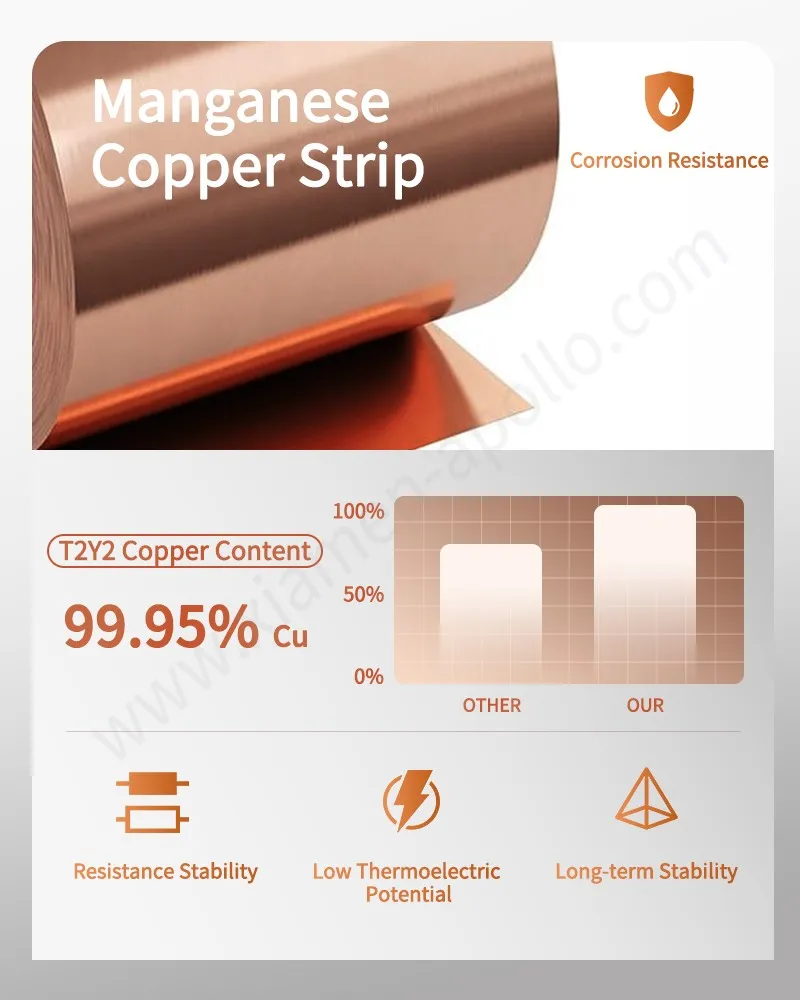
Using a T2 electrolytic copper coil, with a conductivity of≥99.9%, excellent plasticity, and resistance to cracking during stamping and bending, it has a low self-heating coefficient under high current conduction. It is responsible for the main mechanical structure and high current conduction of the Maganin Shunt Resistor, reducing relay operating losses and improving overall energy efficiency.
Precision Manganese-Copper Alloy Strip Performance and Advantages
Custom-proportioned manganese-copper alloy raw materials exhibit an extremely low temperature coefficient of resistance, resulting in minimal resistance change across the entire operating temperature range of the meter. This makes it a key substrate for achieving high-precision energy sampling. Manganin Shunt For Electronic Power leverages the inherent material properties of manganese-copper to ensure that the metering error complies with national standards.
Advantages of Combining Dissimilar Welding Materials
The combination of copper and manganese in a composite structure leverages the strengths of both materials. Copper addresses mechanical strength and high-current conductivity, while manganese copper meets the requirements for precision sampling. This approach avoids the drawbacks of high cost associated with using only manganese, copper, and excessive temperature drift with only copper, making it a mainstream and mature material selection solution for EBW Manganin Shunt for Relay.
Manufacturing Process
Electron Beam Welding Process
The E-beam Welding Shunt utilizes vacuum electron beam welding equipment. In a vacuum environment, a high-energy electron beam melts the contact surface between copper and manganese-copper, achieving metallurgical fusion.
Precision stamping process
Automated multi-station high-speed stamping machines complete bending, punching, and pin forming of the Lapping Relay with 120A for Smart Energy Meter in a single operation, reducing dimensional deviations caused by multiple processing steps.
Heat treatment process
Batch stress relief treatment in a constant-temperature oven releases stamping deformation stress, stabilizing the physical dimensions and electrical resistance of the Maganin Shunt for Electronics Meter.
Ultrasonic cleaning process
A multi-tank ultrasonic cleaning line sequentially performs degreasing, pure water rinsing, and hot air drying to remove processing residues and improve the product's oxidation resistance.

Product Structure Disassembly
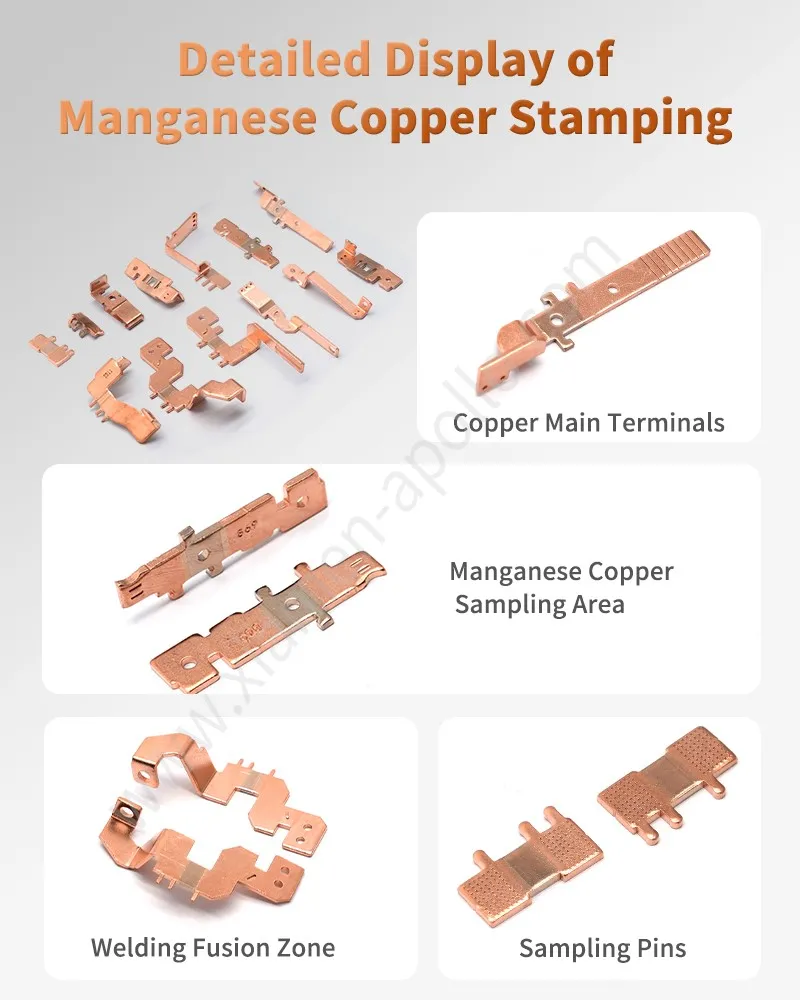
| Conductive Base Area | Made of T2 high-purity copper, this component of the Relay Resistor Shunt carries a high-current circuit, has pre-drilled mounting holes, and provides relay base pins, offering mechanical assembly strength. |
| Sampling Resistor Area | Made of precision manganin copper alloy strip, this core component of the Manganin Copper Shunt is responsible for energy sampling. It relies on a fixed resistivity to achieve current-to-voltage conversion and is the core carrier of resistance values. |
| Dissimilar Metal Fusion Area | A copper and manganese copper electron beam welding layer is used to achieve electrical and mechanical integration between the two metals, serving as the core functional transition area for the EBW Manganin Shunt for Relay. |
contact us
For further information on the technical details of the Mangnetic Latching Relay Shunt or customized solutions, please feel free to contact us. We will provide you with professional engineering support and sample testing services to help your new energy projects achieve high reliability and cost optimization.
Hot Tags: mangnetic latching relay shunt, China mangnetic latching relay shunt manufacturers, suppliers, factory, Braze Welding Shunt Resistance For Energy Meter, Electrical Manganin Shunt Stampings, Magnetic Shunt for Latching Relay, Manganin Copper Shunt Stamping, Prepayment Meter Shunts, Spot Welding For Manganin Shunt Resistor


