


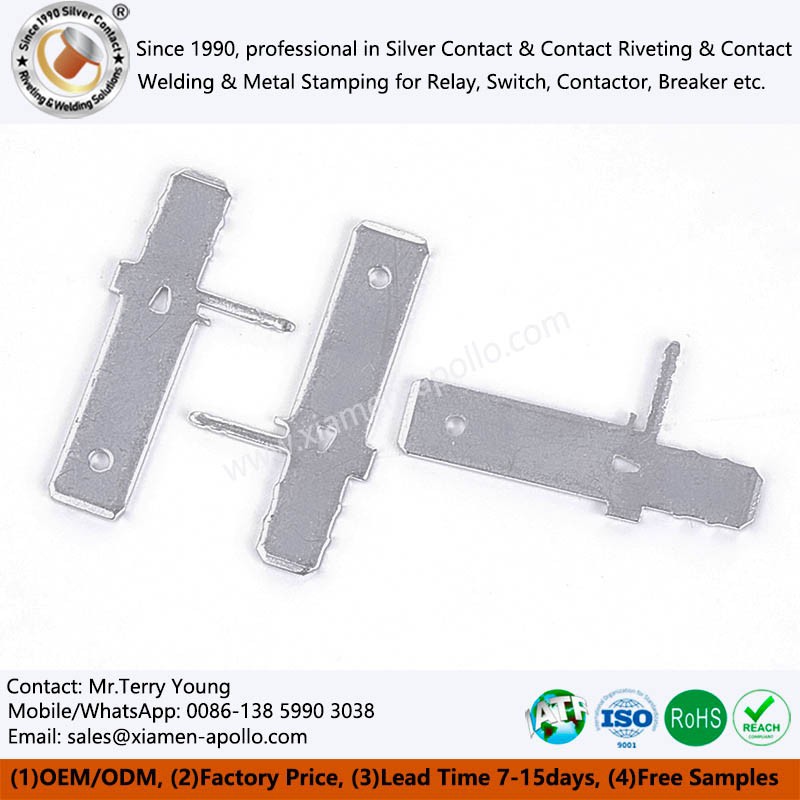
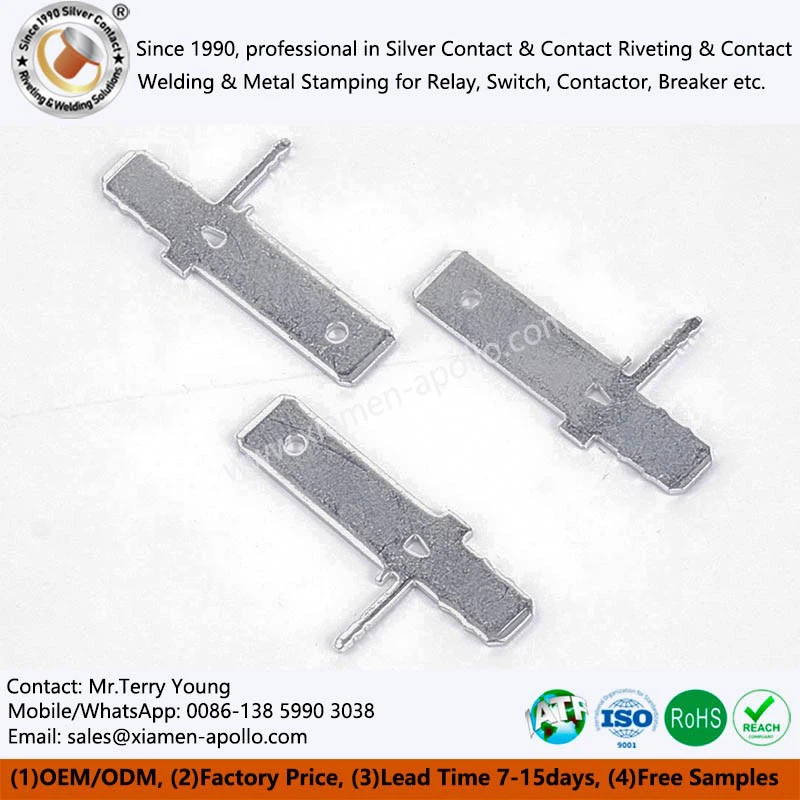

what are the Electrical Metal Stamping Parts For Switches Sockets?
Electrical Metal Stamping Parts for Switches and Sockets form the conductive interfaces, terminal connections, and contact-support structures used in wall switches, wall sockets, modular smart switches, and low-voltage electrical assemblies. Parts can be produced from specified copper or brass sheet through blanking, punching, bending, forming, and secondary finishing. OEM supply supports drawing-based development, material and finish selection, sample approval, and repeat production. Material grade, temper, thickness, contact geometry, and dimensional tolerances are defined against the approved engineering specification.

Key Material & Base Performance of China Metal Stamping Parts
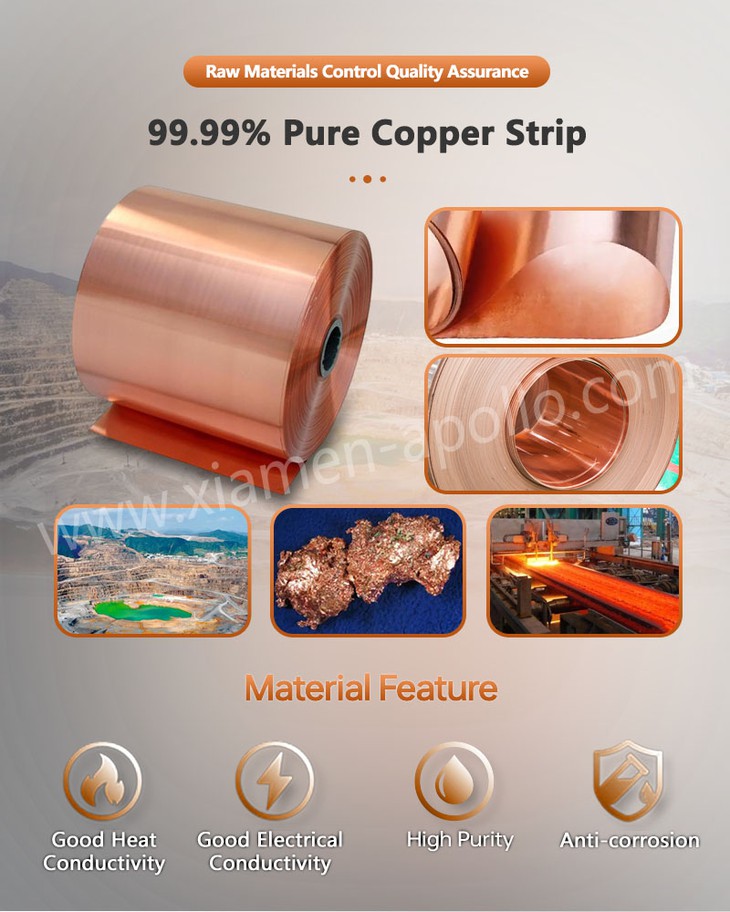
High-Purity Copper Raw Material Selection
The electrical performance of switch terminals depends on raw material selection. Electrolytic Tough Pitch (ETP) Copper C1100 with >99.90% copper content is used for main conduction paths to ensure maximum IACS rating and minimize Joule heating under rated load currents. Incoming coils undergo chemical composition verification and thickness tolerance checks before feeding into high-speed press lines.
Surface Treatment Options
Plating applied to electrical metal stamping parts for switches sockets prevents base metal oxidation and stabilizes long-term contact resistance. Silver plating (1.0–5.0 µm thickness) reduces surface oxidation at elevated operating temperatures and suppresses arc degradation during circuit make-and-break cycles.
Mechanical Elasticity and Fatigue Resistance
Spring-loaded switch shrapnel and socket contact clips rely on high yield strength and stress relaxation resistance to maintain contact pressure over 40,000+ insertion/switching cycles. Tensile strength and hardness profiles are controlled to match specific mechanical displacement limits specified by R&D engineering teams.
Thermal Dissipation & Temperature Rise Control
Cross-sectional area and material conductivity are calculated to prevent temperature rise exceeding IEC 60884 limits under continuous rated current (10A to 32A). Dense material grain structure achieved through controlled press forces eliminates internal voids that restrict current density. Low resistance across contact interfaces minimizes thermal buildup within enclosed switch housing bodies, delaying thermal aging of adjacent thermoplastic insulation walls.
Core Design Features For Switch & Socket of Switch Socket Precision Custom Metal Stamping Parts
1. Precision Stamping For Socket Insert / Contact Shrapnel / Ground Terminal
Progressive stamping dies with multi-stage forming tooling produce complex geometry switch inserts, snap-action contact shrapnel, and grounding straps in a single continuous automated operation. Precision piercing, bending, and blanking operations maintain tight edge radius control, minimizing internal material stresses that lead to premature mechanical fatigue. In-die sensing monitors part presence, stroke accuracy, and critical bending angles across high-volume production runs.
2. Long Service Life Against Repeated Plug-Unplug Cycles
Socket contact terminals incorporate dual-contact clamping geometries that exert consistent retention force on plug pins without causing galling or excessive surface wear. Stamped lead-in chamfers guide insertion pins smoothly, reducing insertion forces while maintaining contact wiping action. Wiping removes surface oxides automatically during insertion, maintaining stable millivolt drop values throughout the mechanical endurance lifecycle of wall sockets.
3. Integrated Contact Riveting Capabilities
For high-power switch applications, the stamping line integrates automated in-die riveting of solid or bimetallic silver contacts (e.g., AgSnO2, AgNi). In-die riveting eliminates offline secondary operations, locking the contact rivet directly into the stamped copper shrapnel base. Continuous mechanical shear monitoring ensures bonding force values meet rigorous pull-off strength thresholds required for heavy inductive loads.

Reliability & Safety Performance of China Copper Stamping Metal Parts
Anti-Corrosion Salt-Spray Test Performance
Exposed brass and copper switch components undergo routine Neutral Salt Spray (NSS) testing per ASTM B117 standards to confirm plating integrity. Electroplated coatings are verified to withstand up to 96 hours of salt fog exposure without base metal corrosion, preserving contact surfaces stored or deployed in humid tropical regions or high-salinity coastal environments.
Stable Contact Resistance Under Long-Term Operation
Contact resistance is evaluated before and after thermal shock, humidity aging, and mechanical endurance testing. Utilizing 4-wire Kelvin measurement setups, initial contact resistance is verified below 1.5 mΩ. Microstructural examination confirms that plating thickness remains consistent across high-wear contact points, preventing resistance spikes that cause excessive heating during extended high-current operations.
Strict Batch-To-Batch Quality Inspection
Statistical Process Control (SPC) measures monitor critical parameters throughout the stamping process. Automated optical sorting machines inspect 100% of finished terminals for dimension variations, missing features, or surface scratches. Batch traceability is established from raw material heat numbers down to final carton labels, providing complete audit records compliant with IATF 16949 quality standards.

contact us
Send your component drawing, material and finish requirements, critical tolerances, and forecast quantity today for a manufacturing review and quotation for Electrical Metal Stamping Parts for Switches and Sockets.

Hot Tags: electrical metal stamping parts for switches sockets, China electrical metal stamping parts for switches sockets manufacturers, suppliers, factory, Copper Contact Terminals With Silver Electroplating, Copper Strip Stamping, 99 99 Silver Plated for Copper Stamping, Metal Copper Stamping Parts, Copper Contact For Electric Switch Stamping, Metal Copper Stamping Bracket Parts


