


What are Bimetal Contact Rivets?

Bimetal Contact Rivets are composite electrical contact components consisting of a silver‑alloy contact head and copper base material. Designed for medium‑low current switching duties, these rivets are widely applied in power relays, AC contactor auxiliary contacts, household switches, timers, and other low‑voltage electrical devices to undertake arc-breaking and current conduction work. As a reliable manufacturer, Xiamen Apollo delivers standard and custom‑made contacts, supporting OEM and customized solutions per customer drawings or samples. In‑house composite cladding and precision stamping processes guarantee stable bonding performance and consistent product quality. We accept small‑batch trial orders and large‑volume mass production, providing complete inspection records to meet diverse procurement demands from global electrical OEM buyers.
Key Features of Bimetal Electronic Contacts
Silver‑alloy working surface ensures good anti‑arc, anti‑wear, and low contact‑resistance performance
Copper base Bimetal Rivet Contact reduces the consumption of precious silver material and controls overall component cost
Stable metallurgical bonding interface for Bimetal Electronic Contacts, no delamination under long‑term cyclic switching
Suitable for rivet assembly process of Bimetallic Contact Rivet, convenient for automatic assembly on electrical parts
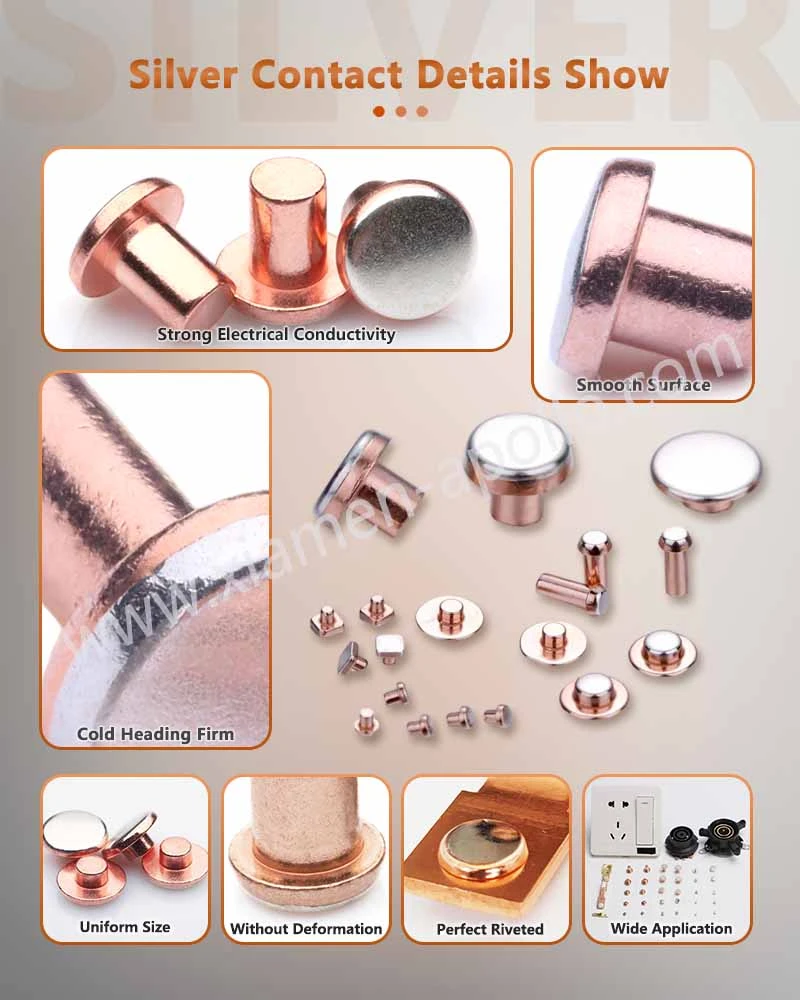
Material Combinations & Technical Specifications of Bimetallic Rivet Contact
| Item | Parameter |
|---|---|
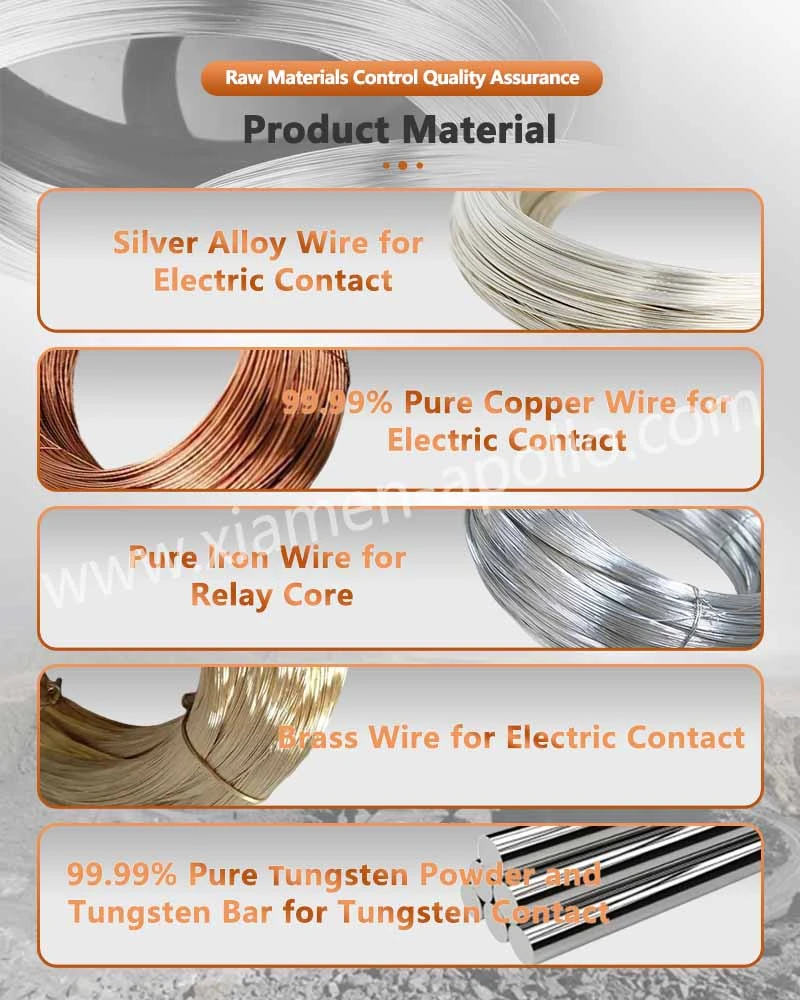
| Available Silver Alloy Layer | AgCdO, AgSnO₂, AgNi, AgCu, etc. |
| Base Substrate Material | T2 Copper / Copper alloy |
| Rivet Dimension Range | Diameter: Φ1.5mm‑Φ8.0mm; Custom drawing supported |
| Working Current Condition | Medium‑low current switching scenario |

Material Advantages of Bimetal Silver Contacts
Economical Efficiency
Only the Bimetallic Rivet Contact working surface uses silver alloy, while the rivet body adopts cheap copper material. It greatly cuts silver raw‑material cost compared with full‑silver solid rivet contacts.
Enhanced Performance Stability
The metallurgical composite interface realizes a tight combination between the silver layer and copper base. It maintains stable Bimetal Silver Contacts resistance during repeated arc impact and mechanical riveting assembly.
contact us
Reach out to our engineering‑sales team right now if you have ongoing project demands for Bimetal Contact Rivets. As a full‑source manufacturer, we handle bimetal cladding, stamping, and in‑house quality inspection under one roof. Whether you require prototype samples for performance verification or urgent bulk production for upcoming orders, share your drawings, target specs, and quantity requirements. Our team will deliver a targeted technical proposal and formal quotation within 24 working hours. Don't delay your project schedule; submit your inquiry today.

Hot Tags: Bimetal Contact Rivets, Bimetallic Silver Contacts, Silver Copper Bimetal Rivet, Relay Bimetal Contact, Custom Bimetal Contact Rivets, OEM Electrical Contact Rivets, Low Voltage Switch Contacts, Contactor Bimetal Contacts, Silver Alloy Rivet Contacts, Stamping Bimetal Contacts, Bimetallic Silver Contacts, Silver Point Contact, Spring Loaded Electrical Contact, Contactor Electrical Silver Contacts, Bimetal Electronic Contacts, Silver Coated Electrical Contacts


