




Products Description

Product Profile
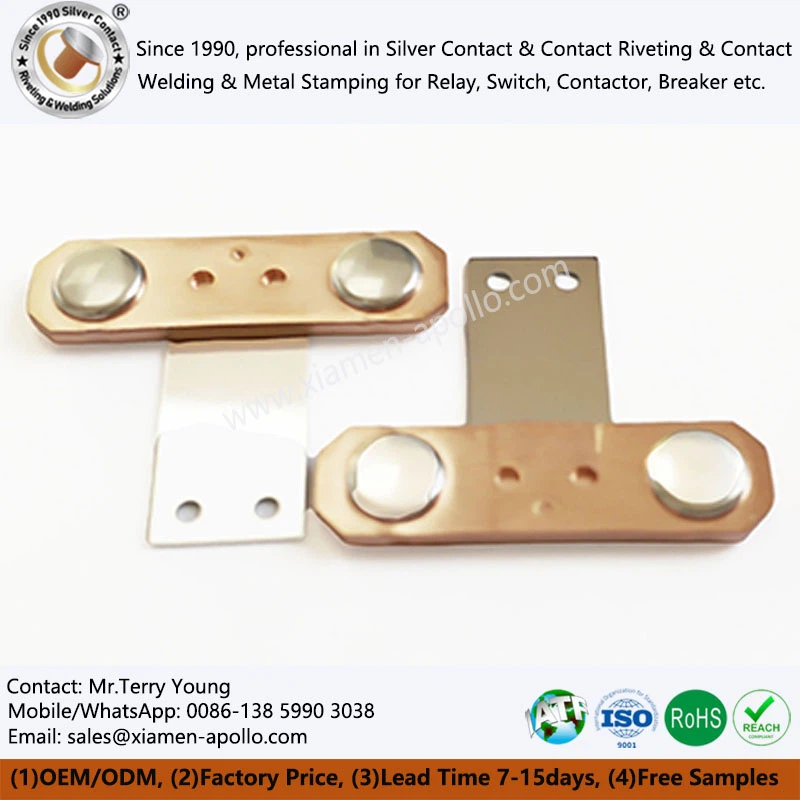
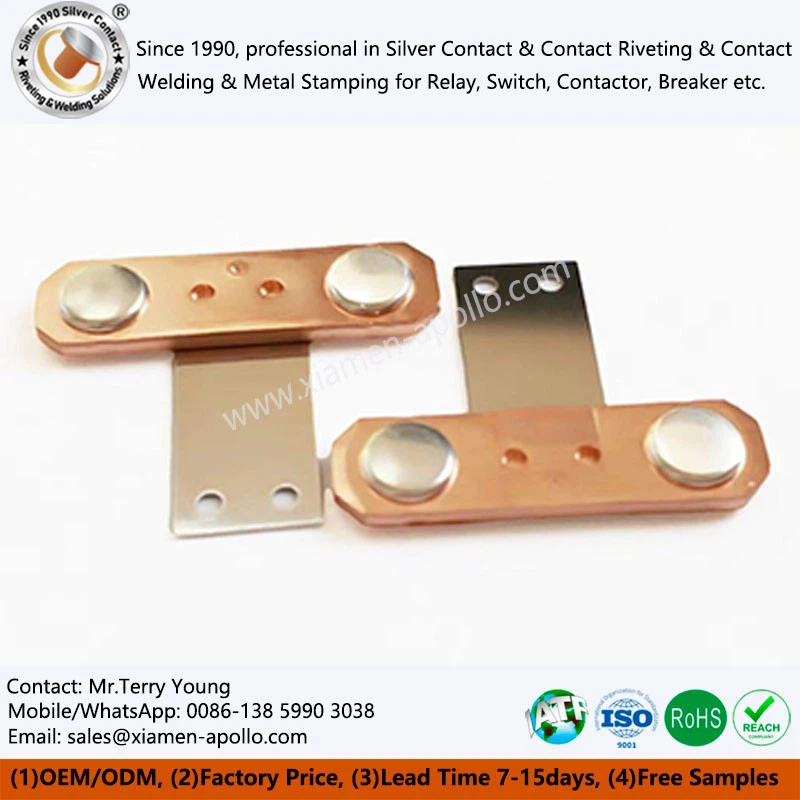
The Flat Silver Contacts for PV Power Relay are critical in photovoltaic systems. They are designed to ensure reliable and efficient electrical connections within PV inverter relays. These contacts, including the Movable Contact for Photovoltaic PV Inverter Relay and those suitable for New Energy Relay applications, play a vital role in the smooth operation of solar power generation and distribution. The Bimetal Rivet for PV Inverter Relay is often incorporated to enhance performance and durability. Our product is engineered to meet the specific demands of the PV industry, providing stable conductivity and long-term reliability.
Product Parameters
Contact Resistance
Maintains a low contact resistance, typically less than 0.1 milliohms. This is crucial for minimizing power loss during the transfer of electricity in the PV inverter relay, ensuring maximum energy efficiency in the photovoltaic system. For example, in a 10 kW PV inverter, a low contact resistance helps to reduce energy wastage and improve overall system performance.
Operating Temperature Range
Spans from -40°C to 85°C. This wide temperature range is essential as PV systems are exposed to varying environmental conditions. The contacts can reliably operate within this temperature range without significant degradation in performance, ensuring stable power conversion and distribution in both hot and cold climates.
Rated Current
Capable of handling currents up to 50 amperes, depending on the specific model and application. This high current-carrying capacity allows the contacts to function effectively in various PV power relay setups, from small residential installations to larger commercial solar power systems.
Mechanical Durability
Withstands a minimum of 100,000 make-and-break cycles. This durability is vital for the long-term operation of the PV inverter relay, reducing the need for frequent replacements and maintenance. In a typical PV installation with daily cycling, the contacts can maintain their integrity and performance for many years.

Details of the Moving Contact Material
The moving contact material is primarily silver, chosen for its outstanding electrical conductivity. Silver offers low resistance to the flow of electric current, ensuring efficient power transfer within the relay. Additionally, it has good thermal conductivity, which helps dissipate heat generated during operation. The silver used is high purity, typically 99.9% or higher, to maximize its performance characteristics. Some contacts may also incorporate alloying elements in small amounts to enhance specific properties such as hardness or resistance to oxidation. For example, a small addition of nickel can improve the wear resistance of the contact surface, prolonging its lifespan in the demanding environment of a PV inverter relay.

Moving Contact Production and Processing Technology
Material Preparation
High-quality silver is carefully sourced and prepared. It is melted and refined to the required purity level. The bimetal components, if applicable, are fabricated through precise alloying and lamination processes. For the Bimetal Rivet for PV Inverter Relay, the two metal layers are bonded with exacting precision to ensure optimal thermal and electrical properties.
Precision Machining
The contacts are machined to precise dimensions using advanced CNC (Computer Numerical Control) techniques. This ensures accurate shaping and sizing, with tolerances within very tight limits. For example, the flatness of the contact surface is maintained within a few micrometers to ensure reliable electrical contact.
Surface Treatment
The contact surfaces may undergo specialized treatments such as plating or polishing. A thin layer of protective metal, like gold or palladium, may be plated onto the silver surface to enhance its resistance to oxidation and corrosion. Polishing is carried out to achieve a smooth finish, reducing contact resistance and improving the overall performance of the moving contact.
Assembly and Integration
The moving contacts are carefully assembled with other components of the PV power relay, such as the bimetal rivets and springs. The assembly process is highly controlled to ensure proper alignment and functionality. Each contact is tested for its mechanical and electrical performance before being integrated into the final relay product.

Contact Inspection Process and Equipment
Visual Inspection
Trained technicians conduct a detailed visual examination of each contact. They check for any surface defects, such as scratches, pits, or burrs, that could affect the contact's performance. The overall shape and dimensions are also verified to ensure they meet the specified tolerances.
01
Electrical Testing
Using specialized electrical test equipment, the contact resistance is measured precisely. This is done under controlled conditions, simulating the actual operating environment of the PV inverter relay. Any contacts with resistance values outside the acceptable range are rejected and further analyzed or reworked.
02
Durability Testing
A sample of the contacts is subjected to accelerated make-and-break cycle testing. This mimics the long-term operation of the relay and helps to identify any potential issues with wear or fatigue. The contacts are monitored for changes in contact resistance and mechanical integrity throughout the testing process.
03
Material Analysis
Advanced spectroscopic and metallurgical analysis techniques are employed to verify the composition and quality of the contact material. This ensures that the silver and any alloying elements are present in the correct proportions and that the material meets the required standards for conductivity and durability.
04

contact us

Hot Tags: flat silver contacts for pv power relay, China flat silver contacts for pv power relay manufacturers, suppliers, factory, bimetal silver contact, Contactor Electrical Silver Contacts, Silver Coated Electrical Contacts, Bimetal Electrical Silver Contact Point, Bimetallic Silver Contacts, Bimetal Silver Contacts


