




Product Introduction

products description
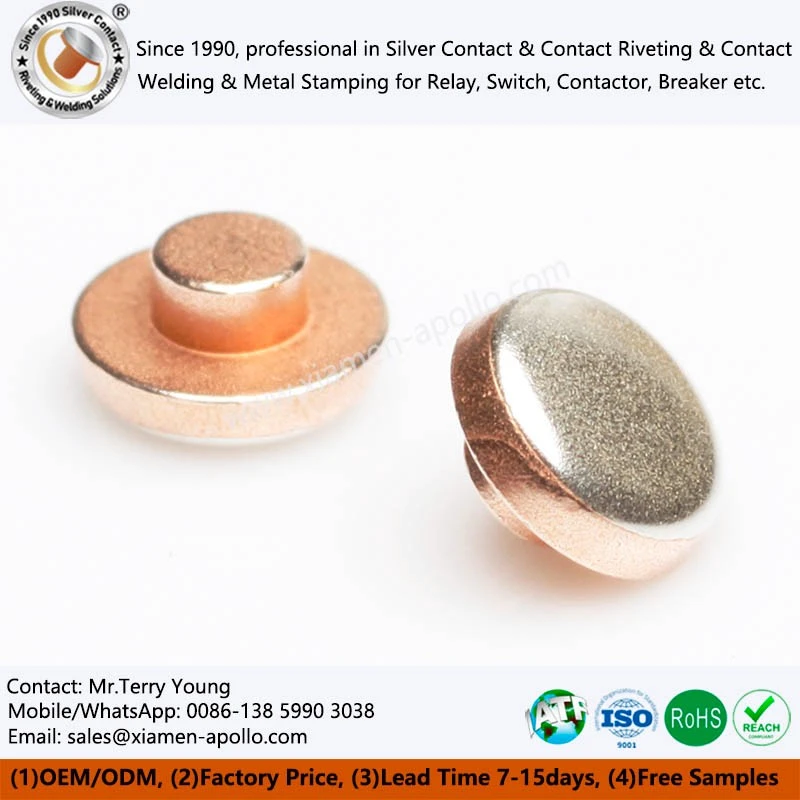
The Moving Contact is a vital component in electrical systems, especially in relays and switches. It is designed to enable the opening and closing of electrical circuits with precision and reliability. The combination of elements like Movable Contact Rivet, Leaf Spring Electrical Contacts, Spring Loaded Electrical Contacts, and Bimetal Rivet For Relay gives it unique characteristics.
Economical Practicality of Moving Contacts
Reduced Power Loss
Due to low contact resistance, it helps in reducing power consumption, leading to cost savings in the long run, especially in high-power applications.
Longevity
Its durability means fewer replacements are needed, saving on both parts and labor costs over time.

Space Efficiency
Compact design allows for more efficient use of space in electrical devices, eliminating the need for large enclosures and associated costs.
Compatibility
Can be easily integrated into various electrical systems, reducing the need for extensive redesign or additional components.
Product Production Process
Material Preparation
The raw materials for the contacts, springs, and rivets are carefully selected and inspected. The alloys for the Leaf Spring Electrical Contacts are melted and cast into ingots, which are then rolled or drawn into the required wire or sheet form. The metals for the Movable Contact Rivet and Bimetal Rivet For Relay are machined into the appropriate shapes and sizes.
01
Component Fabrication
The Leaf Spring Electrical Contacts are stamped or machined to the final shape and then plated. The Spring Loaded Electrical Contacts are wound using automated winding machines. The Movable Contact Rivet and Bimetal Rivet For Relay are fabricated using precision machining techniques such as turning and milling.
02
Assembly
The components are assembled in a cleanroom environment to prevent contamination. The Spring Loaded Electrical Contacts are attached to the Leaf Spring Electrical Contacts, and the Movable Contact Rivet is inserted and riveted. The Bimetal Rivet For Relay is then installed in the appropriate position, ensuring proper alignment and thermal contact.
03
Quality Control
Each assembled moving contact undergoes a series of quality checks. Electrical resistance is measured using a precision multimeter. Force and travel distance are tested using specialized testing equipment. Visual inspection is carried out under a microscope to check for any surface defects or misalignments.
04

Product Inspection Process and Equipment
| Electrical Resistance Tester | A high-precision digital multimeter is used to measure the contact resistance. The multimeter is calibrated regularly to ensure accurate readings. It can measure resistance values in the milli-ohm range with a resolution of 0.001 milli-ohms. |
| Force Measurement Device | A computer-controlled force gauge is employed to test the force exerted by the Spring Loaded Electrical Contacts. The force gauge can apply and measure forces in both static and dynamic modes, allowing for a comprehensive evaluation of the spring's performance. |
| Microscopic Inspection | A stereo microscope with a magnification range of 10x to 100x is used to examine the surface of the Leaf Spring Electrical Contacts and other components. The microscope is equipped with a digital imaging system that allows for detailed documentation of any surface defects or irregularities. |
| Thermal Cycling Chamber | A thermal cycling chamber is used to test the performance of the Bimetal Rivet For Relay under different temperature conditions. The chamber can accurately control the temperature within a range of -50°C to +200°C and can cycle the temperature at different rates to simulate real-world operating conditions. |

Trust in Our Team
Skilled Engineers: Our team of engineers has extensive experience in electrical contact design and manufacturing. They have in-depth knowledge of materials science, mechanical engineering, and electrical engineering, enabling them to develop innovative and high-performance moving contacts.
Quality Assurance Experts: Dedicated quality assurance professionals who oversee every step of the production process. They conduct regular audits, perform quality inspections, and ensure that all production processes comply with quality standards and regulations.
R&D Specialists: A team of research and development specialists who are constantly exploring new technologies and materials. They work on improving the performance of moving contacts, developing new product features, and finding solutions to emerging challenges in the industry.
Customer Support Representatives: Responsive and knowledgeable customer support representatives who are available to answer customer questions, provide technical assistance, and address any concerns or complaints promptly. They ensure that customers have a positive experience with our products and services.

contact us

Hot Tags: moving contact, China moving contact manufacturers, suppliers, factory, Slip Ring Contacts, Silver Point Contact, Bimetal Silver Contacts, Bimetallic Silver Contacts, Dry Contactor Electrical Silver Contacts, Spring Loaded Electrical Contact


