



Products Description
What is a Tungsten Copper Rivet Electrical Contact?
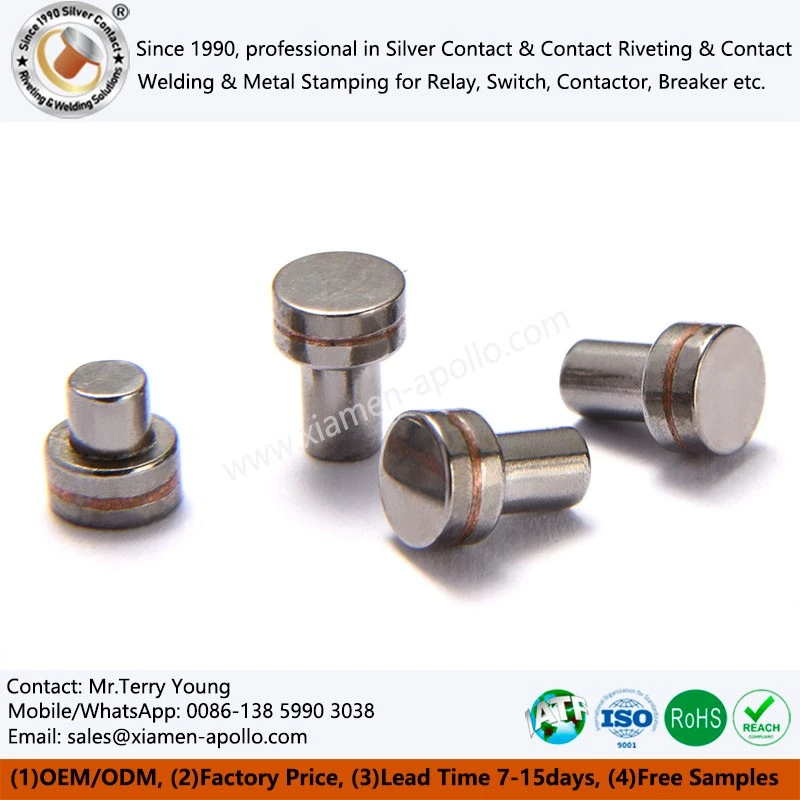
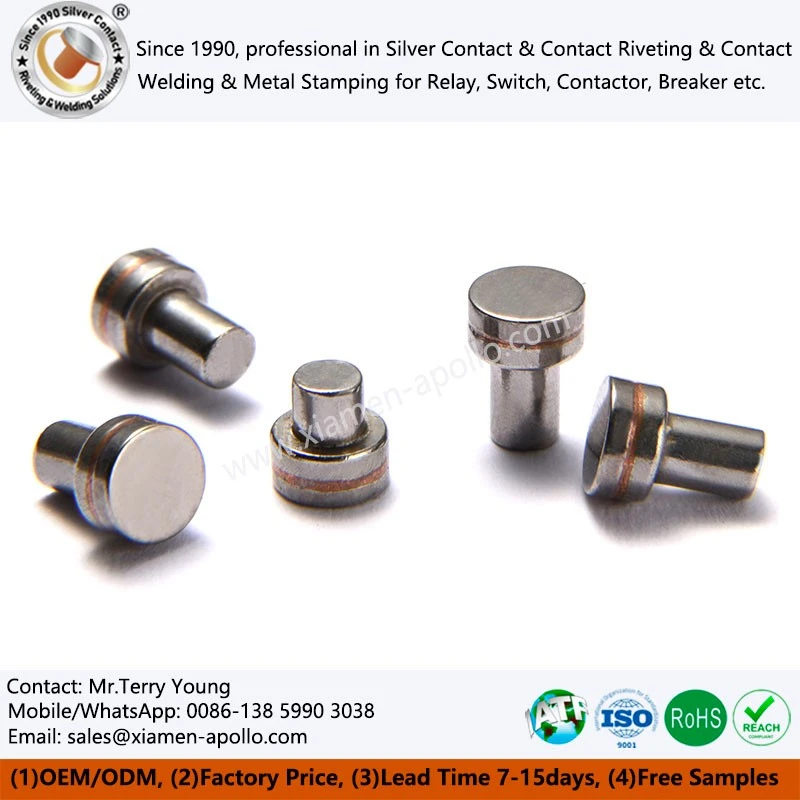
It is a composite rivet-style electrical contact consisting of a high-melting-point tungsten contact head securely bonded to a base shank (made of iron or pure copper) via high-temperature brazing; the surface is nickel-plated to enhance oxidation resistance. This structure combines the arc resistance of tungsten with the electrical conductivity and assembly characteristics of the base material.
Typically, the contact features a round or flat tungsten head and a semi-hollow or solid rivet shank; the overall height and diameter can be customized according to relay specifications (common diameters range from 2 to 8 mm, with head thicknesses of 0.5 to 2 mm).

Key Functions
High-Frequency Current Switching: In devices such as automotive horns and relays, Half Hollow Tungsten Contact Rivets undergo frequent opening and closing operations. The tungsten working layer maintains low-resistance contact despite repeated arc impacts, ensuring reliable circuit conduction.
Arc Energy Dissipation and Resistance: When an arc forms at the moment of Tungsten Contact Point Rivet separation, the tungsten material-thanks to its high melting point and low evaporation rate-dissipates arc energy, thereby minimizing material transfer and ablation.
Mechanical and Electrical Connection: The rivet shank secures the component to a terminal or contact spring, providing stable mechanical support and an electrical conduction path. The excellent ductility of the copper base ensures smooth flange formation during the riveting process.
Weld Resistance and Rapid Disconnection: Under short-circuit or overload conditions, the weld-resistant nature of the Tungsten Copper Electrical Contacts ensures rapid separation, preventing a sustained short circuit.

Manufacturing Advantages
Continuous High-Speed Vacuum Brazing
We utilize advanced mesh-belt continuous vacuum/protective atmosphere brazing furnaces. The thickness of the copper-silver brazing layer between the tungsten disc and the oxygen-free copper substrate is strictly controlled between 15 µm and 30 µm, achieving an interface wetting rate of over 98% and eliminating the microscopic voids or unbonded areas often caused by manual welding for Copper Tungsten Electrical Contacts.
Vertically Integrated Supply Chain For High-Purity Raw Materials
All raw materials undergo secondary refining. High-density, pore-free tungsten blanks are produced via powder metallurgy, while high-conductivity electrolytic copper is used for the substrate; this prevents impurities from negatively affecting brazing surface tension and electrical conductivity for Half Hollow Tungsten Contact Rivets.
Digital Automated Inspection And Sorting
The assembly line integrates high-speed 3D machine vision inspection (3D AOI) and eddy-current impedance sorting systems. Every Tungsten Contact Point Rivet undergoes non-destructive sampling for dimensions, coaxiality, and bonding layer shear strength, ensuring that quality fluctuations remain within ±0.02 mm during high-volume, continuous production.

Frequently Asked Questions
Q: Tungsten Copper Electrical Contacts have higher contact resistance than silver alloy ones; will this affect horn operation?
A: In the automotive horn contact circuit, coil resistance and line impedance are far greater than contact resistance (milliohms vs. ohms); an additional contact resistance of 2–5 mΩ has no substantial impact on current amplitude. The critical factors are resistance to contact welding and service life.
Q: How should I choose between copper terminals and iron terminals?
A: If the Copper Tungsten Electrical Contacts is secured to the reed solely via mechanical riveting and requires no soldering → choose iron terminals (lower cost). If the terminal needs to be fixed to a PCB or copper contact bridge via spot welding or wave soldering → choose copper terminals (better solderability and slightly superior electrical conductivity).
Q: Will the brazed interface fail in the high-temperature environment of the engine compartment?
A: The solidus temperature of AgCu brazing filler metal is approximately 779°C, whereas the maximum engine compartment temperature is 125°C-far below that threshold. Furthermore, differences in thermal expansion are accommodated by the elastic strain of the fillet braze joint; validation through 500 thermal cycles (-40°C to +125°C) confirmed no delamination for Half Hollow Tungsten Contact Rivets.

contact us
If you are an engineering procurement or technical professional seeking reliable, arc-resistant Tungsten Copper Rivet Electrical Contact solutions for automotive horns, smart home relays, or other electrical control projects, please feel free to contact us. Our team offers expert selection advice, sample testing support, and stable volume supplies tailored to your load parameters, assembly methods, and environmental requirements, helping to drive your project forward efficiently. We look forward to collaborating with you.

Hot Tags: tungsten copper rivet electrical contact, China tungsten copper rivet electrical contact manufacturers, suppliers, factory, Electrical Contact Of Tungsten Copper, electrical tungsten contact, Tungsten Brazed Rivets, Tungsten Contacts For Electrical Appliances, Tungsten Copper Electrical Contacts, Tungsten Rivet For Electric Horn


