


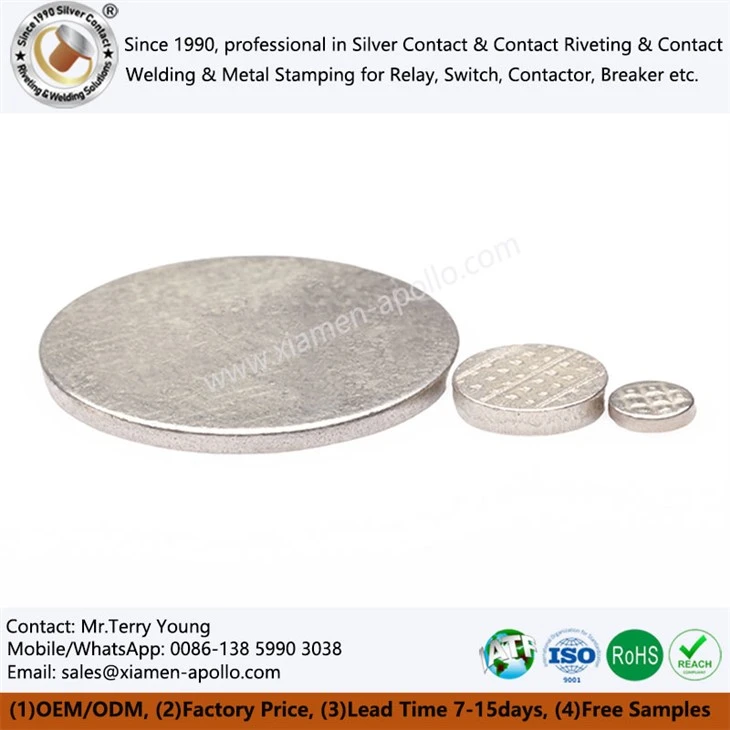
What is Silver Solder Contact?

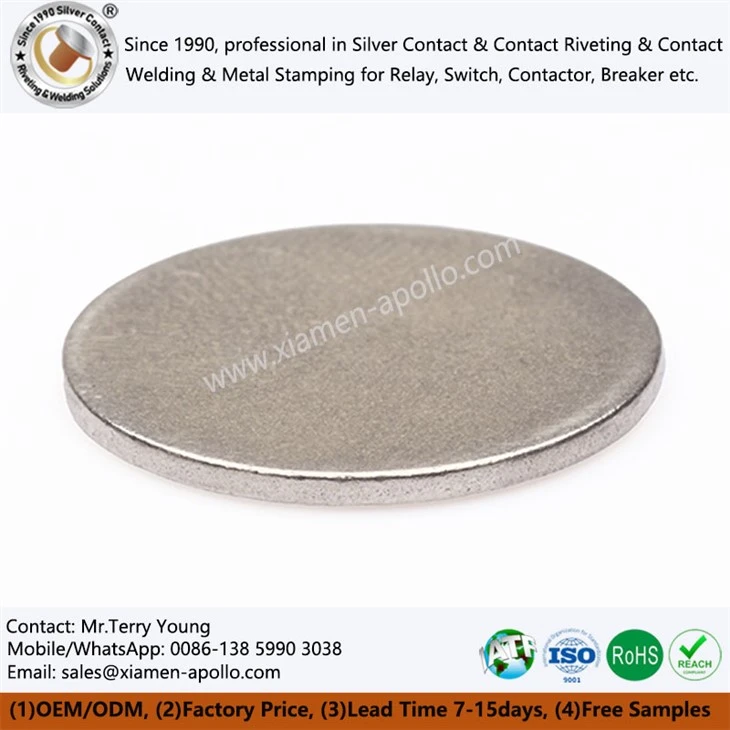
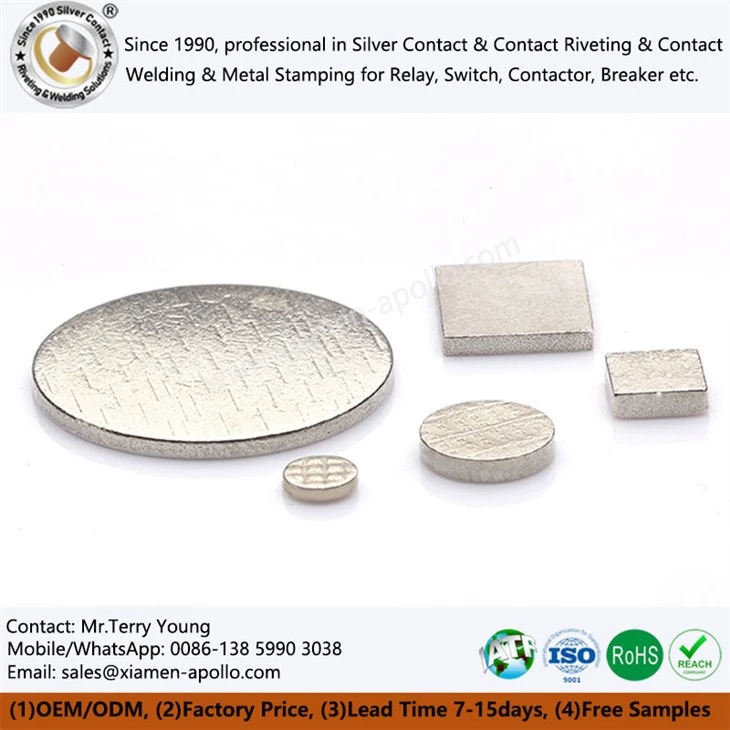
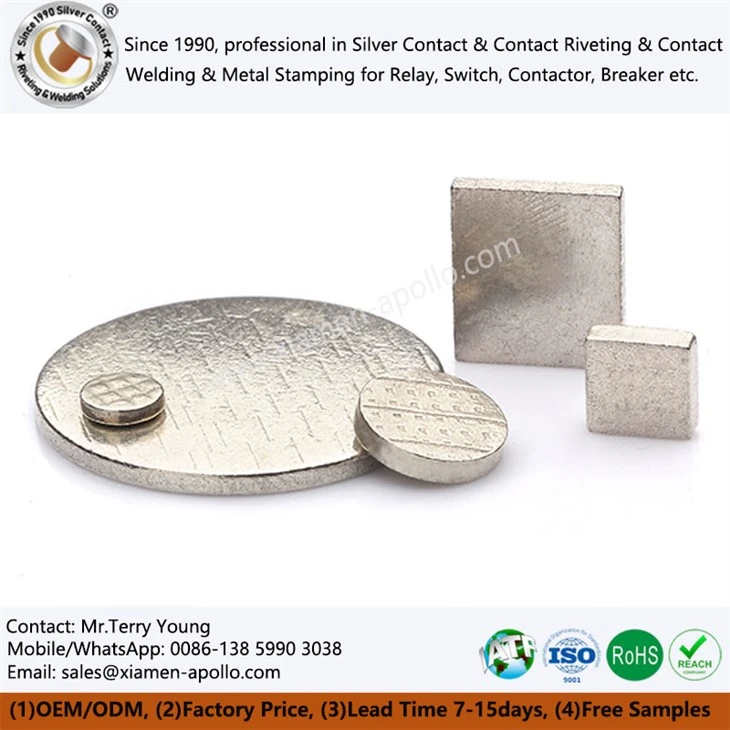
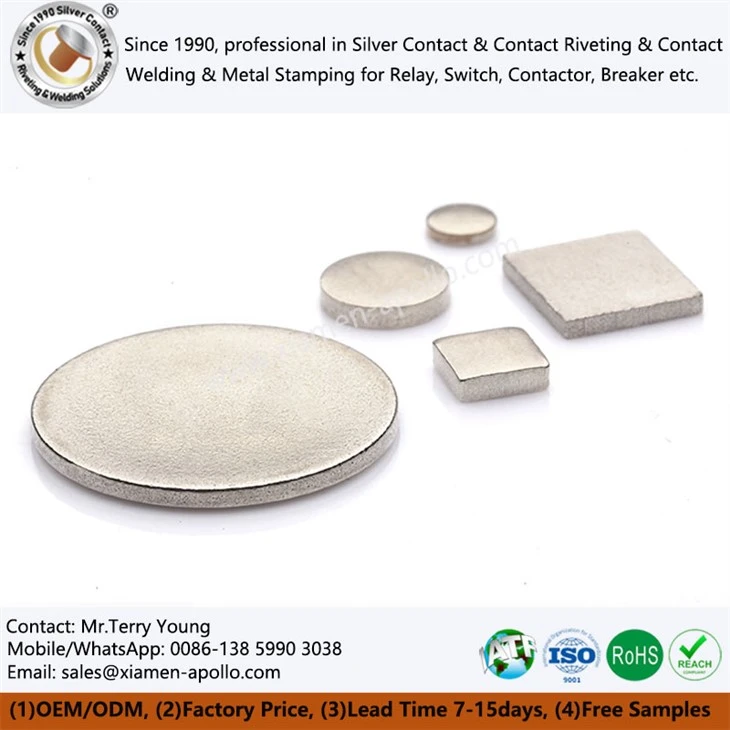
A Silver Solder Contact comprises a conductive base and a silver-alloy contact surface joined through a brazing process, where the contact surface serves as the switching interface and the base provides the mechanical connection to the carrier, terminal, or conductive member. The silver-alloy working surface is positioned at the current-carrying switching point, and its material composition can be selected to match the electrical load, switching frequency, and required resistance characteristics of the finished relay, contactor, or switch assembly.
The brazed region forms both the mechanical and electrical transition between the Button Silver Contacts material and the conductive base, requiring proper solder flow and wetting to prevent incomplete joining, excessive voids, or local discontinuities. These contacts can be manufactured in various geometries for integration into relay contacts, contactor assemblies, circuit-breaker mechanisms, and other switching components, with final dimensions, joining area, and base-metal configuration defined according to the customer's engineering drawing.
Material Selection of Silver Brazing Contacts
Silver Alloy Facing Composition
The Silver Brazing Products layer utilizes verified silver‑based binary or ternary alloys, including AgSnO₂ (88/12), AgCdO (10/15), or AgCuO, chosen specifically to balance arc extinction capabilities with low contact resistance in heavy industrial environments.
Copper Substrate Base Materials
Base substrates are stamped from oxygen‑free electronic copper or high‑conductivity brass, providing the necessary mechanical rigidity to support high‑current paths while maintaining structural integrity under sustained thermal expansion.

OEM Customization & Quality Control of resistance brazing Silver Contact
Drawing-Based Production
Custom Silver Solder Contacts are produced from customer drawings defining contact dimensions, base geometry, joining area, and required tolerances. CAD data can be used as the initial engineering reference before sample production.
Material Traceability
Material grade should be recorded against the production batch where traceability is required, especially for Silver Cadmium Oxide Contacts. This is particularly important when the contact alloy, base metal, or brazing material is controlled by an OEM specification.
Brazing Process Control
Production control focuses on component positioning, solder distribution, heating conditions, wetting, and joint formation of Brazed Composite Rivet Electrical Contacts. These parameters directly affect the finished electrical and mechanical interface.
Quality Management
The source page identifies ISO 9001:2015 certification and states that quality management covers material sourcing, production, and delivery for AgCdO Contacts. RoHS and REACH requirements can be addressed according to the customer's project specification.

Frequently Asked Questions about Welding with Contacts
How does the brazing process prevent the Silver Brazing Contacts from separating from the copper base?
+
-
Controlled induction brazing melts silver‑based filler metal in a protective atmosphere, creating a uniform metallurgical diffusion bond with a shear strength exceeding 180 MPa, preventing delamination.
Can these Silver Brazing Products withstand high‑frequency switching without performance degradation?
+
-
Yes. The fine metal‑oxide dispersion within the silver matrix resists arc erosion, maintaining stable contact resistance and minimal material transfer across hundreds of thousands of cycles.
How is a Brazing Electrical Contact different from a solid silver contact?
+
-
A welding contact uses a silver-alloy working surface joined to a separate conductive base, while a solid contact is made from one contact material. The composite structure can reduce the amount of silver-based material while retaining a suitable switching interface and conductive support.
Can Silver Contact Weldings be customized for relays?
+
-
Yes. Contact diameter, thickness, profile, base geometry, joining area and dimensional tolerances can be defined from an engineering drawing. Material grades should also be specified according to current, switching frequency, contact force and thermal conditions rather than using one standard configuration for every relay.
Which standards should be specified for procurement of Welding Button Contact?
+
-
The applicable requirements should be defined according to the finished switching component and destination market. Material standards, customer drawings, RoHS, REACH, and the relevant electrical product standard may all apply. ISO 9001:2015 quality-system control is identified for the production operation.

Contact Us
Partner directly with our engineering team to integrate high‑performance Silver Solder Contacts into your next‑generation switching devices. Contact our manufacturing facility today to submit your technical drawings, request material samples, or secure competitive wholesale volume pricing.

Hot Tags: Silver Solder Contact, Brazed Silver Contact, OEM Brazed Electrical Contacts, AgCdO Contact, AgSnO2 Contact, Brazing Silver Contact, Relay Silver Contacts, Circuit Breaker Contact, Automatic Brazing Contact, Custom Electrical Contacts, Brazed Electrical Contacts, Brazing Electrical Contacts, Silver Electrical Contacts Brazing, brazed contact, Brazed Composite Rivet Electrical Contacts, Contacts Metal Welding


