


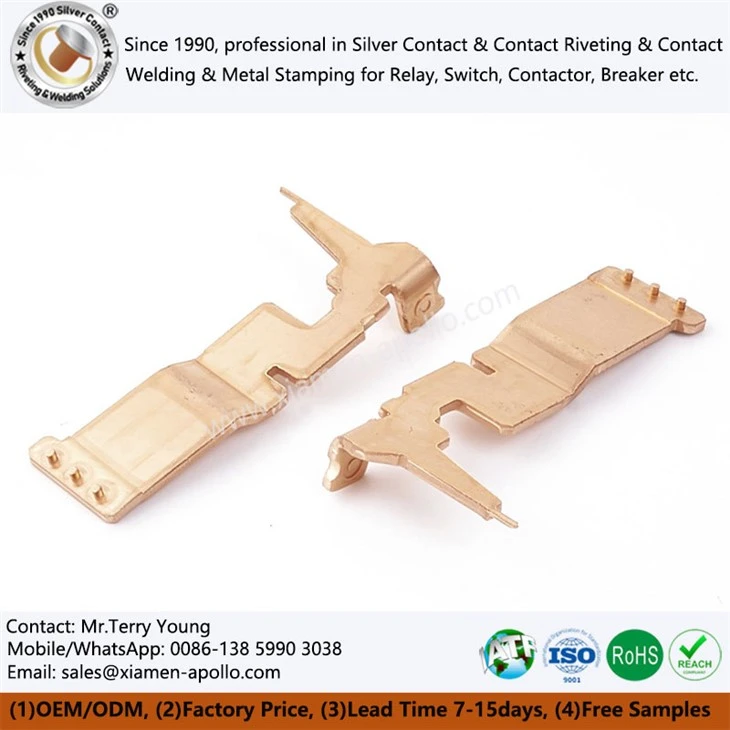
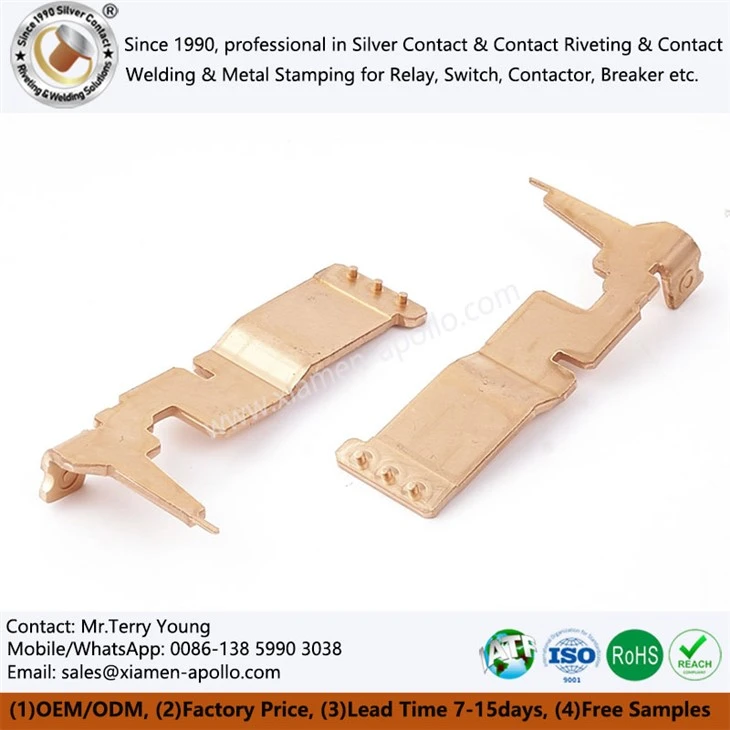

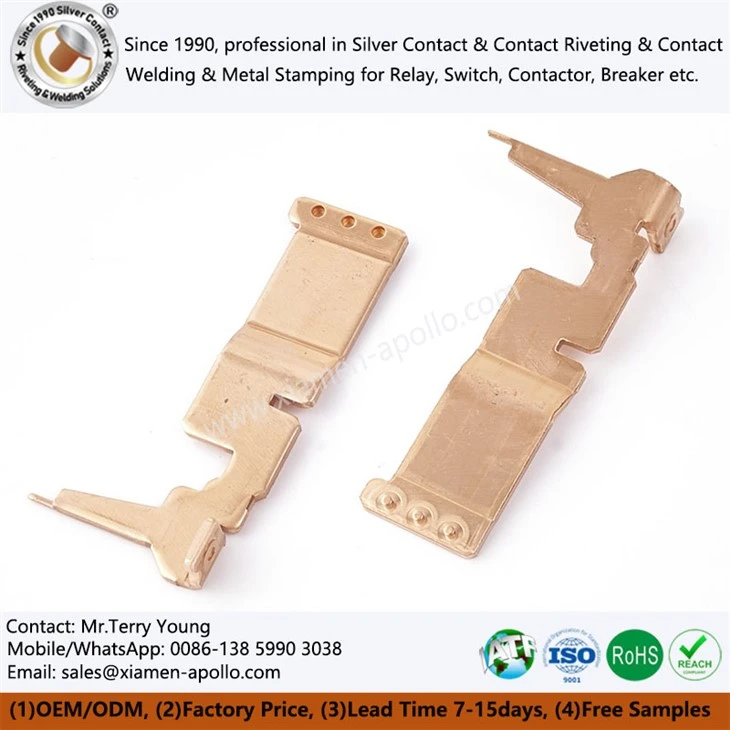
What is the Magnetic Latching Relay Shunt Terminal
Magnetic latching relays used in advanced smart grid infrastructure demand absolute precision in current sensing and signal transmission. The internal Magnetic Latching Relay Shunt Terminal serves as the critical bridge for accurate electrical metering; inferior materials or unstable welding interfaces introduce thermal drift, resistance fluctuation, and severe measurement errors under continuous load. This custom‑engineered manganese‑copper shunt terminal leverages electron beam laser welding technology to fuse high‑conductivity copper with precision manganese‑copper alloy strip, followed by controlled progressive stamping and ultrasonic cleaning. Designed specifically to eliminate resistance instability in high‑amperage smart meter applications, our factory delivers robust supply capabilities, strict metallurgical testing, and fully customizable OEM configurations to meet rigorous international metrology standards.
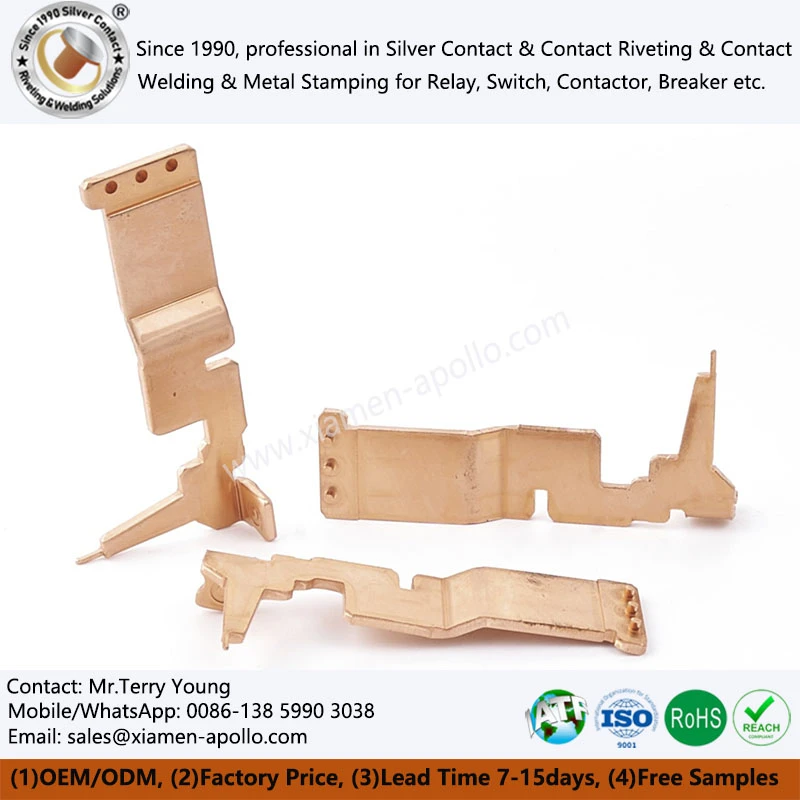
Product Specifications & Materials of EBW Manganese Copper Shunt
| Electrical Parameters | Specification |
|---|---|
| Base Materials | C1100 Oxygen‑Free Copper & Manganese Copper Alloy (e.g., CuMn12Ni) |
| Electrical Conductivity (%IACS) | ≥ 85% (Copper section), Specific low TCR for alloy section |
| Contact Resistance | < 0.5 mΩ across welded interface |
| Current Rating | Up to 100A continuous load capacity without thermal degradation |
| Resistance Tolerance | ±1% custom calibration capability |

Manufacturing Process of Manganin Latching Relay for Single Phase
Electron Beam Laser Welding & Composite Strip Integration
The manufacturing sequence begins by joining high‑purity C1100 copper strip and manganese‑copper alloy strip via advanced electron beam (EBM) laser welding for EBW Manganese Copper Shunt. This metallurgical fusion creates a continuous bimetallic strip that combines superior electrical conductivity with stable resistance temperature coefficients.
Precision Stamping & Thermal Stress Relief
Following laser welding, the composite strip feeds into high‑speed precision stamping presses equipped with custom tungsten carbide dies for Manganin Latching Relay for Single Phase. Parts undergo multi‑stage bending and piercing to achieve exact terminal geometries. Subsequent controlled atmosphere heat treatment eliminates internal mechanical stresses induced during stamping, locking in long‑term dimensional stability and resistance accuracy.

Diverse connection methods and flexibility of Manganin Shunt for Electronic Power
Multiple interface adaptations
Electron Beam Welded Shunt supports multiple physical interface designs for real‑world relay assembly. Available options include plug‑in terminals and screw‑mount terminals, matching standard assembly processes for smart‑meter latching relays.
Customizable connection solutions
Shunt Connector for Magnetic Relay provides configurable connection structures. Adjust terminal layout, hole position, and tab geometry based on customer CAD drawings to fit target relay housing and PCB mounting requirements.
Flexible topological connection capabilities
Magnetic Relay Shunt Connection supports series and parallel connection configurations for current sampling circuits. It fits typical application environments including smart metering and power distribution measurement, to satisfy different system‑level current collection requirements.

contact us
If you want to know more about Magnetic Latching Relay Shunt Terminal, please visit our website or call our customer service; we will serve you wholeheartedly!

Hot Tags: Magnetic Latching Relay Shunt Terminal, Smart Meter Relay Shunt, Laser Welded Shunt Terminal, Custom Copper Shunt Connector, Electrical Relay Parts Manufacturer, High Precision Shunt Terminal, Electronic Beam Welded Strip, Relay Internal Components Wholesale, Copper Manganese Alloy Terminal, Low Resistance Shunt Terminal, Latching Relay Manganin Shunt, latching relay shunt terminal, Magnetic Shunt for Latching Relay, Manganin Shunt For Latching Relay, Primary Wire Manganin Shunt, Static Copper Plate With Manganese


