


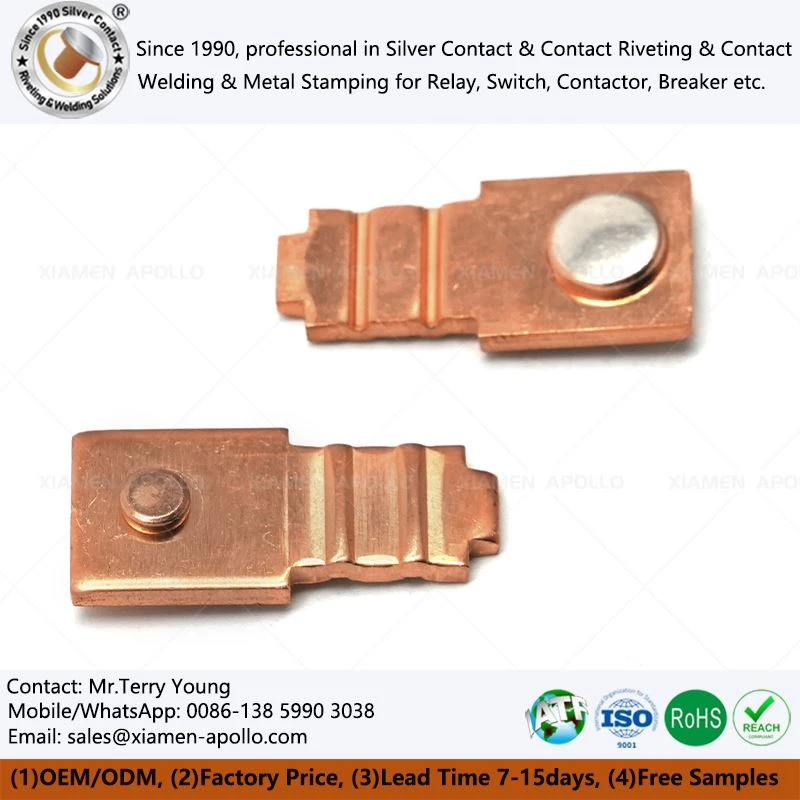
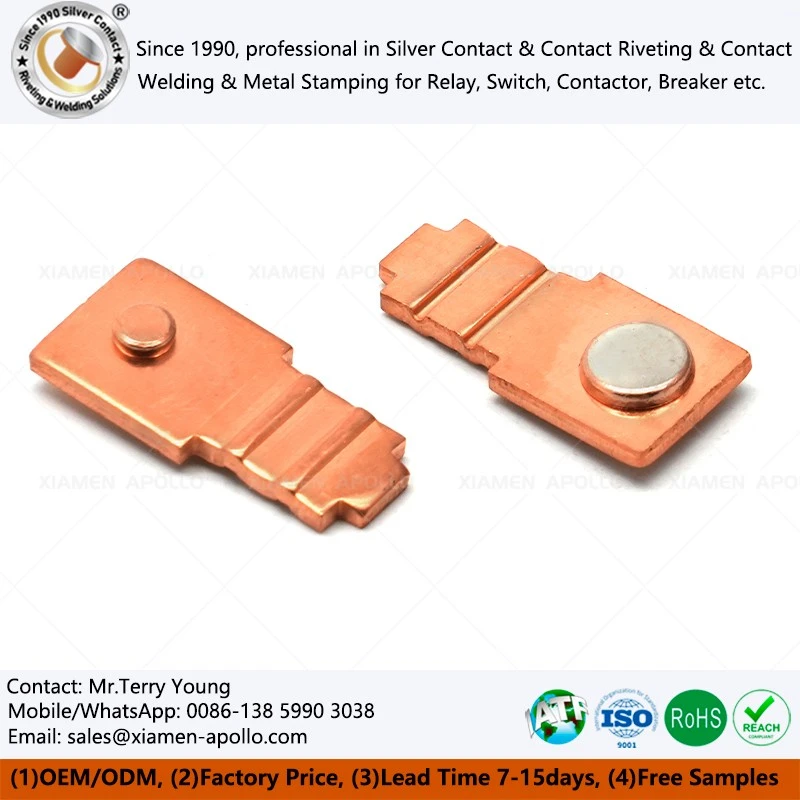
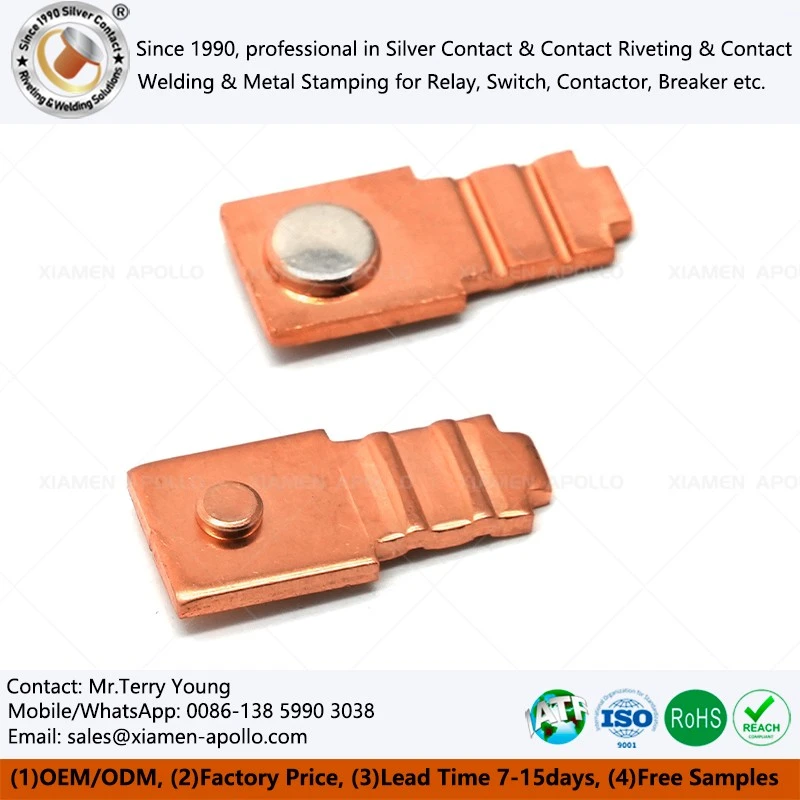
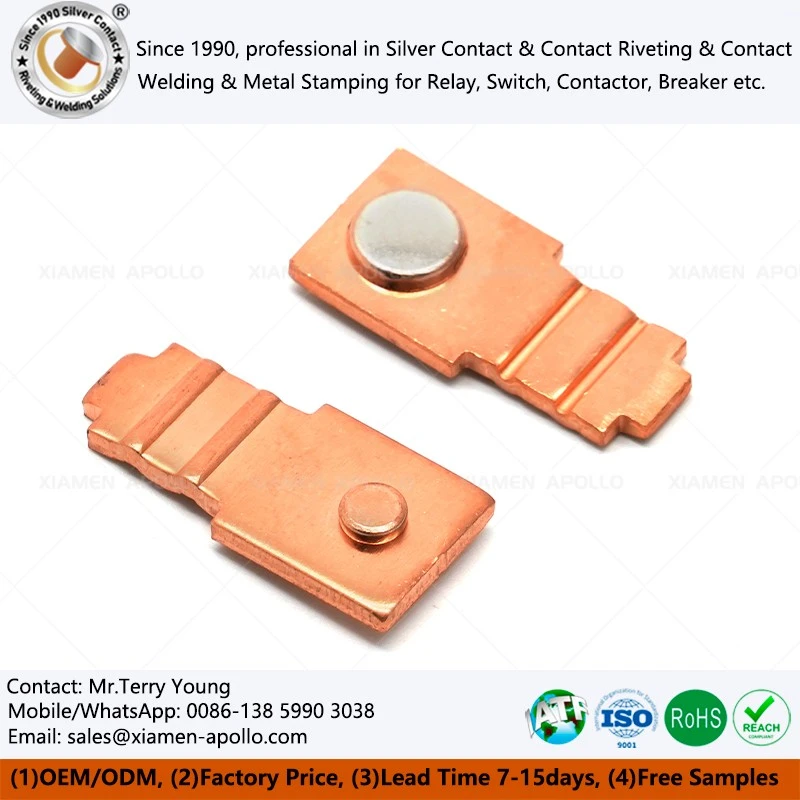
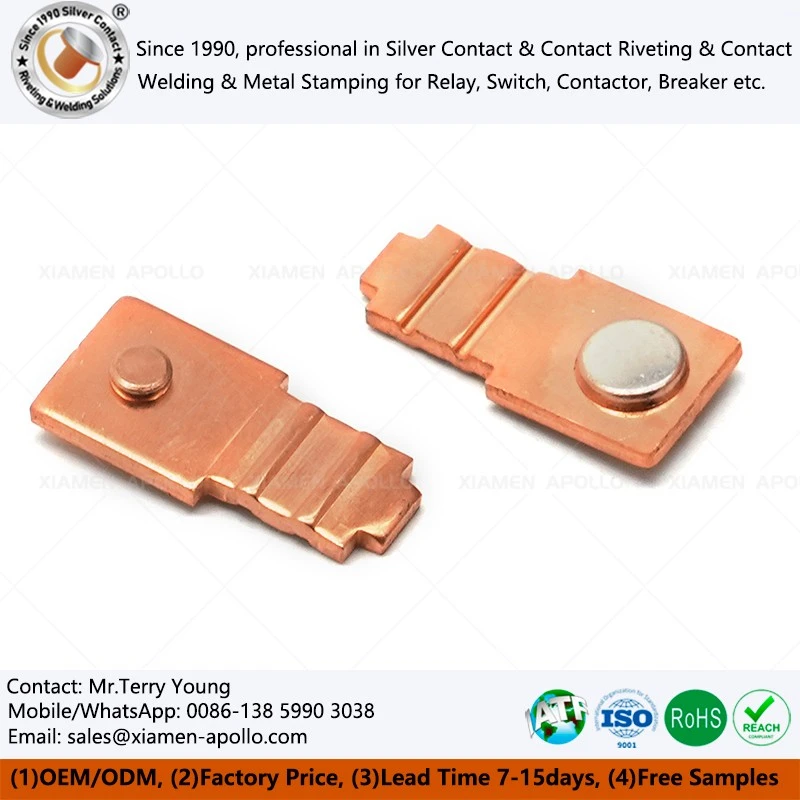
What is In-Die Riveting in Metal Stamping?
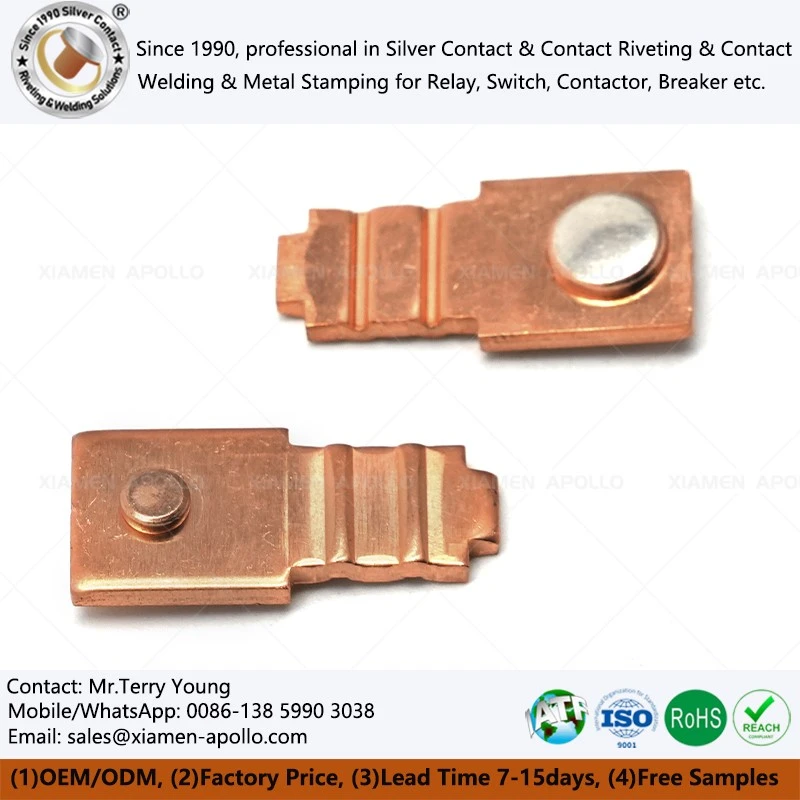
In-Die Riveting in Metal Stamping combines copper strip forming and silver contact attachment within a coordinated stamping operation to produce electrical connection components for relay static terminals, switches, and contactors. The manufacturing route can integrate blanking, forming, contact positioning, and mechanical riveting into a progressive die, subject to part geometry and tooling design. Custom production supports OEM drawings, specified contact materials, terminal dimensions, and agreed inspection requirements for repeatable series manufacturing.
Material Selection & Electrical Performance of Silver In-Die Riveting Connections
C1100 ETP Copper Substrate Conductivity
The underlying carrier utilizes high-purity C1100 electrolytic tough pitch copper, achieving an electrical conductivity rating exceeding 100% IACS. This minimizes Joule heating losses across the current path during continuous load operations in low-voltage switchgear.
AgSnO2 and Fine Silver Contact Tips
Contact tips are selected based on anticipated switching arcs and load profiles, utilizing fine silver (Ag) for low-voltage resistive loads or silver-tin oxide (AgSnO2) for heavy inductive loads. These materials resist welding and material transfer during repetitive make-break cycles.
Interfacial Bonding Strength Parameters
Through controlled mechanical cold-heading and riveting pressure during the stamping sequence, the rivet shank expands uniformly inside the copper punched hole, yielding a mechanical pull-off force that satisfies stringent industrial endurance criteria.
Thermal Expansion and Oxidation Resistance
The mating interface between the silver alloy head and the copper stamping maintains low contact resistance even after elevated temperature aging tests, preventing localized hot spots inside sealed relay enclosures.
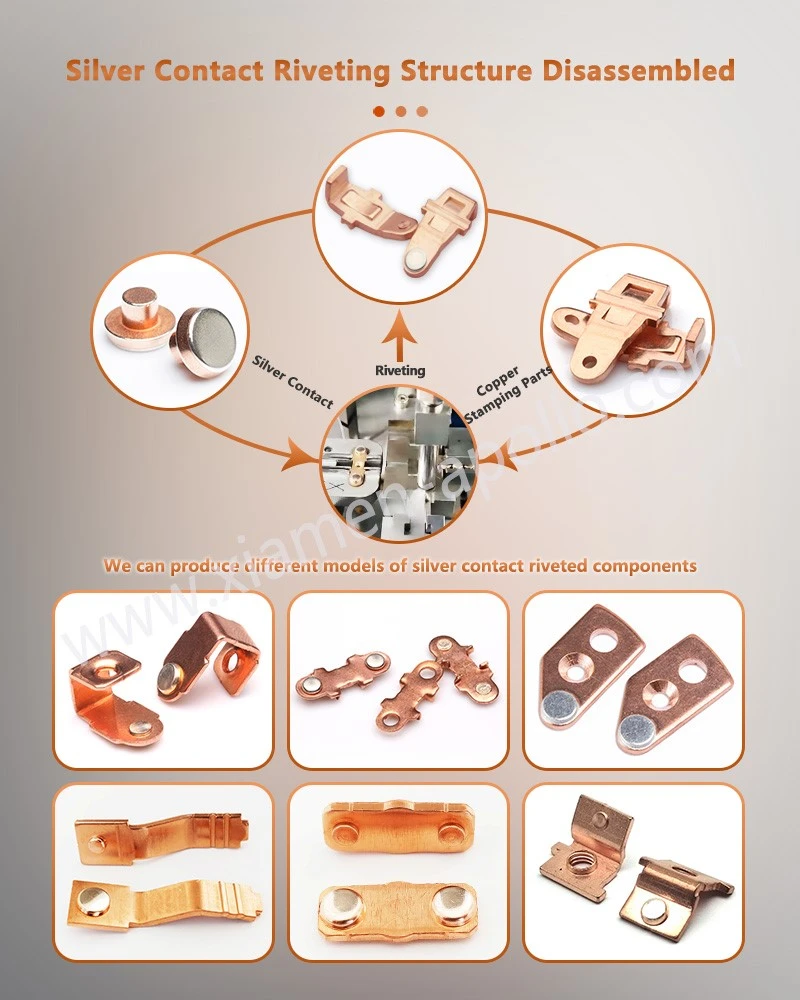
Manufacturing Process & Progressive Die Integration of Riveted Silver Electrical Contacts

In-Die Riveting Technology
By feeding wire stock and strip material directly into automated multi-station progressive dies, the riveting punch fastens the contact tip onto the stamped copper blank prior to final carrier separation, eliminating manual positioning errors.
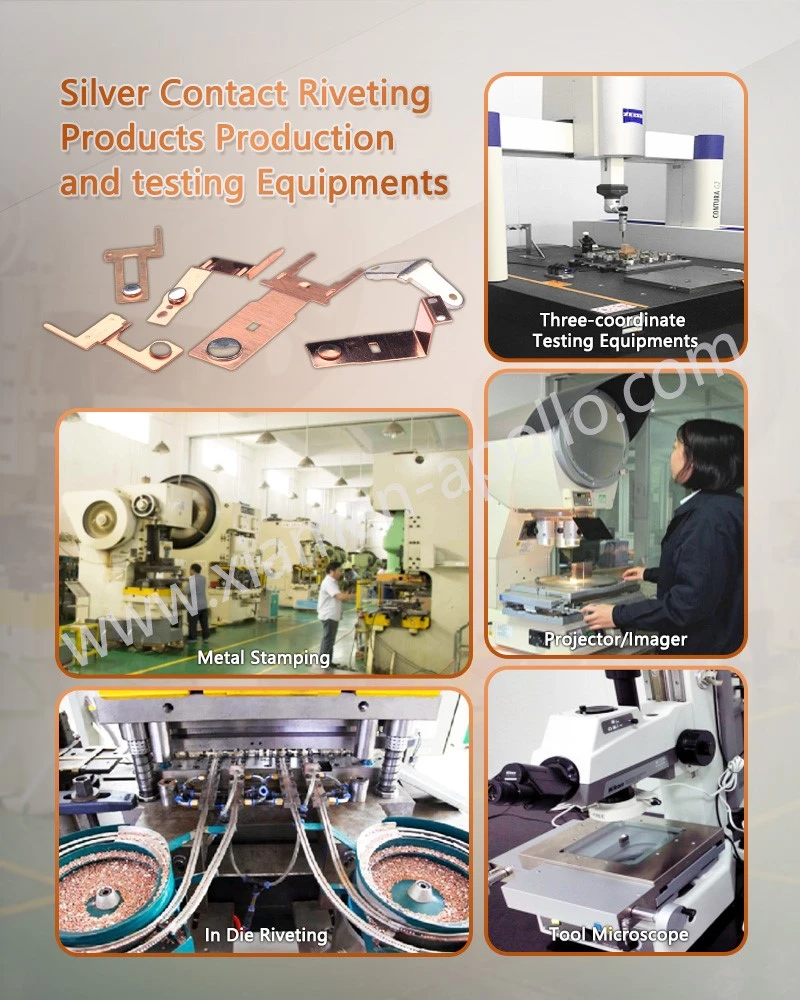
High-Speed Stamping Press Operations
Precision mechanical presses operating at high strokes per minute ensure uniform dimensional repeatability across millions of cycles, stabilizing the geometric profile of every manufactured batch.
Tooling Design and Maintenance
In-house tool rooms utilize CNC wire EDM and high-precision grinding machinery to fabricate tungsten carbide die inserts, preventing burr formation and maintaining sharp shear edges throughout production campaigns.
Automated Inline Vision Sorting
Completed stamped assemblies pass through high-resolution optical inspection systems that verify rivet head height, coaxiality, and surface defects before bulk packaging and shipment.
Frequently Asked Questions about Precision Stamped Riveted Contact Assemblies
How is contact resistance minimized between the Silver Contact and Copper Stamping Riveted Parts?
Precise cold-heading parameters eliminate micro-gaps at the interface, ensuring metal-to-metal contact that maintains stable low milliohm resistance values throughout extended switching lifecycles.
What quality control inspections are performed before shipping wholesale orders?
Parts undergo rigorous checks including optical dimensional sorting, plating thickness measurement via XRF, mechanical pull testing, and electrical conductivity verification prior to export packaging.
What information is needed for a quotation for custom in-die riveting?
Provide the 2D drawing or 3D model, copper grade and thickness, contact material and geometry, critical tolerances, annual demand, sample requirements, and applicable compliance documentation. These details allow a factory to assess tooling feasibility, material consumption, inspection needs, production routing, and a realistic delivery schedule.
How do you prevent oxidation and damage during international transit?
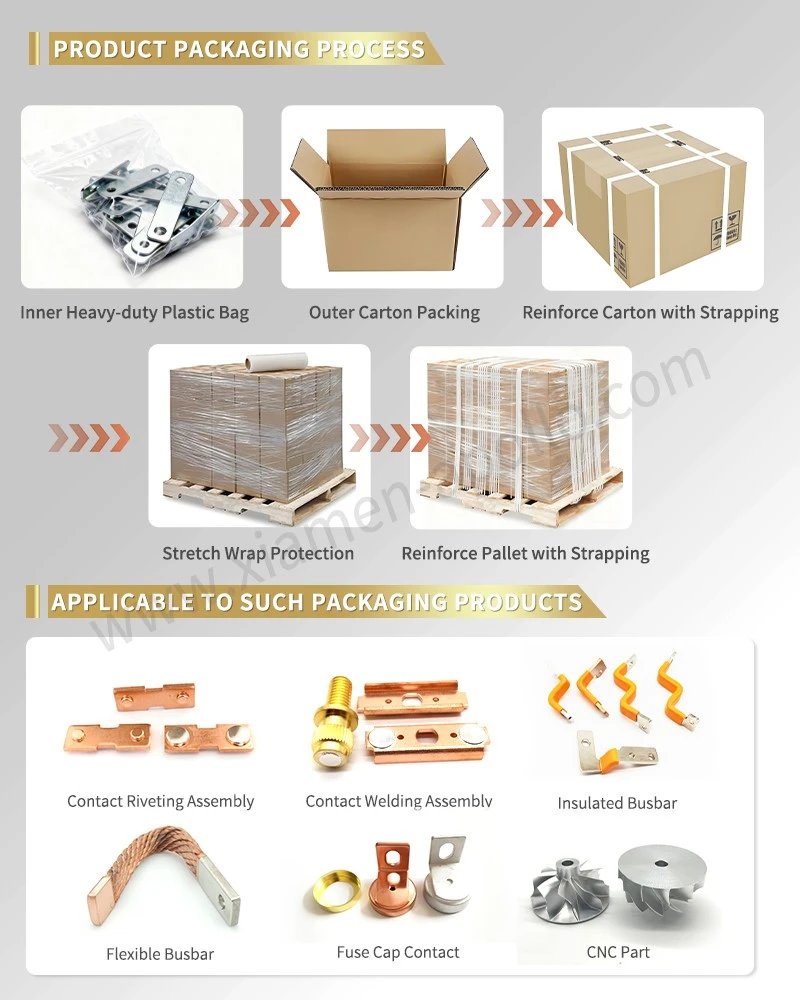
Components are packaged in anti-corrosion VCI bags and vacuum-sealed trays within reinforced export cartons to prevent moisture ingress and mechanical deformation during freight.
contact us
Submit your terminal drawings, silver contact specifications, and annual volume requirements now to obtain a factory-reviewed quotation for In-Die Riveting in Metal Stamping, including tooling feasibility, joint validation, and serial production planning.
Hot Tags: Copper Stamping Parts, Silver Contact Riveting, In-Die Riveting Manufacturer, Custom Metal Stamping, Relay Static Terminals, Electrical Contact Assemblies, Progressive Die Stamping, Electrical Contacts For Solar DC Relay, EV Charging Relays Contacts, Silver Contact Riveted Brass Stamping Parts, Silver Contact Riveted Onto Copper Stampings, Silver Contact Riveting Assembly, Silver Contacts For PV Power Relay Riveting Terminals


