


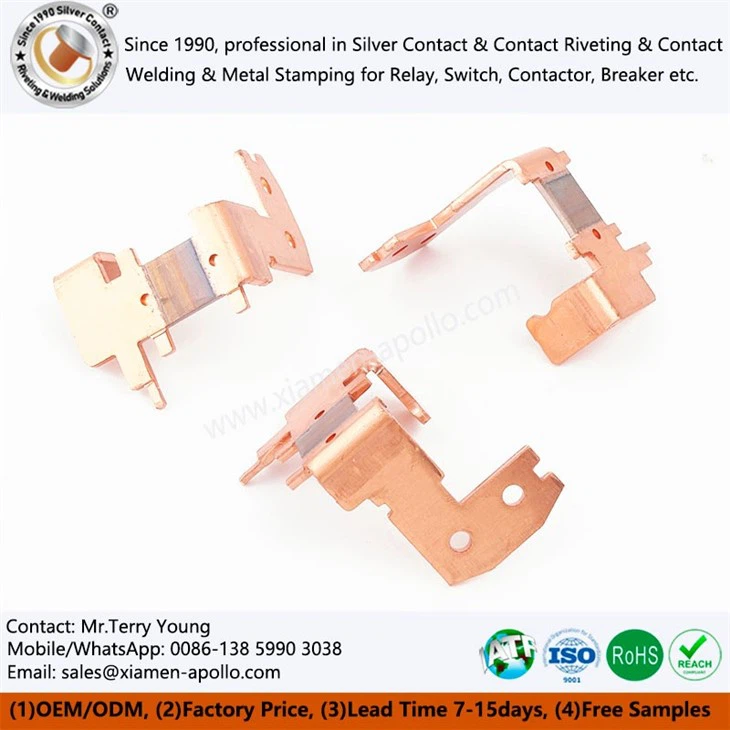

What is the Manganese Copper Terminal Lead Shunt Resistor?
In high-precision electrical measurement environments such as smart electricity meters and battery management systems, engineering teams frequently face critical operational hurdles: resistance at welded joints tends to drift upward over time, causing severe DC measurement errors; conventional inflexible shunts restrict internal relay layout and wiring; and demanding thermal metering requirements mean unstable temperature coefficients introduce critical calibration failures. This Manganese Copper Terminal Lead Shunt Resistor is engineered specifically to eliminate these risks. Utilizing advanced vacuum electron-beam welding (EBW), our factory fuses high-conductivity copper terminal leads with precision manganese-copper alloy sheets without thermal degradation. Backed by extensive high-volume production capabilities, we deliver stable resistance performance and strict dimensional tolerances for global engineering procurement.

Core Performance Advantages of E‑beam Welding Shunt
Low Temperature Coefficient (TCR) & Minimal Thermal EMF
The carefully balanced chemical formulation of the manganese‑copper strip ensures an exceptionally low temperature coefficient of resistance. Furthermore, the vacuum EBW joint of the E‑beam Welding Shunt prevents dissimilar‑metal thermal electromotive force generation during heavy load fluctuations, securing reliable voltage readings.
High Linearity for DC Current Measurement
Because current measurement linearity directly dictates metering accuracy, our progressive stamping and stress‑relieving thermal protocols for Magnetic Shunt for Latching Relay ensure a uniform cross‑sectional geometry, preventing localized current crowding and non‑linear output.
Structural Reliability of Terminal‑Lead Design
The integrated copper lead and manganese‑copper sensing section configuration of Manganin Shunt for Electronic Power permits direct mechanical and electrical mounting inside relay enclosures, withstanding continuous mechanical vibrations and heavy switching currents without structural fatigue.

Material Composition & Mechanical Parameters of Copper Alloy Shunt
| Parameter | Specification |
|---|---|
| Tensile Strength | > 380 MPa across the welded joint |
| Hardness | 160 − 210 HV (Manganese‑copper resistance section) |
| Dimensional Tolerance | ±0.015 mm linear, ±0.05° angular bend |
| Applicable Standards | ISO 9001, IATF 16949, RoHS, REACH |

Packaging & Quality Assurance of Magnetic Shunt for Latching Relay
Packaging Method: Packed securely in custom anti‑static blister trays and vacuum‑sealed moisture‑barrier packaging to prevent surface oxidation during international logistics transit.
Quality Inspection: Every production run of Copper Alloy Shunt undergoes 100% optical dimension screening, micro‑resistance verification, and periodic destructive shear testing under strict ISO 9001 guidelines.

Frequently Asked Questions about Manganin Shunt for Electronic Power
Why is vacuum electron‑beam welding superior to standard point welding for this EBW Manganin Shunt for Relay?
+
-
Electron‑beam welding occurs in a vacuum with high energy density, creating a narrow fusion zone that prevents oxidation, protects the manganese‑copper matrix, and eliminates resistance drift.
How do you verify the mechanical strength of the welded joint?
+
-
We perform routine destructive shear and tensile tests on batch samples to confirm that the weld strength exceeds the fracture limit of the base metal.
What is the minimum order quantity (MOQ) for custom shunt resistor orders?
+
-
MOQs depend on raw material sizing and tooling requirements, typically starting at 1,000 units for customized configurations.
Are these Magnetic Latching Relay Shunts fully compliant with international environmental directives?
+
-
All supplied components comply completely with RoHS and REACH regulations, supported by verifiable material test reports.
How does the EBW process prevent resistance drift under long‑term high current?
+
-
The vacuum fusion process eliminates micro‑voids and trapped impurities at the interface, ensuring a stable, homogeneous current pathway that withstands thermal fatigue.

contact us
Whether you are looking for a high-precision current measurement solution or have questions about the stability and cost-effectiveness of Manganese Copper Terminal Lead Shunt Resistor, please contact us.

Hot Tags: Manganese Copper Terminal Lead Shunt Resistor, Ebw Shunt Resistor Wholesale, Custom Copper Shunt Manufacturer, Electron Beam Welded Shunt, Smart Meter Shunt Component, Low Tcr Shunt Resistor, Manganese Copper Alloy Terminal, Relay Shunt Resistor Factory, China Shunt Supplier, Precision Current Shunt, Latching Relay Manganin Shunt, Manganin Shunt For Electricity Meter, Manganin Shunt For Latching Relay, Manganin Shunt Resistor For Relays, Prepayment Meter Shunts, Static Copper Plate With Manganese


