


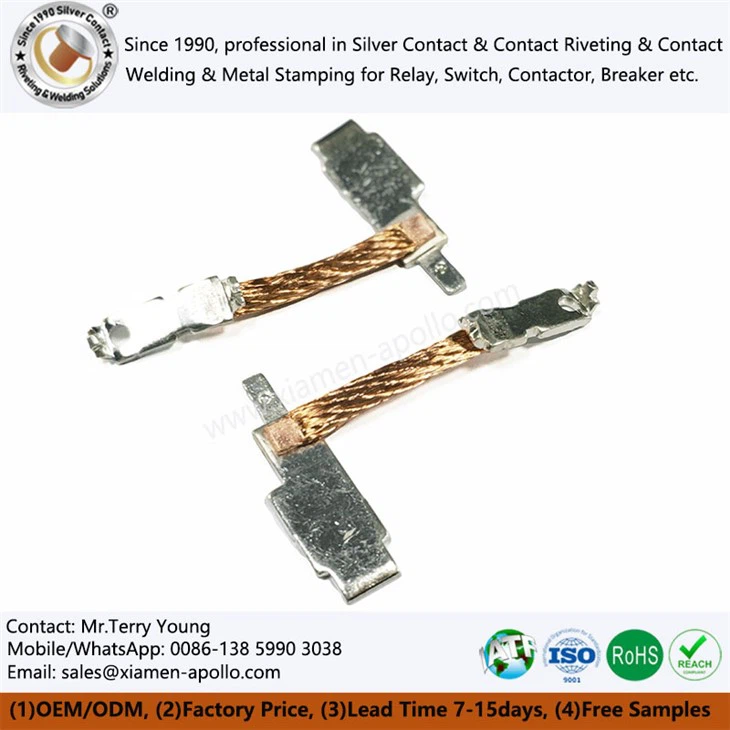

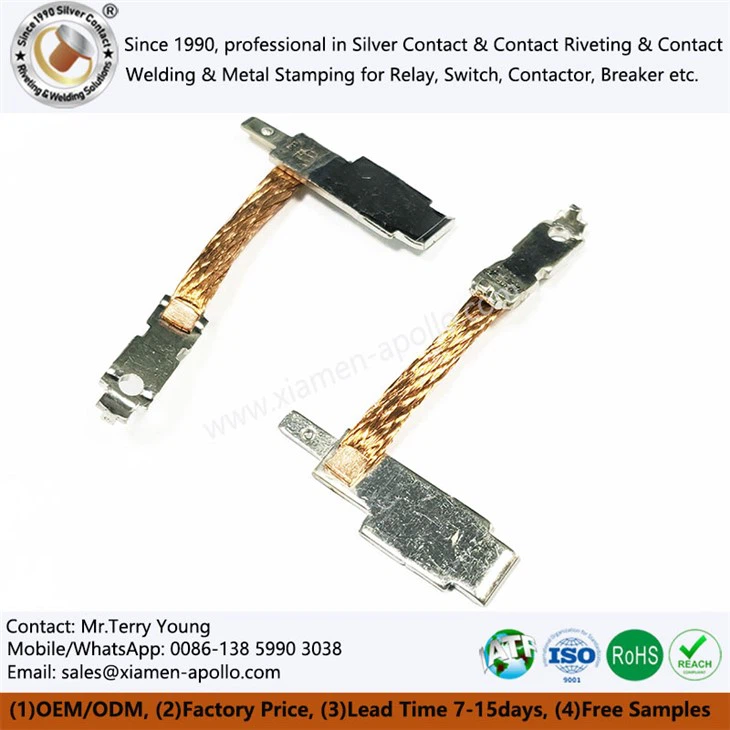
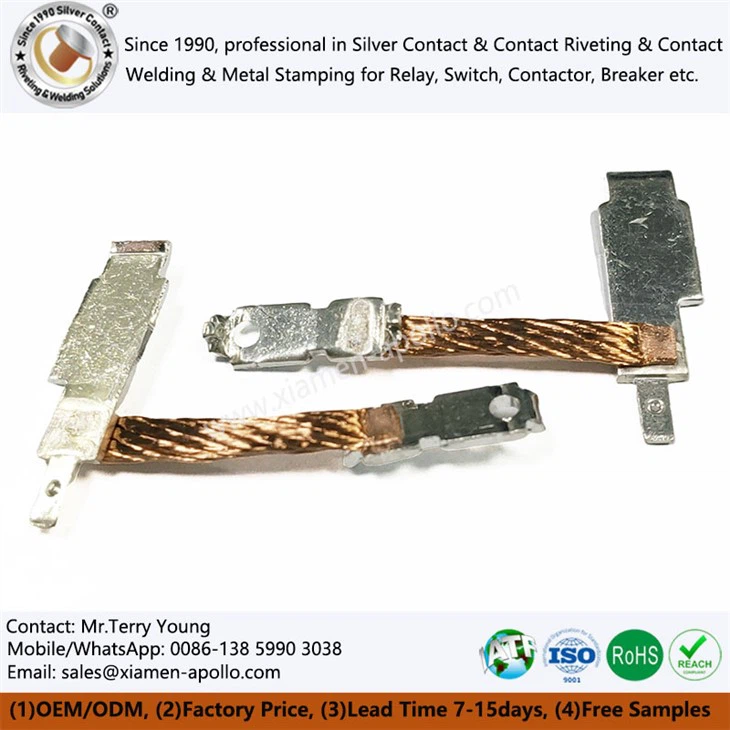

Product Profile of Spot Welding for Manganin Shunt Resistor
- Spot Welding for Manganin Shunt Resistor is widely used in precision current sensing applications due to their highly stable resistance and low-temperature coefficient. These resistors are typically integrated into circuits for accurate measurement of current in various devices such as automotive electronics, industrial machinery, and power distribution systems.
- Spot welding is one of the most reliable and precise methods used for assembling these resistors. It ensures strong, stable electrical connections between the manganin material and other conductive components, such as copper alloy shunts or cable wire shunt resistors.

Product Advantages
Product Advantages
High Accuracy
Manganin is known for its excellent resistive properties, making it the ideal material for shunt resistors. Combined with spot welding, the result is precise, reliable current measurement with minimal variance.
Low Temperature Coefficient
The low-temperature coefficient of manganin ensures that the shunt resistors maintain consistent performance across a wide temperature range, making them suitable for environments with fluctuating temperatures.


Improved Heat Dissipation
The addition of copper alloy shunts improves conductivity and dissipates heat efficiently, allowing the shunt resistors to perform reliably under heavy loads without significant temperature rise.
Long-Lasting Performance
Spot-welded connections provide superior mechanical stability and durability, reducing the chances of joint degradation over time, which contributes to the long lifespan of the shunt resistor.
Major Technological Innovations
Major Technological Innovations
E-beam Welding Shunt Technology
One of the cutting-edge advancements in the production of manganin shunt resistors is E-beam welding shunt technology. This process uses a high-energy electron beam to precisely join components at a molecular level, ensuring optimal conductivity with minimal heat impact. This method results in highly accurate, strong joints that enhance the durability and performance of the shunt resistors in extreme conditions.
Copper Alloy Shunt Integration
Modern copper alloy shunts are engineered to provide the ideal balance of conductivity, strength, and thermal performance. The use of these shunts in conjunction with manganin ensures reduced thermal resistance, improved heat dissipation, and greater electrical efficiency, particularly in high-power applications such as automotive power systems and industrial equipment.
Magnetic Shunt Customization
Another technological breakthrough is magnetic shunt customization. This innovation allows engineers to create highly specific current paths within the resistor structure, enabling the fine-tuning of electrical performance for specialized applications. It provides better control over magnetic fields and enhances the ability of the shunt resistor to handle large currents without saturation or excessive heat buildup.
Production Process
| Material Selection | The first step in the production of manganin shunt resistors involves selecting the appropriate materials. Manganin alloy is chosen for its excellent resistance properties, while copper alloy shunts are selected for their high conductivity and strength. In applications requiring higher flexibility, cable wire shunt resistors are incorporated. |
| Preparation and Shaping | The manganin material is processed and shaped into thin strips or sheets, depending on the design requirements of the resistor. The copper alloy shunt or cable wire shunt resistor components are also prepared by the required specifications for conductivity and thermal performance. |
| Spot Welding and E-beam Welding Shunt Assembly | Spot welding is used to bond the manganin strips to the copper alloy shunts, creating a robust mechanical and electrical connection. In more advanced designs, E-beam welding shunt technology is utilized for precision bonding, ensuring the highest possible electrical conductivity and stability under load. |
| Magnetic Shunt Customization | During the assembly process, magnetic shunt customization is applied to tailor the magnetic and current distribution characteristics of the resistor. This process helps optimize the device for specific applications, particularly those requiring high current handling or complex magnetic field management. |
| Testing and Quality Control | After assembly, each manganin shunt resistor undergoes rigorous testing to ensure it meets all performance specifications. These tests include electrical resistance measurements, temperature coefficient evaluations, and thermal cycling tests to verify that the resistor performs reliably under different conditions. |
| Packaging | Once tested and approved, the resistors are packaged carefully to prevent any mechanical damage during transport. For high-precision products, specialized protective packaging is used to maintain the integrity of the components. |

Storage Methods
| Temperature Control | Manganin shunt resistors should be stored in a temperature-controlled environment to preserve their resistance properties. Extreme fluctuations in temperature can cause changes in the resistance value, which may affect performance. |
| Humidity Protection | Shunt resistors must be stored in dry environments to avoid moisture ingress. High humidity can lead to corrosion of the copper alloy shunts or cable wire shunt resistors, which may degrade their electrical properties over time. Using desiccants or sealed containers is recommended for long-term storage. |
| Physical Protection | To avoid mechanical damage, resistors should be stored in protective containers that prevent physical stress, such as bending or crushing. Spot-welded connections, in particular, are sensitive to mechanical shocks, so handling must be done carefully. |
| Electrostatic Discharge (ESD) Precautions |
Manganin shunt resistors, especially those with E-beam welding shunt technology, are sensitive to electrostatic discharge. Therefore, storing these resistors in ESD-safe packaging is essential to prevent damage to the internal structure. |

Hot Tags: spot welding for manganin shunt resistor, China spot welding for manganin shunt resistor manufacturers, suppliers, factory, Braze Welding Shunt Resistance For Energy Meter, Copper Manganin Shunt Stampings, Electric Meters Manganin Shunt, Manganin Copper Shunt Stamping, Primary Wire Manganin Shunt, Static Copper Plate With Manganese


