

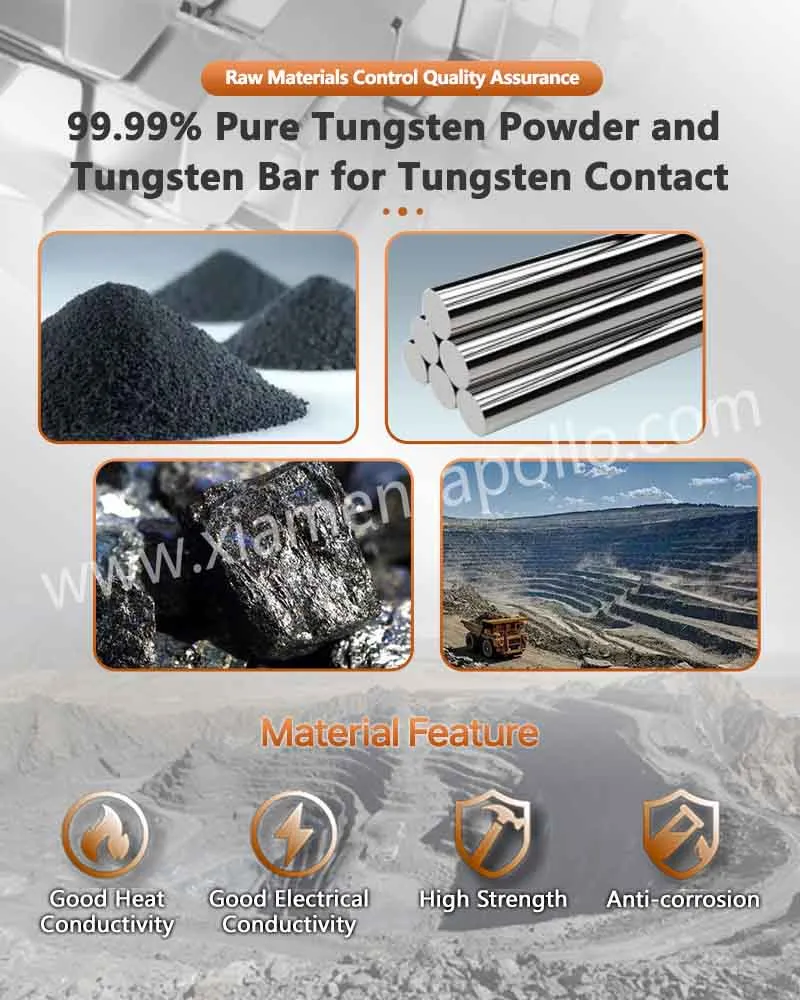
In modern electrical systems, Solid Tungsten Contact Rivets serve as core components for establishing and interrupting electrical circuits, finding widespread application in fields such as AC contactors, as well as automotive and motorcycle electrical systems. With the continuous advancement of the automotive manufacturing industry, the demands placed on contact materials have escalated rapidly. To meet rigorous standards-including crack-free rod stock, superior surface finish, fine and uniform grain structure in cross-sections, and high dimensional straightness-manufacturing processes must effectively eliminate defects such as splitting and brittle fracture. Against this backdrop, Tungsten-Copper Solid Rivet Contacts-produced using advanced manufacturing techniques-stand out due to their exceptional physical and mechanical properties; they not only possess high hardness and excellent impact toughness but also maintain stable arc-resistance performance under extreme operating conditions.
From the perspective of materials science, tungsten is a silvery-white non-ferrous metal characterized by an extremely high melting point and exceptional hardness. When utilized as a material for electrical contacts or contactors, it exhibits outstanding properties, including robust resistance to arc erosion and excellent anti-welding capabilities. Because the material loss resulting from surface evaporation and transfer-induced by electrothermal effects-is minimal, these materials possess a formidable capacity for interrupting electrical currents. To further compensate for the relatively lower electrical conductivity of pure tungsten, the industry widely employs Tungsten-Copper contacts. This composite material synergistically combines tungsten's high-temperature resistance with copper's superior electrical and thermal conductivity, enabling the contacts to maintain low contact resistance even during frequent switching operations, thereby significantly enhancing the overall operational efficiency of the equipment.
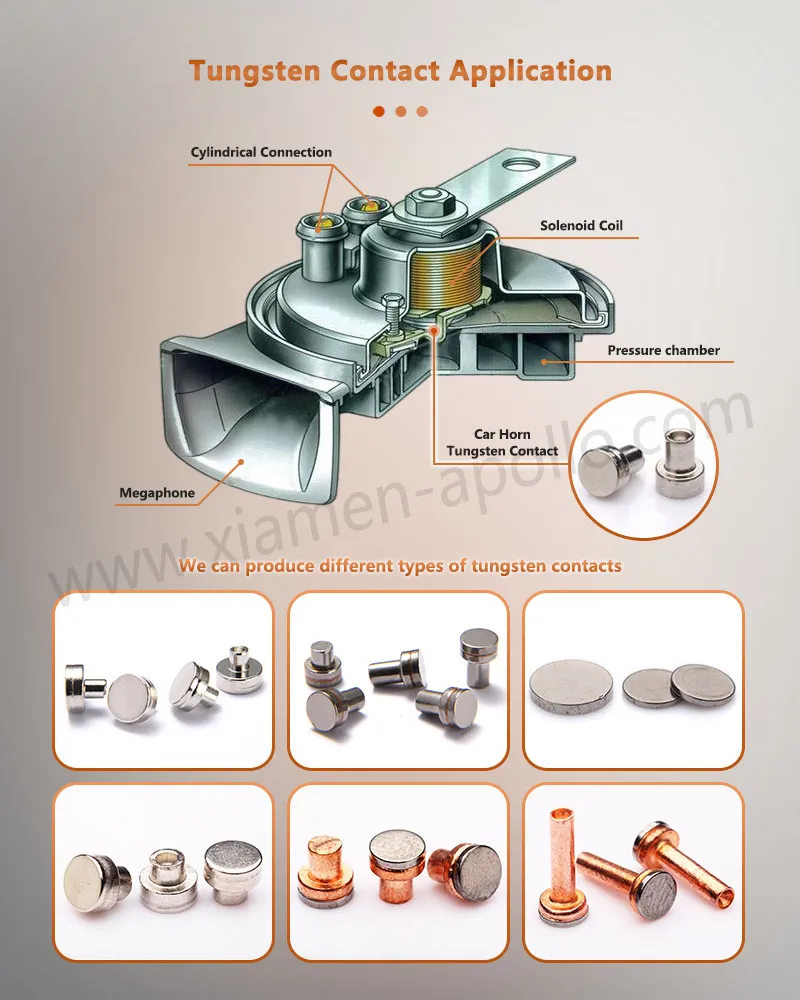
In automotive electrical applications, Solid Tungsten Contact Rivets face the rigorous challenges of high-frequency vibration and complex environmental conditions. For instance, in electric horn systems, Electric Horn Tungsten Contacts are capable of withstanding prolonged exposure to air without oxidizing, thereby ensuring the horn's reliability even under adverse weather conditions. Meanwhile, in traditional magnetos or ignition systems, Tungsten Steel Contact Points remain widely utilized due to their simple structure, low cost, and ease of maintenance. When subjected to high-current surges, these contacts effectively prevent sticking and erosion, thereby safeguarding the precision and stability of the engine's ignition system.
For more sophisticated and high-voltage electrical control equipment, engineers have undertaken extensive optimization of contact geometries and structures. For example, Tungsten-Copper Button Contacts are frequently employed in miniature relays and signal switches; their compact design is well-suited for high-density printed circuit board layouts. Concurrently, in large-scale industrial circuit breakers and high-voltage switchgear, Tungsten-Copper Vacuum Contacts play an indispensable role. Operating within a vacuum environment, they effectively suppress arc formation-significantly enhancing arc-quenching capabilities and electrical service life-making them critical, indispensable components in modern smart grids and high-capacity power distribution equipment.
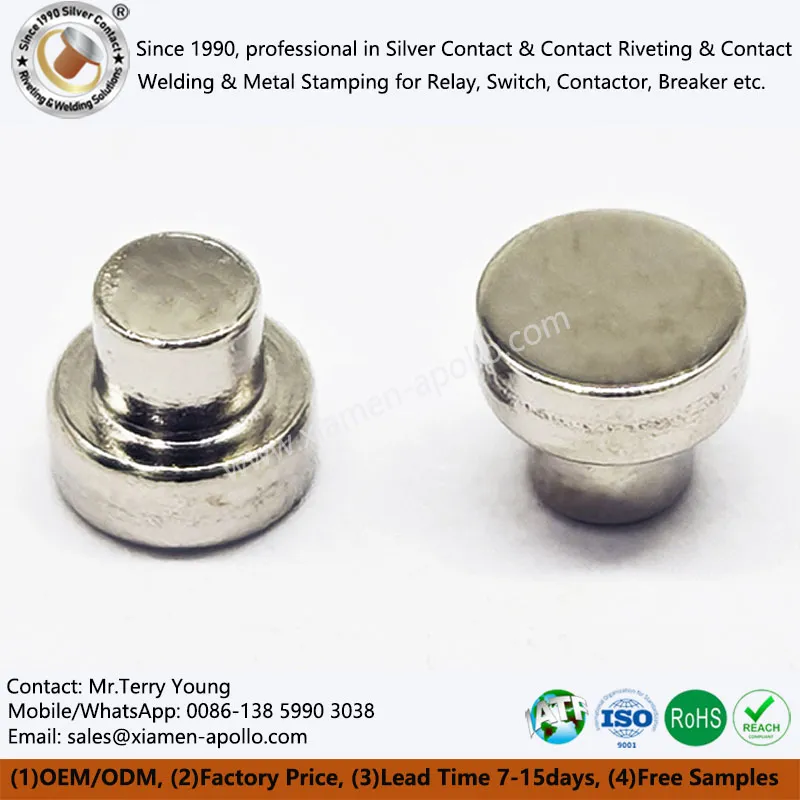
In the realms of automated assembly and mass production, both the standardization and customization of electrical contacts are of paramount importance. To accommodate diverse installation requirements, the market now offers Half-Hollow Tungsten Contact Rivets; this structural design simultaneously reduces overall weight while ensuring mechanical stability during the riveting process. Furthermore, Customized Flat Tungsten Contact Rivets-specifically engineered for particular base substrates-provide a larger contact surface area, thereby effectively minimizing contact resistance. Whether dealing with standard Tungsten Rivets or specialized Tungsten Contact Point Rivets, their concentricity and roundness must undergo rigorous inspection to ensure that no misalignment or abnormal wear occurs during high-speed mechanical operation.
Overall, Copper Tungsten Contacts and their derivative products have found widespread application across diverse sectors-including industry, agriculture, technology, and national defense-thanks to their exceptional wear resistance, impact resistance, and relatively low cost. As electrical equipment evolves toward miniaturization and higher capacity, increasingly precise requirements are being placed on the electrical conductivity and ablation resistance of Tungsten Copper Electrical Contacts. Through the continuous optimization of powder metallurgy and sintering processes, the performance of Copper Tungsten Electrical Contacts is undergoing constant improvement. Looking ahead, with the growing adoption of novel composite materials-such as Tungsten Copper Rivet Electrical Contacts-the safety and reliability of electrical systems will be further enhanced.
Contact Us
If you have specific customization requirements for Solid Tungsten Contact Rivets, or if you are seeking professional electrical connection solutions, please do not hesitate to contact us; we are ready to provide you with optimal technical support and a competitive quotation.
