

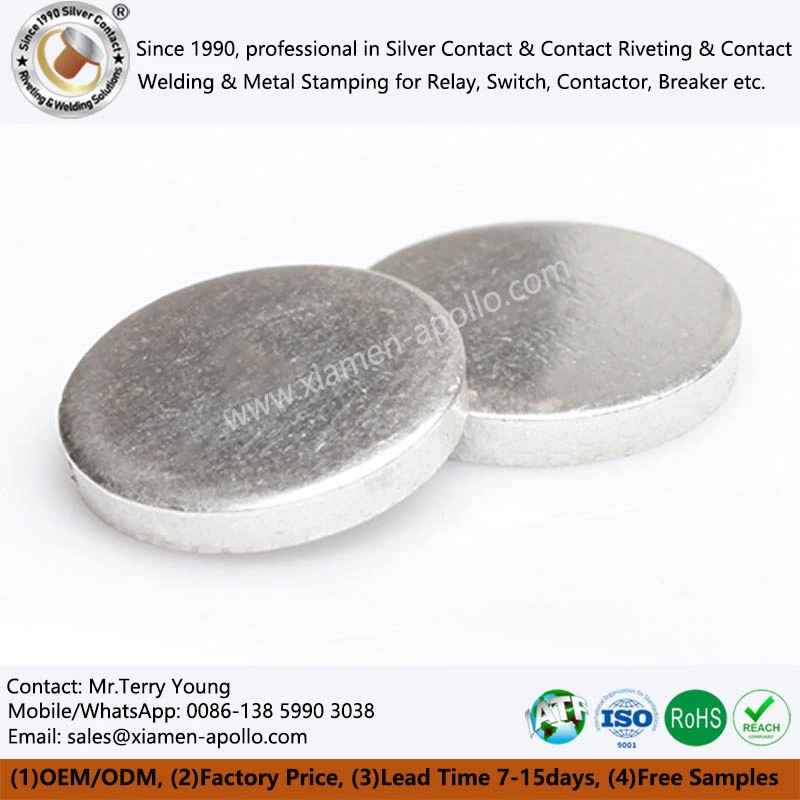
One of the most significant technical advantages of brazed silver contact points is their relatively low melting point, typically ranging from 600°C to 850°C. This characteristic allows for effective protection of the base material during high-temperature operations, preventing damage to precision components caused by overheating-a factor of particular importance in the manufacture of brazed silver electrical contacts. Furthermore, the material exhibits excellent fluidity and gap-filling capabilities when heated, enabling it to rapidly and uniformly penetrate and fill minute metal interstices. This property not only substantially enhances the mechanical strength of the joint but also ensures a smooth, aesthetically pleasing finish, perfectly meeting the rigorous demands for miniaturization and high reliability in modern electronic products.
Regarding electrical connectivity and signal transmission, brazed silver contact points inherit the superior electrical and thermal conductivity of pure silver, making them an ideal choice for silver welding contacts. Their use in the welding of microelectronic components minimizes contact resistance, ensuring efficient and stable electrical connections. Additionally, silver-based alloy joints offer exceptional tensile strength and corrosion resistance; they maintain connection integrity even under harsh industrial conditions or prolonged high-load operation, thereby significantly extending the service life of precision electronic components.
As electronic packaging technology advances, the manufacturing processes for silver brazing electrical contacts continue to be optimized. In the production of precision instruments for sectors with stringent safety requirements-such as medical, aerospace, and marine industries-silver welding electrical contacts are employed for the seamless joining of critical components. Given that equipment in these fields is often subjected to complex vibrations and temperature fluctuations, the contacts' outstanding fatigue resistance and high strength ensure absolute stability at the connection points. By carefully selecting the alloy composition, engineers can tailor welding solutions to specific stress conditions and operating environments, guaranteeing the long-term, reliable performance of precision instruments.
In the realms of automation and high-precision assembly, the production of brazed silver electrical connectors relies heavily on pre-formed welding contacts. For instance, in applications such as refrigeration equipment, automotive electronics, and semiconductor packaging, preformed ring-shaped welding contacts enable precise, automated feeding; when paired with high-frequency induction welding or vacuum furnace brazing, they facilitate high-quality welding in a very short time. These standardized welding materials not only boost production efficiency but also ensure consistency across every silver contact brazing joint-minimizing quality fluctuations caused by manual handling-making them an indispensable component of modern intelligent manufacturing systems.
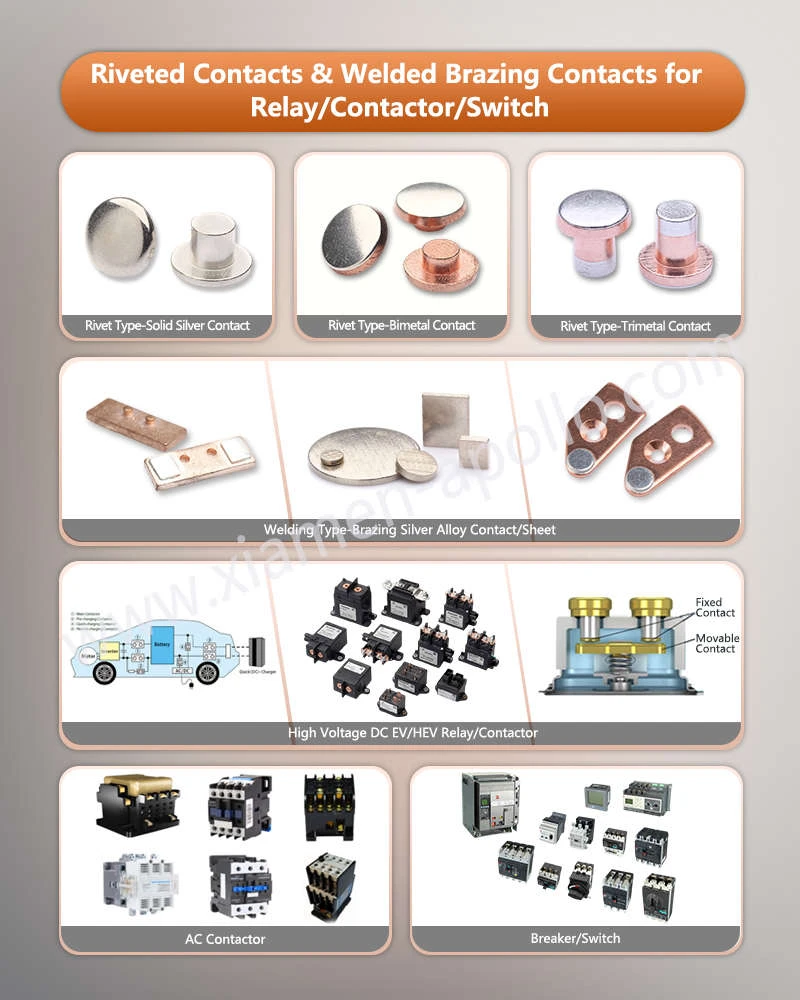
For silver-alloy brazed electrical contacts operating under specialized conditions, material selection and process control are critical. For instance, high-power electronic devices or high-current transmission applications require brazing preforms with high silver content (e.g., Ag ≥ 50%) to ensure minimal electrical resistivity, whereas structural components may utilize alloys containing elements like zinc to optimize flow characteristics and reduce costs. Furthermore, to prevent short circuits caused by silver migration in humid environments, a moisture-resistant resin coating is often applied to the brazed joint surface. These sophisticated material engineering practices underscore the technical depth involved in silver-brazed electrical contacts within modern electrical engineering.
While striving for peak performance, the manufacturing of silver-welded connector contacts must also address environmental and regulatory requirements. Traditional silver solders often contained cadmium-which releases highly toxic fumes at high temperatures-prompting a widespread industry shift toward cadmium-free silver contacts. These eco-friendly solders not only comply with international directives such as RoHS and REACH but also incorporate trace amounts of elements like nickel to refine grain structure and enhance joint toughness. This transition toward green manufacturing drives continuous technological advancement in silver-brazed electrical contacts, ensuring a harmonious balance between industrial growth and environmental protection.
If you have any technical requirements regarding the selection of Spot welding Silver Contact, the optimization of precision electronic welding processes, or the development of custom alloy materials, please feel free to contact us via our official website or customer service hotline. Our team of technical experts is dedicated to providing comprehensive support and solutions, and we look forward to the opportunity to collaborate with you.
contact us
