

In the fields of electronics and electrical engineering, silver contacts serve as critical conductive components, and their performance directly affects the safety and reliability of equipment. Here is a systematic method for identification, designed to help industry professionals accurately assess the quality of silver contacts.
I. Detailed Considerations for Visual Inspection
Color and Luster: High-quality Solid Silver Contacts should exhibit a pure silver-white surface with a luster level maintained within the range of 500-700 GU (Gloss Units). If the surface appears dark black or yellowish spots, it may indicate insufficient silver content or the presence of metal impurities such as copper or nickel, which can affect electrical conductivity.
Shape and Size: The shape of electrical contacts must be precise, with smooth, burr-free edges and dimensional tolerances strictly controlled within ±0.1mm. Thickness, a key parameter, typically ranges from 0.1mm to 0.5mm, with specific values to be determined according to product standards.
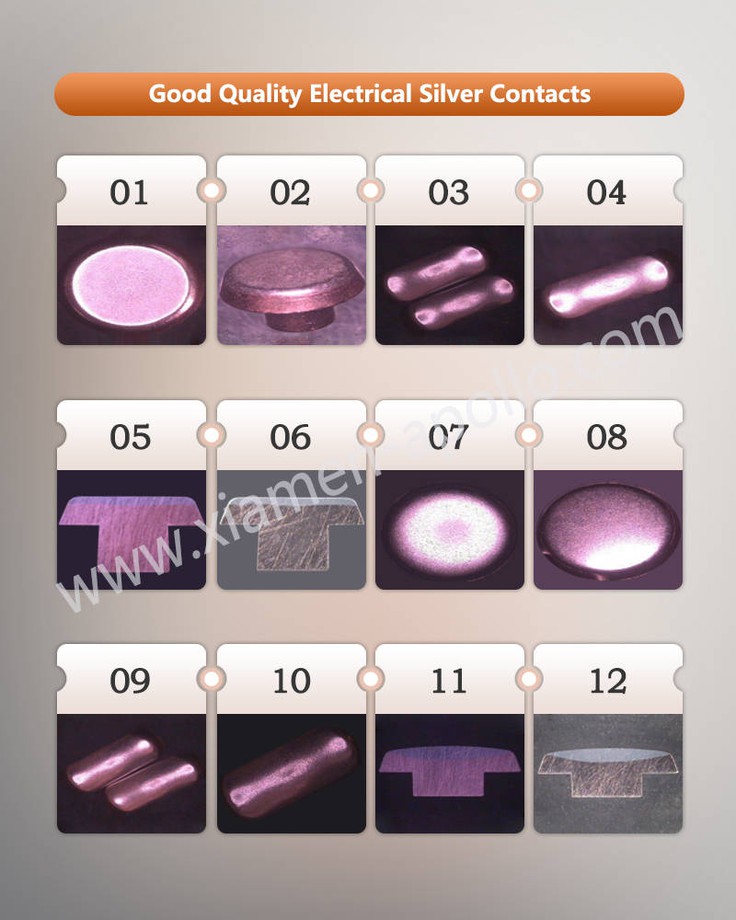
II. In-depth Analysis of Material Composition
Chemical Composition: The Silver Tin Oxide Contact in high-quality contacts should not be less than 99.9%, and the total impurities should not exceed 0.1%. High-precision instruments such as Atomic Absorption Spectrometers (AAS) or Inductively Coupled Plasma Mass Spectrometers (ICP-MS) can be used for compositional analysis to ensure data accuracy.
Hardness Testing: The Vickers hardness (HV) of silver contacts should be maintained within the range of 30-60. Testing is conducted using a standard Vickers hardness tester with a loading force of 1kgf and a dwell time of 10 seconds. Excessively high or low hardness values can affect the wear resistance and service life of the contacts.
III. Comprehensive Evaluation of Performance Testing
Conductivity: The resistivity of Contacts Silver Plated should be below 1.59×10^-8 Ω·m (at 20°C), and under standard testing pressure (e.g., 0.5N/mm²), the contact resistance should not exceed 30mΩ. Good conductivity is key to ensuring smooth current transmission, reducing energy loss, and minimizing temperature rise.
Wear Resistance: The dynamic friction coefficient should be between 0.1-0.3, and under specified wear testing conditions (e.g., 50,000 cycles), the wear amount should not exceed 5μm. Contacts with strong wear resistance can extend the service life of equipment and reduce maintenance costs.
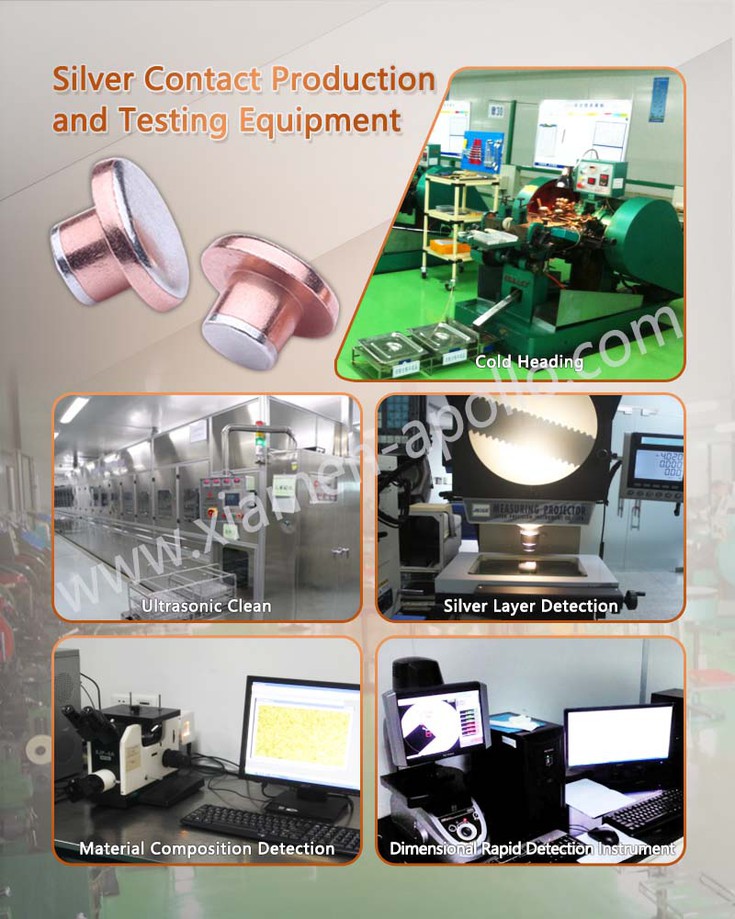
IV. Strict Verification Through Reliability Testing
Temperature Cycle Test: By simulating extreme temperature environments (-55°C to +125°C), at least 1000 cycles of testing should be conducted, with a temperature change rate not exceeding 5°C/minute. This test aims to evaluate the stability and reliability of the contacts under temperature variations.
Salt Spray Test: The Bimetal Contact Rivets are placed in a 5% NaCl solution at 35°C for 48 hours. After the test, there should be no obvious corrosion spots or shedding on the contact surface to verify its corrosion resistance.
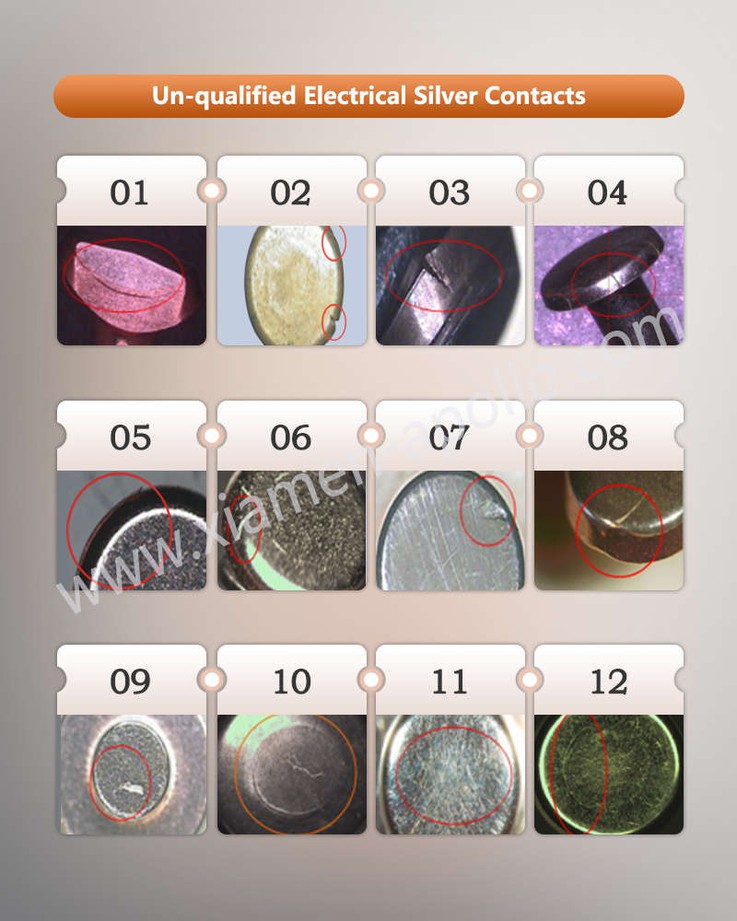
Through the detailed technical parameters and testing methods outlined above, industry professionals can comprehensively and accurately identify the quality of Electrical Contact Silver Point. In practical operations, national and industry standards should be strictly followed to ensure the accuracy and reliability of test results. Additionally, for silver contacts used in different applications, factors such as mechanical and physical performance parameters and surface smoothness should be considered to comprehensively evaluate their quality. Excellent conductivity, wear resistance, and reliability are essential features of high-quality silver contacts, and they collectively constitute an important guarantee for the efficient and stable operation of equipment. In the quality inspection process, conducting visual inspections and resistance measurements on prepared silver contacts is also a crucial step to ensure that the performance of the contacts meets standards.