

In the field of electrical connections, screw clamp terminals are indispensable core components. As an important branch of connectors, their core function is to provide convenient and detachable solutions for wire connections, and they are widely used in various electrical scenarios such as power equipment, industrial control, home appliances, and automotive electronics. With the continuous improvement of industrial automation, the requirements for precision and safety in industrial control are becoming increasingly stringent, leading to a continuous expansion in the demand for screw terminal blocks, an extension of their application scope, and a diversification of their types. A thorough understanding of their definition, structure, function, and key quality factors is crucial for standardized selection, safe use, and ensuring the stable operation of electrical systems.

Many industry professionals have a vague understanding of "what is a Screw Clamp for Fuse Terminal?" In fact, its definition is simple and clear: it's an accessory product used to achieve electrical connections, belonging to the connector category in industrial classification. Its core structure is not complex; essentially, it's a metal plate encapsulated in an insulating plastic shell. Both ends of the metal plate have holes for inserting wires, and screws are used to tighten or loosen the wires, enabling quick connection and disconnection.
This structural design gives the Screw Clamp for Fuse Holder Terminal its core advantages of convenience and efficiency, perfectly solving the pain point of "needing flexible connection and disconnection" in wire connections. In practical applications, if two wires need to be temporarily connected and may need to be disconnected later, using a Screw Terminal eliminates the need for soldering or winding. Simply insert the wire into the Screw Terminal Wire Connector hole, tighten the screw, and disconnect; simply loosen the screw and remove the wire. The operation is simple and quick, significantly improving the efficiency of electrical connections, and also facilitating later maintenance, repair, and circuit adjustments. Whether for simple household electrical wiring connections or complex industrial control circuit layouts, it plays a crucial role in facilitating convenient connections.
As the "bridge" of electrical connections, the quality of Screw Type Terminal Blocks directly determines the operational stability and safety of the electrical system. The core of its quality depends on two key components: the plastic insulation material and the conductive components. These two determine the insulation and conductivity performance of the terminals, respectively, and neither is dispensable. A quality problem in any component can cause the AMP Terminal Screws to fail, leading to a malfunction in the entire electrical system. Such cautionary tales are not uncommon in industrial production and daily life, highlighting the importance of M4 Screw Terminal quality control.
The plastic insulation material is the "protective barrier" of the Electrical Screw Terminal Block, and its performance directly affects the safety of the electrical connection. High-quality insulating plastic must possess good insulation, flame retardancy, and mechanical strength. It must effectively isolate the metal conductive components from external contact, preventing short circuits, leakage, and other safety hazards, while also withstanding a certain amount of external impact to prevent the outer shell from cracking and exposing the internal conductive components. If the insulating plastic material is of poor quality or lacks sufficient flame retardancy, it is highly susceptible to overheating and combustion in high-temperature, high-load electrical environments, potentially leading to electrical fires. Similarly, insufficient mechanical strength of the insulating plastic can cause damage during installation and maintenance, also posing safety risks.
Conductive components are the core of the Terminal Screw Block, enabling current conduction. Their material, processing precision, and electroplating quality directly affect conductivity and lifespan. Conductive components typically use high-conductivity metals such as copper and copper alloys. Electroplating enhances corrosion resistance and conductivity stability, reducing contact resistance. Poor-quality materials or insufficient cross-sectional dimensions in conductive components increase resistance, generating excessive heat during current flow. Over time, this heat can accumulate and cause the Ground Terminal Block to overheat and burn out. Substandard electroplating processes can lead to plating peeling and oxidation, reducing conductivity and shortening the Fuse Terminal Block's lifespan.
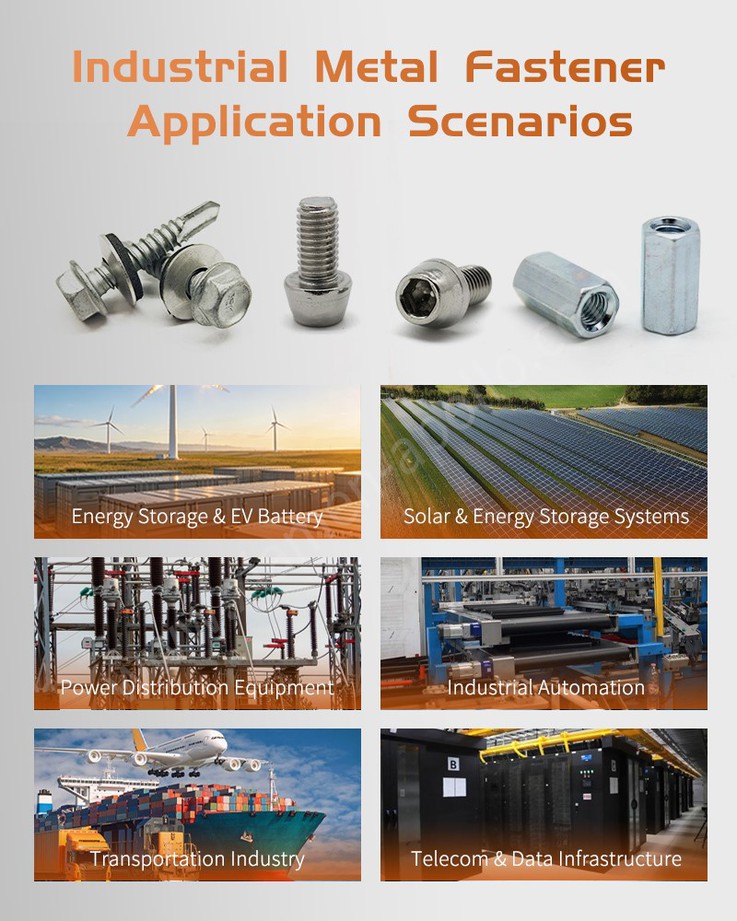
With the rapid advancement of the electronics industry, the application scenarios of Block Terminal Electrical are constantly expanding, and the variety of types is becoming increasingly rich to adapt to the needs of different scenarios. For example, Fuse Terminal Blocks are mainly used in circuit protection scenarios, and can be used with fuses to achieve overload protection of circuits; Ground Terminal Blocks are used for grounding connections in electrical systems to ensure electrical safety; Double cage terminals with M5 screws, with their unique structural design, improve the stability of wire connections and are suitable for high-precision industrial control scenarios. Different types of terminals have different structural and performance focuses, and the appropriate selection should be made according to the specific application scenario, wire specifications, and electrical requirements.
It is worth noting that, as an accessory product for precision operation, the quality of Double cage terminals with M5 screws is always a focus of attention for the industry and customers. In high-end fields such as industrial automation, power transmission and distribution, and automotive electronics, the requirements for the precision, stability, and environmental resistance of iron column joint fasteners are more stringent. They not only need to meet basic conductivity and insulation requirements, but also need to adapt to complex working conditions such as high temperature, low temperature, humidity, and vibration. This has driven the continuous upgrading of terminal screw manufacturing processes, prompting manufacturers to continuously optimize material selection and improve processing precision in order to meet the needs of industry development.
contact us
If you are choosing a suitable Screw Type Terminal solution for your project, or wish to optimize your existing connection structure, please feel free to contact us. We will provide you with professional selection advice and technical support based on your application scenario.
