

Stainless steel fasteners are widely used in outdoor facilities, marine engineering, food machinery, building curtain walls, and electronic equipment due to their excellent corrosion resistance. However, in practical use, steel screws often encounter a troublesome problem-"seizing" or "locking." This phenomenon manifests as the screw suddenly jamming during tightening, unable to be screwed in or out, ultimately leading to component failure or installation failure. The locking of stainless steel set screws is largely due to the material's inherent physical properties and the tightening method. Correctly understanding the locking mechanism and taking targeted measures is crucial to ensuring connection quality.
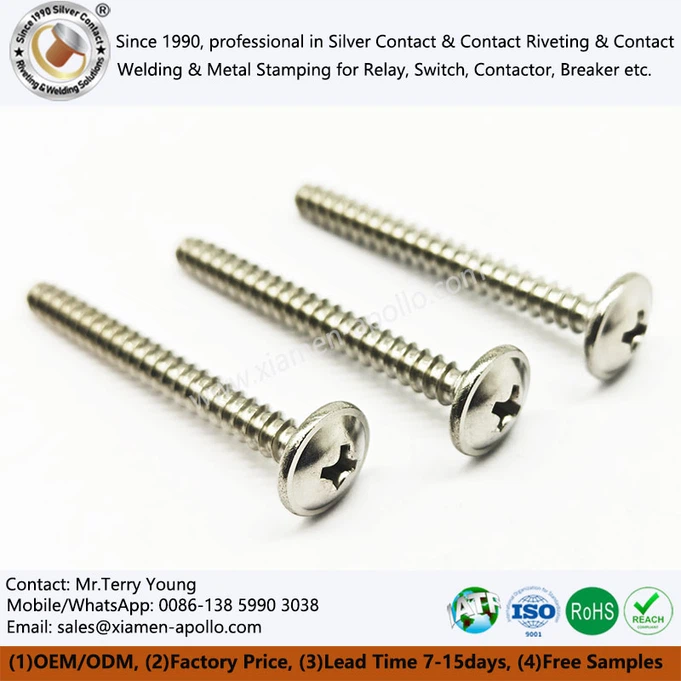
Root Causes of Lock-up: Material Characteristics and Operational Mistakes
Stainless steel possesses excellent oxidation and corrosion resistance due to a dense chromium oxide protective film on its surface. However, it is also relatively soft, has low strength, and poor thermal conductivity. During tightening, extremely high contact pressure and frictional heat are generated between the thread tips. This heat cannot be dissipated quickly, causing a rapid rise in local temperature, damaging the chromium oxide film, and leading to direct contact between the bare metal. Under the combined effects of pressure and high temperature, the threads may stick, shear, or even cold weld, ultimately causing lock-up. Stainless steel set screws typically require high tightening torques; if torque or speed is not properly controlled during installation, the risk of lock-up is particularly pronounced.
Besides material factors, improper operation can also induce or exacerbate stainless steel tapcon lock-up. Specifically, these issues include: the direction of force application not coinciding with the screw axis, causing thread misalignment; the presence of foreign matter such as welding slag and metal shavings on the thread surface; tightening force exceeding the thread's load-bearing limit; using an electric or pneumatic wrench at excessive speed, leading to a rapid increase in temperature; and the failure to use washers, causing the tightening force to act directly on the threaded pair. These operational problems are particularly common in large-scale installations or on-site construction.
Starting with Product Selection: Reducing the Probability of Lock-up
The primary step in preventing lock-up is proper product selection. First, the mechanical properties of the stainless steel roofing screws, such as tensile strength and safe load, should be confirmed based on the application scenario to ensure they meet design requirements. Second, while meeting corrosion resistance requirements, bolts and nuts of different material grades can be used together, such as 304 bolts with 316 nuts. This combination of dissimilar materials effectively reduces the tendency for adhesion between similar metals. It is particularly important to avoid using nuts and bolts made from the same heat batch of material, as metals with the same composition and microstructure are more prone to cold welding under frictional conditions.
In specific application scenarios, selecting the appropriate specifications and types is equally important. For example, stainless steel cladding screws used for fixing metal curtain walls or roof panels typically have a drill bit and sealing washer; their thread design already considers heat dissipation and chip removal requirements, resulting in a relatively low probability of lock-up. However, for 100mm stainless steel screws, the risk of lock-up increases significantly due to the long screw-in stroke and the large amount of accumulated heat from friction. In this case, it is recommended to use a special nut with a lubricating coating or an anti-lock design. Furthermore, for situations where locking is frequent, using an anti-lock nut is a more thorough solution. The length of the screw should also be properly controlled; generally, it should be such that 1-2 thread lengths protrude from the nut after tightening. Screws that are too long or too short will not ensure stable tightening.
Standardized Operation: Practical Tips to Reduce Locking-Up
Assuming proper product selection, standardized operation is the last line of defense against locking-up. First, the direction of force must be aligned with the screw axis, not tilted. This is especially important when using self-tapping anchors for concrete, such as stainless steel tapcon, as the anchors encounter significant resistance when screwed into masonry or concrete substrates, and uneven force can easily cause them to jam. Second, keep the threads clean. SS screws should be stored in clean containers to avoid contact with dust and metal shavings. Third, apply force evenly and within a safe torque range. It is recommended to use a torque wrench or a socket wrench to avoid blindly applying force by feel.
Controlling the operating speed is equally crucial. Avoid using electric or pneumatic wrenches for high-speed screwing. The instantaneous high temperature generated by high-speed screwing of stainless steel drywall screws can damage the thread surface. When using in high-temperature conditions, wait for the parts to cool down before operating, and screw in slowly and evenly. Furthermore, using washers or retainers can effectively prevent over-tightening and distribute the locking pressure. In applications involving large areas and numerous screws, such as flanges, it is recommended to tighten them slowly and sequentially in a diagonal order to the appropriate tightness, avoiding concentrated stress on one side.
Lubrication is a simple and effective preventative measure. Applying a small amount of lubricant (such as paraffin wax, molybdenum disulfide, or a specialized anti-seize agent) to the threads before installation can significantly reduce the coefficient of friction and heat generation. For applications such as stainless steel roofing screws exposed outdoors and subjected to long-term wind load vibration, it is recommended to use an anti-locking design with sealing gaskets during installation and apply appropriate lubricant.

In summary, the locking issue of stainless steel cladding screws is not unavoidable. From material matching and specification selection to operating procedures and lubrication protection, there are mature strategies for addressing each aspect. By correctly understanding the material properties of stainless steel, respecting its inherently soft yet tough and poor thermal conductivity, and fully considering these characteristics during selection and installation, the risk of locking can be effectively avoided while maintaining excellent corrosion resistance. For more information on selecting stainless steel trim screws, please feel free to contact us.
contact us
