

In critical engineering sectors-such as steel-structure bridges, railway tracks, and heavy machinery-the performance of a single fastener often determines the safety and service life of the entire system. As an indispensable foundational connecting element within the industrial ecosystem, the selection of metal fasteners directly impacts a structure's load-bearing capacity and vibration resistance. The Flange Nut, representing an evolution of the standard hexagonal nut, leverages its integrated structural design to demonstrate significant compressive advantages in high-load and high-vibration environments, thereby gradually emerging as a preferred solution for engineering fastening applications.
To understand the compressive mechanism of the Flange Nut, one must first examine the structural limitations inherent in traditional Hex Nuts. Standard hexagonal nuts require the use of a separate washer during assembly; this composite structure suffers from two inherent flaws: first, the washer may shift during the assembly process, leading to uneven load distribution; and second, the minute gap existing between the washer and the nut creates a susceptibility to relative sliding when subjected to load. In contrast, the Flange Nut utilizes a cold-forging process to integrally form the flange and the nut body into a single unit, thereby fundamentally eliminating the gaps and the associated risks of sliding inherent in composite structures.
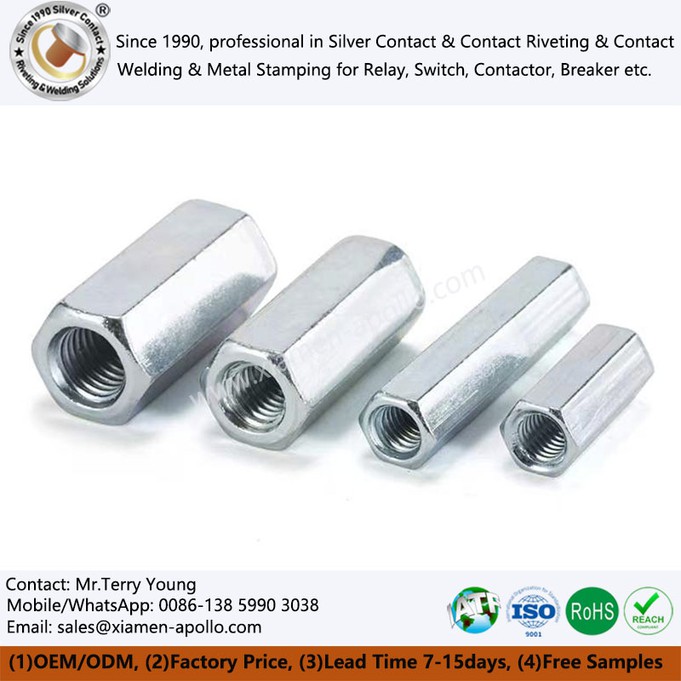
The core advantage of the Hex Flange Nut lies in its integrated design, which fundamentally redefines load-bearing mechanics across three dimensions. The circular structure of the flange distributes the load more evenly, thereby preventing the stress concentration typically observed at the sharp corners of standard nuts. Furthermore, the anti-slip serrations on the base create a mechanical interlock with the mating surface, effectively preventing the nut from loosening under vibration. The monolithic, one-piece construction boasts superior overall rigidity, enabling it to withstand greater pre-tightening forces without undergoing deformation. Test data indicates that, given identical materials and specifications, its maximum load-bearing capacity exceeds that of a standard nut-and-washer combination by approximately 35%.
In high-vibration environments-such as those found in wind power generation and rail transit systems-the anti-loosening performance of Stainless Steel Hex Nuts is of paramount importance. A specific wind power project once suffered a catastrophic failure in the blade-to-hub connection due to the loosening of standard nuts, resulting in extremely high repair costs. Post-incident analysis revealed that standard nuts are prone to thread slippage under high-frequency vibration, leading to a gradual loss of pre-tightening force. Following the transition to Castle Nuts, long-term operational monitoring demonstrated that the bolt pre-tightening decay rate dropped from 28% to a mere 3%, thereby completely resolving the issue of vibration-induced loosening.
The synergistic interplay between materials and manufacturing processes further amplifies these compressive strength advantages. In contrast to nuts manufactured from standard carbon steel, Castle Nuts typically utilize high-strength materials-such as chromium-molybdenum alloy steel-achieving a tensile strength rating of Grade 12.9, which is more than 2.5 times that of standard carbon steel. The cold-forging process aligns the metal's grain structure continuously along the direction of applied force; when combined with strictly controlled thread pitch diameter tolerances (held within ±0.05 mm), this ensures superior load transfer efficiency and overall structural integrity.
From an engineering application perspective, these upgraded versions of Hexagonal Nuts have been thoroughly validated across numerous demanding sectors. In steel-structure bridge construction, the adoption of Nyloc Nuts resulted in a 25% increase in the shear load-bearing capacity of structural joints. In the heavy machinery sector, equipment maintenance cycles were successfully extended from three months to twelve months. Furthermore, in the electronics and appliance industry, the fine-pitch thread variants offer a smooth installation feel and a tight mechanical lock-making them particularly well-suited for assembly scenarios that require frequent angular adjustments.
Compared to standard hex nuts, Nyloc nuts-while carrying a slightly higher unit cost-actually result in lower overall lifecycle costs by eliminating the need for separate washers, mitigating the risk of loosening, and extending maintenance intervals. For applications requiring corrosion resistance, versions treated with Dacromet or hot-dip galvanizing are available; these options enhance weather resistance while maintaining superior mechanical performance, thereby meeting operational demands across a wide range of working conditions.
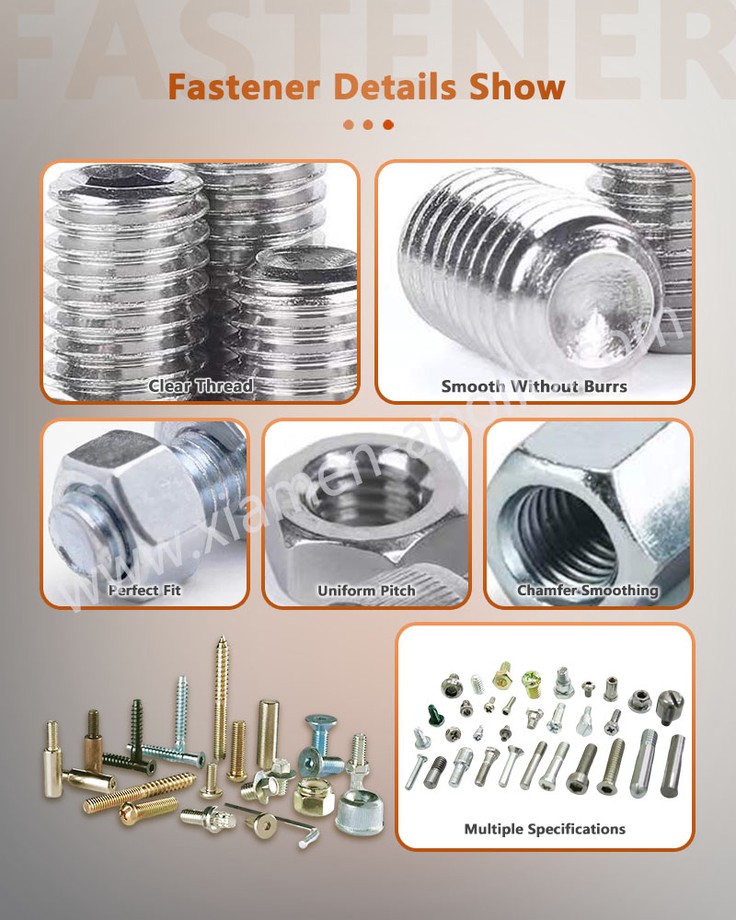
When selecting fasteners, in addition to focusing on fundamental load-bearing parameters, it is essential to comprehensively consider factors such as the vibration environment, corrosive conditions, and ease of maintenance. While specialized nuts-such as Prevailing Torque Nuts-offer unique value in specific scenarios, for the majority of high-load connection applications, Flange Nuts have emerged as the preferred fastening solution in the engineering field, thanks to their structural advantages and superior overall cost-effectiveness.
If you require assistance with fastener selection, inquiries regarding nut compressive performance, or custom manufacturing services, please feel free to contact us at any time; our professional team is ready to provide you with personalized technical support and a quotation.
contact us
