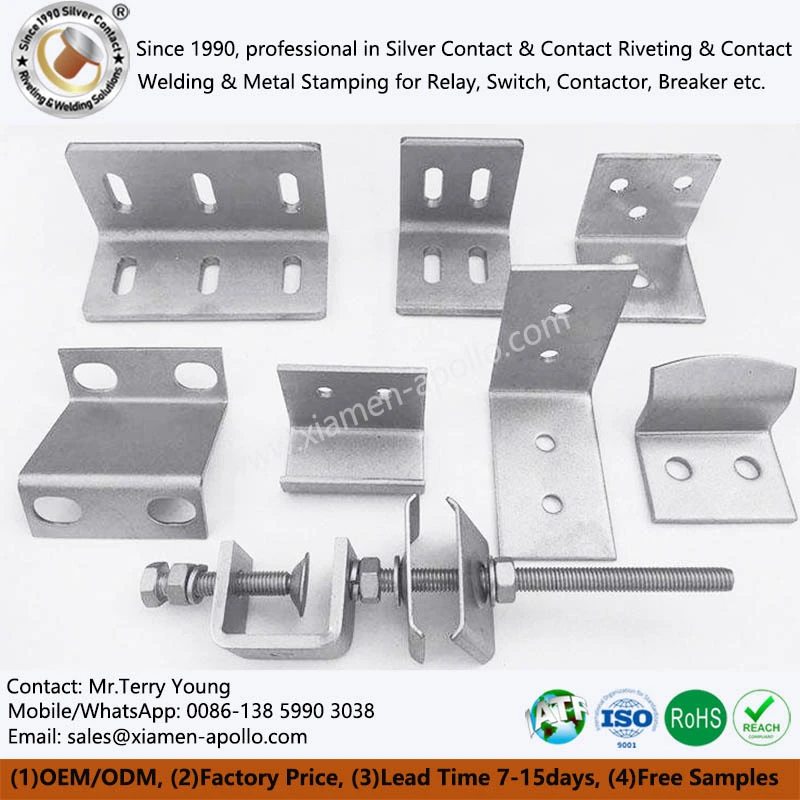
Aluminum Photovoltaic Bracket Accessories form the primary structural hardware for ground-mounted and rooftop photovoltaic arrays. These components carry static wind load, snow load and thermal cycling stress throughout the 25-year design life of solar systems. Material selection directly controls field failure rate, installation labor input, and end-of-loop material recovery efficiency.
Material Property Benchmarks for Aluminum Alloy Waterproof Solar Rail
Aluminum alloy is selected for photovoltaic bracket hardware based on fixed physical metrics. Alloy density sits at 2.7 g/cm³, 65% lower than carbon steel, which reduces dead load on roof substrates and cuts transport tonnage. Standard anodized or powder-coated surfaces resist UV radiation and atmospheric salt spray, eliminating rust-related structural degradation. Thermal conductivity supports passive heat dissipation for backside module frames and clamp assemblies.
The alloy base supports extrusion, stamping and bending processes to produce rails, mid clamps, end clamps, brackets and connecting fittings. Scrap and end-of-service Aluminum Solar Middle Clamp maintain above 95% recycling rate, matching circular material requirements of utility-scale solar projects.

Current Process Improvements for Aluminum Mounting Brackets
Alloy formulation adjustment targets yield strength and intergranular corrosion resistance for coastal and high-temperature deployment zones. Modified 6000-series aluminum grades maintain mechanical stability under continuous temperature fluctuation from -40°C to +85°C.
Low-VOC powder coating replaces traditional surface treatments. Coating thickness is controlled between 60 μm and 100 μm to block chloride penetration and reduce scheduled field maintenance cycles. Automated extrusion and punching lines stabilize dimensional tolerance of Premium Polished Aluminum Sign Mount Brackets; consistent hole positioning reduces on-site fitting adjustment during installation.
Mechanical joining methods are validated via tensile and shear testing. Clamp contact surfaces use controlled contact pressure to avoid module frame deformation while keeping assembly rigidity under rated dynamic wind load.
Forward Technical Roadmap
Production routes for Aluminum Wall Bracket continue to lower embodied energy. Reduced-billet-heating extrusion cycles cut power consumption per kilogram of finished part. Next alloy iterations target higher thermal conductivity variants, to limit module operating temperature and stabilize power output.
Multi-material composite assemblies are under field trial. Aluminum Alloy Solar Panel Mounting Brackets paired with non-conductive gaskets mitigate galvanic corrosion when mated with stainless steel fasteners. Design standards align with updated regional solar loading codes to raise structural safety margin for large distributed solar farms.
Recycling protocols are embedded into component design. Single-alloy construction simplifies sorting at end-of-life, removing mixed-metal separation steps and lowering recycling processing cost.

contact us
Submit your PV mounting drawing, load specification, and surface requirements for production validation. We have fixed extrusion and stamping capacity to schedule bulk runs of Aluminum Photovoltaic Bracket Accessories within confirmed lead times.