

With the continuous advancement of electronic technology, the problem of heat dissipation has gradually become a bottleneck restricting the development of power-type electronic products towards higher power and lightweight. The development of the Metallization of Alumina technology provides a new path for solving this problem. In the packaging application of power-type electronic components, the heat dissipation substrate not only performs functions such as electrical connection and mechanical support, but also serves as an important channel for heat transfer. For power-type electronic devices, their packaging substrate should have high thermal conductivity, insulation, and heat resistance, as well as high strength and a thermal expansion coefficient matching that of the chip.
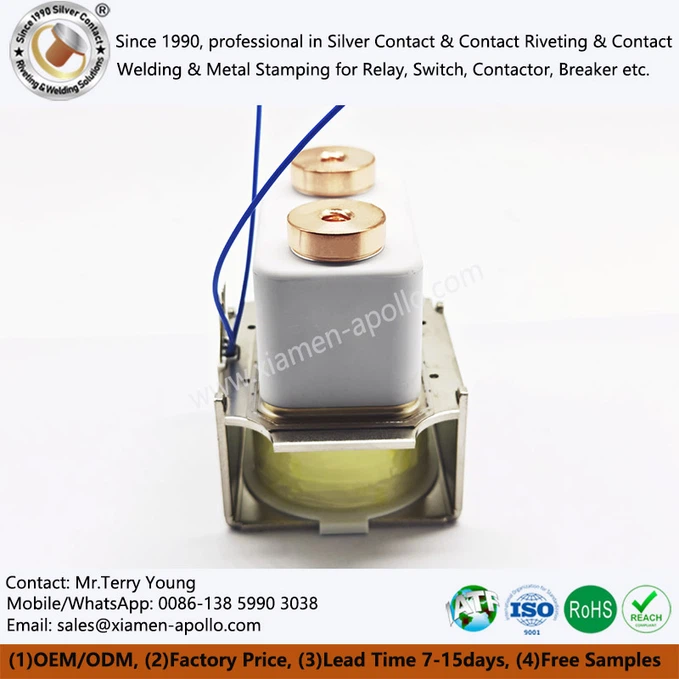
Surface metallization is a crucial step in the fabrication of ceramic substrates. This is because the wetting ability of the metal on the ceramic surface determines the bonding force between the metal and the ceramic. Good bonding force is an important guarantee for the stability of LED packaging performance. And Metallized Ceramics is one of the key technologies for optimizing this bonding force. Therefore, how to implement metallization on the ceramic surface and improve the bonding force between the two has become the focus of research for many scientists.
Combined combustion method
The co-fired multi-layer ceramic substrate, which can meet many requirements of integrated circuits by embedding passive components such as signal lines and micro-lines into the substrate using thick film technology, has received widespread attention in recent years. Its metallization process can be combined with the Ceramic Metallization technology to enhance performance. There are two types of co-firing methods: one is High-Temperature Co-Firing (HTCC), and the other is Low-Temperature Co-Firing (LTCC). Both have basically the same process flow, and the main production process flow includes slurry preparation, sheet formation, drying, through-hole drilling, screen printing filling, screen printing lines, laminated sintering, and final post-processing such as slicing.
The co-fired ceramic substrate has significant advantages in increasing assembly density, shortening interconnection length, reducing signal delay, minimizing volume, and enhancing reliability. Combining with the Ceramic to Metal can further optimize its overall performance.
Thick-film method
The thick film method refers to a manufacturing process where conductive paste is directly applied onto a ceramic substrate using screen printing, and then subjected to high-temperature sintering to ensure that the metal layer is firmly attached to the ceramic substrate. This method can be used as an auxiliary approach for the Metallization Ceramic.
The thickness of the metal layer after TFC sintering is generally 10 to 20 μm, and the minimum line width is 0.1 mm. Due to its mature technology, simple process and low cost, TFC has been applied in some LED packaging with low requirements for graphic precision. Its compatibility with Metalized Ceramic is also being continuously optimized. At the same time, TFC has certain limitations in its application scope due to its disadvantages such as low graphic accuracy (error of ±10%), unstable coating stability affected by the uniformity of the slurry, poor flatness of lines and surfaces (more than 3 μm), and difficulty in controlling adhesion.

The field of power electronics
Power electronics technology is a modern efficient and energy-saving technology. It serves as a bridge between weak electrical control and strong electrical components, and is the fundamental technology that supports the development of multiple high technologies in a wide range of fields. The application of Alumina metallization in this field has effectively promoted the upgrading of power electronic devices. The foundation for the development of power electronics technology lies in the emergence of high-quality devices, and the development of these devices will inevitably place higher and more demanding requirements on the tubes and shells. This Metallized Ceramics technology provides support for the research and application of high-quality devices in this field.
Microwave Radio Frequency and Microwave Communication
In the field of radio frequency/microwave, aluminum nitride ceramic substrates possess advantages that other substrates do not have: low dielectric constant and low dielectric loss, insulating and corrosion-resistant, capable of high-density assembly. The Ceramic Metallization technology can further enhance its packaging adaptability.
The copper-clad substrate can be applied to passive devices such as RF attenuators, power loads, combiners, couplers, etc., as well as communication base stations (5G), optical communication heat sinks, high-power wireless communication, and chip resistors. The application of Ceramic to Metal can enhance the stability of these devices.
The field of new energy vehicles
Relays are one of the most widely used automotive electronic components in automotive products after electronic sensors. They are extensively used in controlling systems such as vehicle start-up, air conditioning, lighting, oil pumps, communication, electric windows, airbags, as well as automotive electronic instruments and fault diagnosis. The Metallization Ceramic technology has significant applications in automotive relays.
The ceramic housing can insulate and seal the sparks generated by the circuit breakage of high voltage and high current, and connect the power supply. When the high-voltage DC relay is overloaded and opens, an arc will be produced. Due to the cooling effect of the ceramic and the surface adsorption effect, the arc can be quickly extinguished, which can prevent short circuits and fires caused by arcs in the vehicle's circuit, ensuring the safety performance and service life of the entire vehicle. During this process, the Metalized Ceramic plays a key role.

about us
We have launched Metallization of Alumina, which precisely meets the demands of multiple fields such as power electronics, microwave communication, and new energy vehicles. It effectively resolves the problems of insufficient bonding force, poor stability, and limited adaptability in traditional metallization processes. It also possesses excellent thermal conductivity, insulation properties, and corrosion resistance. The process parameters can be customized according to different scenarios to fully meet the packaging requirements of various power electronic components.
Our Precision Metallized Alumina Ceramic Components are of high quality and excellent performance, providing strong support for the upgrade of your products. We welcome all customers to inquire about product details and negotiate cooperation at any time. We sincerely invite you to place an order and experience our products together to explore new application scenarios.
contact us
