

Brazing is a commonly used metal connection technology that melts the brazing material by heating and fills it into the joint surface to form a strong metal joint. Compared with other connection methods such as welding and soldering, brazing has unique advantages and characteristics and is widely used in mechanical manufacturing, electronic engineering, aerospace and other fields. This article will discuss the main characteristics of brazing in detail, including its principles, advantages and disadvantages, scope of application and precautions.
1. Brazing principle
The basic principle of brazing is the metal connection performed at a temperature higher than the melting point of the brazing material but lower than the melting point of the parent material. The brazing material has strong fluidity when it is liquid, can fill the gap on the joint surface, and form a strong joint after cooling. During the brazing process, the melting of the parent material does not occur, and the brazing material combines with the parent material through chemical and physical effects to form a strong joint. The basic principle of our Electrical Contact Resistance Brazing is the metal connection performed at a temperature higher than the melting point of the silver brazing material but lower than the melting point of the parent material.

2. Advantages of brazing
Low-temperature operation: The brazing temperature is usually lower than the melting point of the parent material, which means that materials that are difficult to withstand high temperatures can be connected, reducing the impact of heat on the parent material.
High joint strength: The strength of brazed joints is generally high, especially for alloy materials such as copper, silver and nickel, which can provide good mechanical properties.
Strong adaptability: Brazing is suitable for a variety of materials, including metals, ceramics and some plastics, which makes it perform well in a variety of applications.
Good sealing: By properly selecting brazing filler metals and processes, brazing can achieve excellent sealing performance and is suitable for high pressure or vacuum environments. Our Resistance Welding Contacts use high-quality materials and intelligent and automated production equipment, with extremely high production efficiency.
3. Disadvantages of brazing
Joint brittleness: Some brazed joints may be brittle, especially when using certain brazing filler metals, which may affect the durability of the joint.
High surface treatment requirements: Brazed joints require that the joint surface must be clean and free of oxides to ensure good adhesion of the brazing filler metal, which places high demands on surface treatment.
Limited solder selection: Brazing requires the selection of appropriate solder filler metals. Different materials and applications require different solder fillers, which may increase the complexity of material selection.

4. Application scope of brazing
Brazing is widely used in various industrial fields. Here are several major application areas:
Electronic manufacturing: In the packaging and assembly of electronic components, brazing is used to connect components on circuit boards. Our Electrical Contact Resistance Brazing is widely used in the electrical industry, and its stability and corrosion resistance can provide effective support for the product.
Automotive industry: Used to manufacture and repair radiators, air conditioning pipes and other parts of automobiles.
Aerospace: Used to connect high-precision parts in aerospace vehicles, requiring brazing to have excellent high temperature resistance and strength.
Medical devices: In medical devices, brazing is used to manufacture precision parts, requiring high strength and good corrosion resistance.
5. Precautions for brazing
Choose the right brazing material: Choose the right brazing material according to the type of parent material and working conditions to ensure the performance of the joint.
Control temperature: Temperature control during brazing is crucial, and it must be ensured that it is heated to the melting point of the brazing material but not exceeding the melting point of the parent material.
Pretreatment work: The joint surface needs to be cleaned to remove oxides and oil stains to ensure that the brazing material can adhere well.
Conclusion
As an important metal connection technology, brazing has become an indispensable process in many industrial fields due to its low temperature operation, high-strength joints and wide range of applications. Despite some disadvantages, brazing can effectively meet various connection needs through reasonable process control and material selection. Understanding the characteristics and precautions of brazing is of great significance to improving process quality and connection performance. Our product Brazed Rivet Electrical Contacts can effectively meet various difficult process requirements with its good material characteristics.
our products
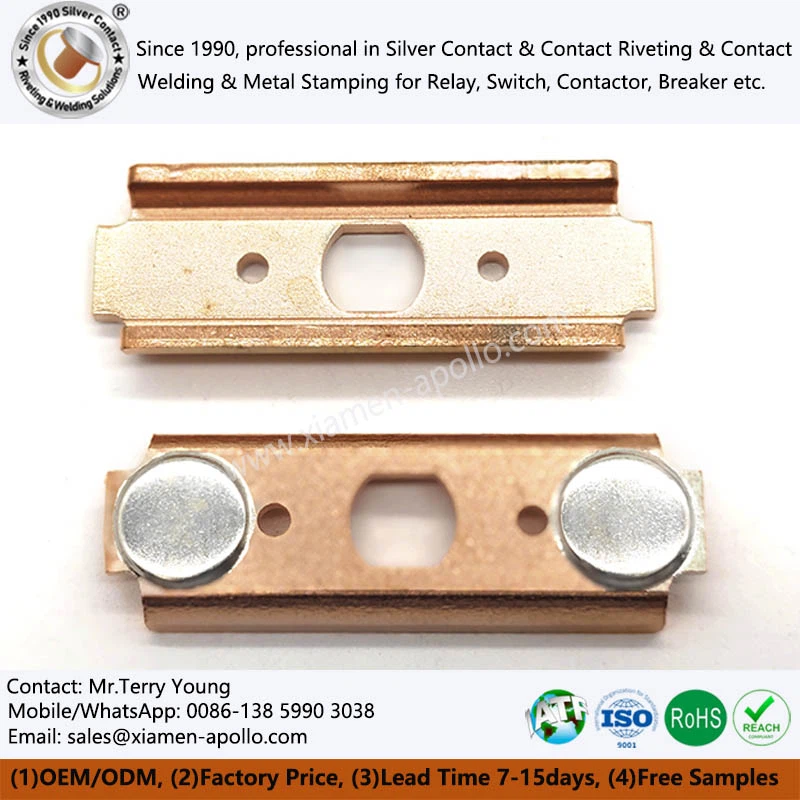
Electrical Contact Resistance Brazing
Resistance Welding Contacts is a high-performance welding solution designed to meet the stringent requirements of modern industry. It uses high-quality silver alloy materials to provide excellent conductivity and high welding strength, ensuring the stability and long-term reliability of the welding point. With advanced welding technology and precise control systems, silver spot welding components can maintain excellent performance in high temperature environments and have excellent corrosion resistance and oxidation resistance. Widely used in electronics and electrical, automotive manufacturing, aerospace and other fields, silver spot welding components not only improve product quality, but also optimize production efficiency.
contact us
