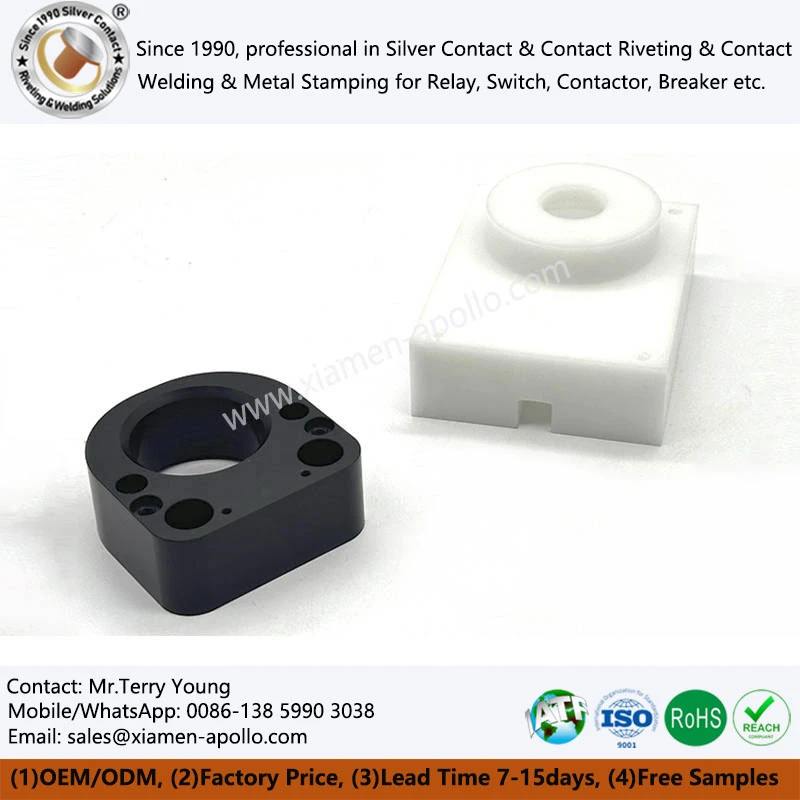
Engineering plastics-valued for their lightweight nature, temperature resistance, and capacity for functional integration-are reshaping material selection logic in precision turning. Leveraging stable cutting processes, Plastic CNC Turning Parts are capable of meeting the rigorous demands of applications such as satellite brackets, medical devices, and structural switch components, helping engineers strike an optimal balance between weight reduction, cost control, and functional integration.
As high-end manufacturing continues to evolve, CNC machining has emerged as a primary solution for component development, thanks to its consistent precision and production flexibility. Among the various substrates used, the scope for engineering plastics is expanding: moving beyond simple accessories like bushings and gaskets, they are increasingly used for core structural components that must withstand mechanical loads, extreme temperatures, or even provide electrical conductivity. These applications span sectors including medical devices, consumer electronics, new energy vehicles (NEVs), and aerospace. This article explores the core value of plastics in CNC machining, compares key material selection criteria and processing challenges, and outlines implementation pathways to guide decision-making regarding materials and manufacturing processes.
Why Choose Plastic Materials?
1. Driven by the Need for Lightweighting
Weight reduction is a clear objective in industrial structural design. Engineering plastics have a density only 1/4 to 1/2 that of metals-for instance, polypropylene (PP) has a density of 0.9 g/cm³, compared to 2.7 g/cm³ for aluminum alloy-making them ideal for weight-sensitive applications such as components for new energy vehicles and drones. The center console panel in the Tesla Model 3, for example, utilizes CNC-machined polycarbonate (PC), which ensures the necessary structural strength while keeping the vehicle's overall weight in check. This lightweight advantage is a primary reason why Custom Plastic Parts are seeing growing adoption in the new energy and aerospace sectors.
2. Capability for Realizing Complex Structures
The cutting characteristics of plastics are well-suited for machining complex contours, thin-walled geometries, and interlocking features. Nylon (PA), with its excellent toughness and fatigue resistance, is ideal for parts requiring precise engagement, such as gears and mating connectors. Producing similar structures using metal would require more manufacturing steps, leading to significantly higher production costs.
3. Cost-Effectiveness
When accounting for both raw material procurement and energy consumption during machining, the overall processing cost for plastics is generally lower than that for metals. The unit cost of ABS raw material is approximately one-third that of aluminum, and it causes less tool wear during machining, making it well-suited for small-batch, customized orders. Data from a smartwatch manufacturer indicates that switching the watch case substrate to PEEK resulted in a 42% reduction in per-unit production costs.
Common Engineering Plastics for CNC Machining
1. Polycarbonate (PC)
Characteristics: Offers light transmission of up to 90%-comparable to glass-and an impact strength 30 times that of acrylic.
Applications: Bullet-resistant protective panels, viewing windows for surgical instruments.
Machining Considerations: Use sharp carbide cutting tools and manage cutting heat to prevent surface clouding or loss of transparency.
2. Polyether Ether Ketone (PEEK)
Characteristics: Withstands long-term temperatures of 260°C, resists chemical corrosion, and is biocompatible.
Applications: Downhole drilling components, implantable joint components. Example: An aerospace organization used PEEK to machine satellite antenna brackets; the material remains stable between -180°C and +300°C, making it an ideal substrate for high-reliability Engineering Plastics CNC Parts.
3. Nylon (PA66)
Characteristics: Possesses inherent self-lubricating properties, which help dampen vibration and reduce noise.
Innovative Application: Used for differential gears in new energy vehicles, where it reduces operating noise by 15 dB.
4. Polyoxymethylene (POM)
Characteristics: Exhibits excellent dimensional stability, making it suitable for precision, fine-tuned structures; often referred to as a "precision engineering plastic."
Machining Considerations: Chips tend to curl and become entangled, necessitating the use of high-pressure coolant.
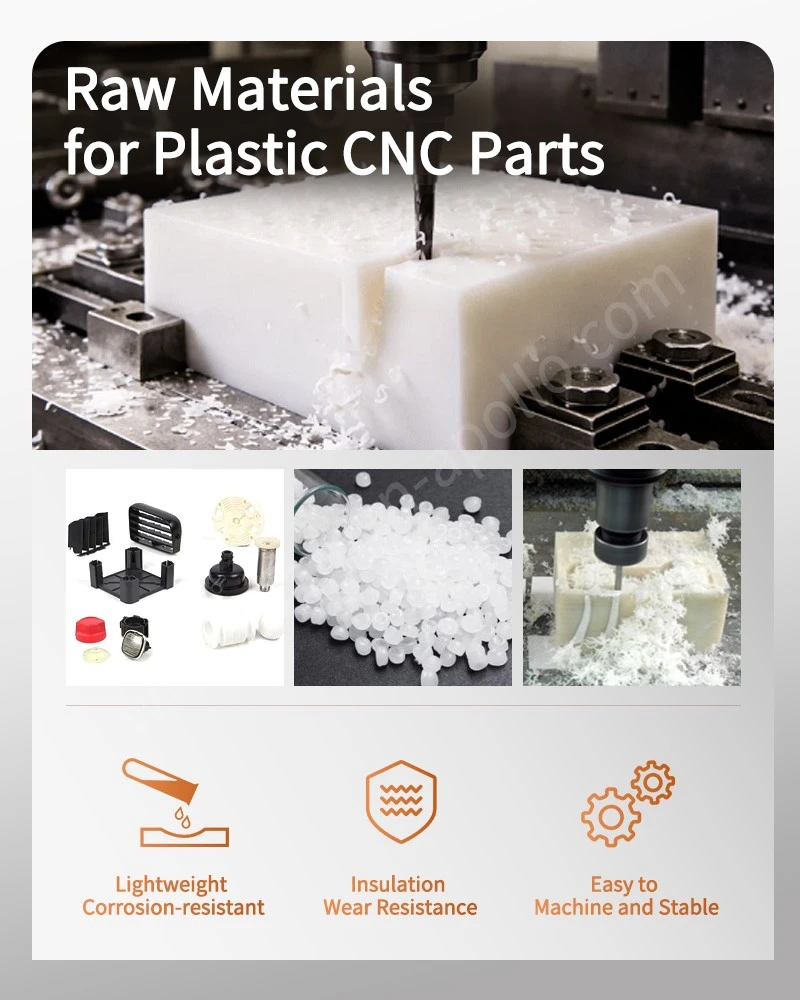
Unique Advantages of CNC Machining for Plastics
1. Rapid Prototyping
During the product development phase, functional prototypes made from ABS can be delivered within three days, whereas equivalent metal prototypes typically require a lead time of over two weeks. A medical device manufacturer reduced its time-to-market for new products by 60% by leveraging iterative prototyping via plastic CNC machining.
2. Diverse Surface Finishes
Direct milling for high-gloss surfaces: Through precision toolpath control, PC (polycarbonate) workpieces can consistently achieve a mirror-like finish (Ra 0.4μm) without the need for additional polishing.
Texture creation without secondary coating: By using specialized coated milling cutters, textures-such as wood grain or leather-like patterns-can be machined directly onto POM (polyoxymethylene) surfaces, eliminating the need for a separate painting or coating process.
3. Material-Function Integration
Case study: A smart home device manufacturer blended graphene-based conductive masterbatch into a PC substrate. Using CNC machining, they produced switch panels with integrated conductive circuitry in a single operation, reducing assembly steps by 80%. This type of integrated structure represents a key advantage of Machined Plastic Components over traditional metal components.
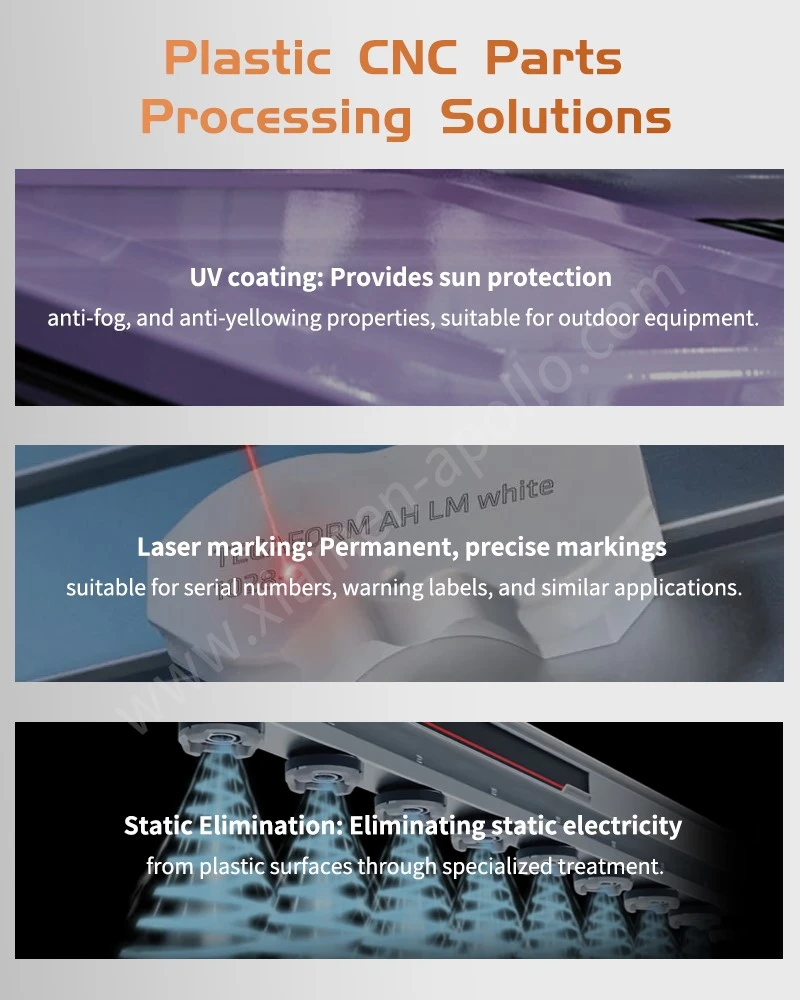
Challenges and Solutions in Plastic CNC Machining
1. Thermal Deformation
Issue: When machining PEI (polyetherimide), a temperature fluctuation of just 0.1°C can cause a linear expansion of 0.05mm, compromising dimensional accuracy.
Solutions:
Implement a compressed-air cooling system and maintain ambient temperature fluctuations within ±0.5°C.
Employ a multi-pass (layered) cutting strategy, limiting the depth of cut to a maximum of 0.2mm per pass.
2. Tool Selection
Diamond-coated tools: Extend tool life by a factor of five when machining glass fiber-reinforced plastics.
Optimized flute geometry: For PEEK, which produces sticky chips, use end mills with a 45° helix angle to ensure efficient chip evacuation.
3. Dimensional Stability Control
An optical component manufacturer ensures precision through a standardized process:
Pre-drying of raw materials (80°C for 4 hours) → Machining in a temperature-controlled environment (23°C ± 1°C) → 48-hour stabilization (aging) period → Final precision finishing.
Future Trends: Innovations in Plastic CNC Machining
1. The Rise of Eco-friendly Materials
Bio-based plastics: Machining processes for polylactic acid (PLA) continue to be optimized, with some manufacturers already achieving mass production of components such as medical forceps.
Recycled and modified materials: A German processing facility has successfully repurposed granulated waste PET bottles for CNC-machining construction connectors, achieving material strength equivalent to 92% of virgin plastic.
2. Hybrid Manufacturing Technologies
Laser + CNC integration: Laser cutting is used for rough-shaping outer contours, followed by CNC machining for precise detailing-a combination that boosts overall processing efficiency by 70%.
3D-printed preforms + CNC finishing: An ideal approach for components like impellers that feature complex internal hollow channels.
3. Intelligent Machining Systems
Adaptive feed control: Vibration sensors monitor cutting conditions in real-time, allowing for dynamic adjustments to feed parameters; in practical applications, this has improved the surface roughness of PPSU components by 40%.
Digital twin-based cutting simulation: By replicating the machining behavior of various plastics in a virtual environment, optimal cutting parameters can be determined in advance.
contact us
Engineering plastics are consistently expanding the horizons of precision manufacturing. By moving beyond the default preference for metals-and instead designing parts based on specific material properties and tailored machining processes-Plastic CNC Turning Parts offer a viable solution for lightweight design, functional integration, and sustainable manufacturing. As material modification techniques and machining processes continue to mature, plastic turned components will increasingly be adopted in a wider range of high-end equipment applications.