

In the realm of modern precision manufacturing, stainless steel stamping has emerged as an indispensable core processing technique across industries such as automotive, electronics, medical devices, and home appliances, owing to its high strength, corrosion resistance, and exceptional formability. The stamping and forming characteristics of stainless steel materials primarily encompass four major categories: bulging, flanging, hole expanding, and bending. To gain a comprehensive mastery of these performance metrics, one must first acquire a thorough understanding of the four fundamental stamping and forming processes that underpin them: deep drawing, bulging, flanging (including hole expanding), and bending.
The deep drawing process is a classic method utilizing specialized dies to transform flat sheet blanks-previously cut or sheared-into open, hollow components. The most distinctive feature of this process is that, driven by the punch, the sheet material is able to flow inward into the die cavity; consequently, the forming process relies heavily on the material's inherent flow characteristics and elongation capacity. When stamping 304 stainless steel, the material's exceptionally high elongation and face-centered cubic (FCC) crystal structure endow it with outstanding plastic deformation capabilities during the deep drawing process, making it ideally suited for manufacturing deep-drawn containers or housing components with complex geometries.
The bulging process, conversely, is a stamping method that employs dies to force a reduction in the blank's thickness while simultaneously increasing its surface area, thereby achieving a specific geometric shape. Unlike deep drawing, the blank in the bulging process is firmly "clamped" in place by a blank holder ring; the material is prevented from flowing into the die cavity and relies entirely on localized elongation within the material itself to achieve its formed shape. This process imposes extremely stringent requirements on the material's work-hardening exponent and uniform elongation, serving as a critical test of the limiting formability of stainless steel stamping materials. It is frequently employed in the manufacture of parts featuring embossed patterns or complex curved surfaces.
The flanging process refers to a stamping method that utilizes dies to fold the edges of holes or the outer perimeter of a blank upward into vertical rims. If the deformation is halted during the intermediate stage of flanging a circular hole-specifically, before the material beneath the punch has fully migrated to the vertical side walls-a distinct, common geometry is produced; this specific variation is known as hole expanding. In practical production, whether performing elongation-type flanging or compression-type flanging, strict requirements are placed on the quality of the material's edges; this constitutes a crucial dimension for evaluating the overall stamping performance of stainless steel sheet metal.
The bending process is a forming method used to bend stainless steel sheets, rods, tubes, or profiles into specific shapes and angles. Although seemingly simple, the bending of stainless steel presents several challenges, such as severe springback and a susceptibility to surface scratching. This is particularly true for high-hardness materials, where the selection of appropriate die clearance and V-groove dimensions is absolutely critical. Typically, during the bending process in stainless metal stamping, it is recommended that the bend line be oriented perpendicular to the rolling grain direction of the sheet material; this serves to minimize the risk of cracking in the outer layer caused by excessive tensile stress.
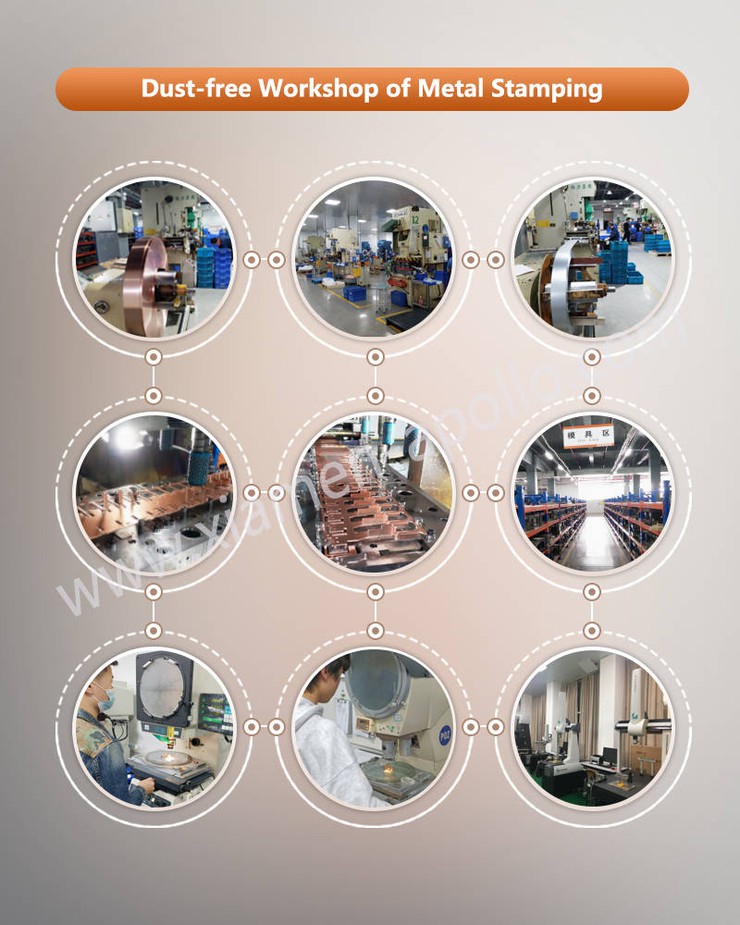
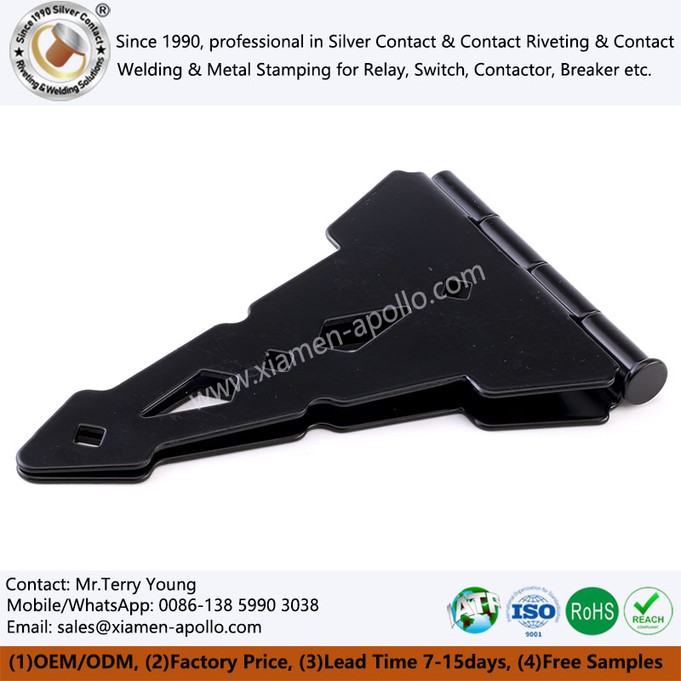
In high-volume industrial manufacturing, the physical properties of materials directly influence the final quality of stamped parts. For many structural components, cold-rolled carbon steel stampings-characterized by their smooth surface finish and uniform strength-are the preferred choice to ensure product interchangeability during subsequent assembly. Concurrently, for chassis or bracket-type parts that require enhanced strength through cold working, specialized carbon steel forming processes allow for precise control over material deformation; this approach not only guarantees structural integrity but also effectively reduces production costs.
The final delivered Stainless Steel Stamped Parts must possess not only precise geometric dimensions but also impeccable surface aesthetics. To mitigate the risk of surface scratches-a common issue during the stamping of stainless steel-modern manufacturing facilities typically utilize coil stock pre-laminated with protective films or apply specialized polishing treatments to the contact surfaces of the stamping dies. This ensures that every OEM stainless steel stamping part delivered perfectly meets the client's exacting standards for both appearance and assembly fit.
If you are looking for professional and reliable services for stainless steel stamped parts, please feel free to contact us at any time; we will provide you with a one-stop solution ranging from mold design to mass production!
Frequently Asked Questions
Q2: Can Stainless Steel Sheet Metal Stamping Sheets be customized based on drawings?
Yes. Professional manufacturers can provide customized stampings based on customer drawings, samples, or technical requirements. Customization options typically include material selection, thickness, dimensional tolerances, surface treatment, bending angles, welding, riveting, and assembly processes to meet specific application needs.
Q3: Which industries commonly use Stainless Steel Sheet Metal Stamping Sheets?
Widely used in automotive systems, electrical equipment, renewable energy products, medical devices, consumer electronics, communication equipment, industrial machinery, and home appliances. Its excellent corrosion resistance and structural strength make it suitable for both indoor and outdoor environments.
Q4: What surface treatment processes are available for Stainless Steel Sheet Metal Stamping Sheets?
Depending on application requirements, stampings can be offered with a variety of surface treatment processes, including polishing, brushing, electropolishing, passivation, sandblasting, vibratory polishing, and protective film treatment. These processes help improve appearance, corrosion resistance, and assembly performance.
Contact Us
