

Basic characteristics of bimetallic silver contacts and silver contacts
Both composite silver contacts and silver contacts are commonly used materials in electronic components. Silver contacts usually refer to contacts made of pure silver, which have good conductivity, wear resistance, and chemical stability. Composite silver contacts are made by combining silver with other materials and are generally used in high-end electronic components.
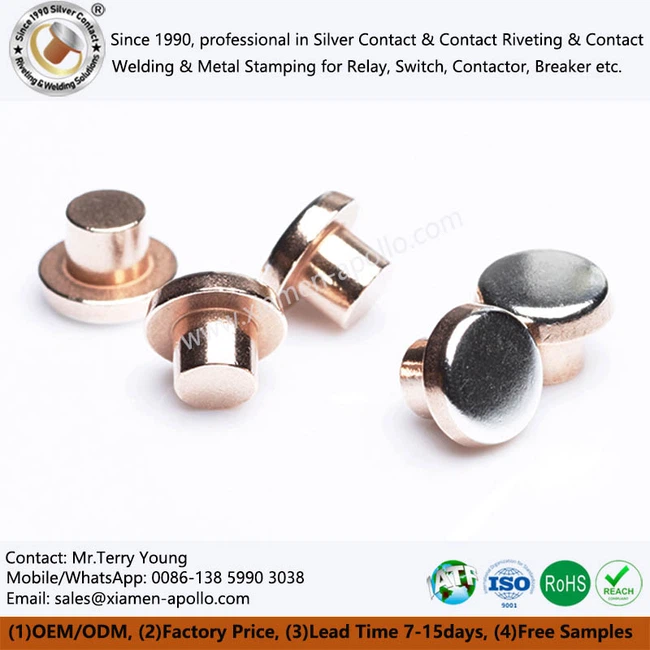
The difference between composite silver contacts and silver contacts
1. Conductivity: Silver contacts have better conductivity, while composite silver contacts have better conductivity than silver contacts, and are usually used for circuit connections with extremely high requirements.
2. Wear resistance: Electrical Contacts have better wear resistance, but due to the weaker hardness of silver, the service life is shorter, while composite silver contacts have better wear resistance and service life.
3. Chemical stability: Composite silver contacts have better chemical stability and oxidation resistance due to the addition of other elements, and can work in harsh environments.

Scope of application of composite silver contacts and silver contacts
Silver contacts are mainly suitable for general electronic components, such as switches, sockets, etc.; while composite silver contacts are suitable for high-end electronic components, such as avionics, precision instruments, etc., because they have better conductivity, wear resistance, and chemical stability, and can better meet the requirements of high precision and high reliability.
In summary, composite silver contacts and silver contacts are slightly different in conductivity, wear resistance, chemical stability, etc. When selecting materials, it is necessary to select according to actual needs. Selecting materials suitable for the product can better ensure the working stability and reliability of electronic products.