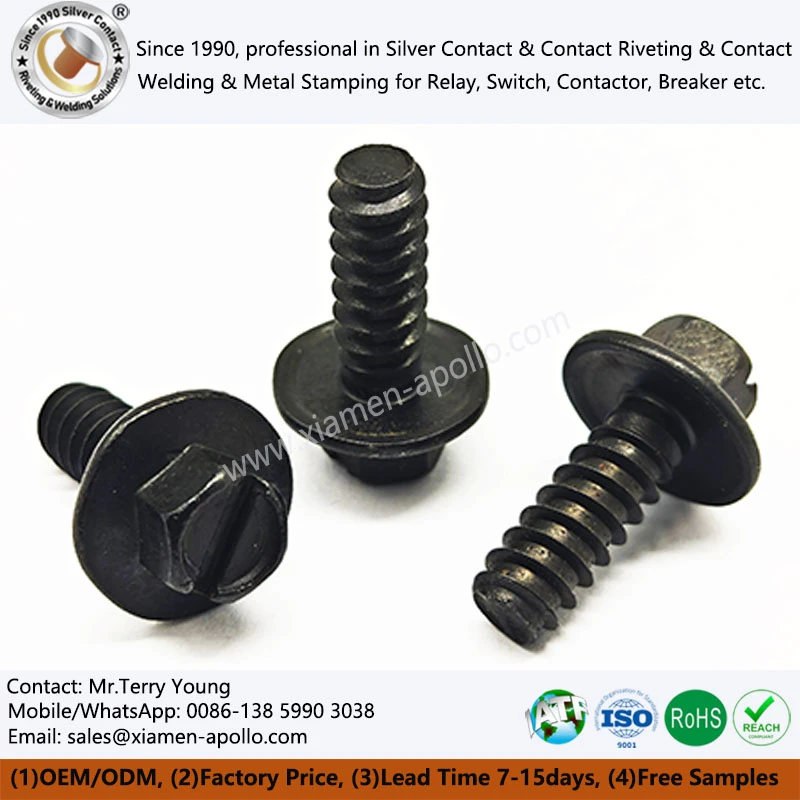
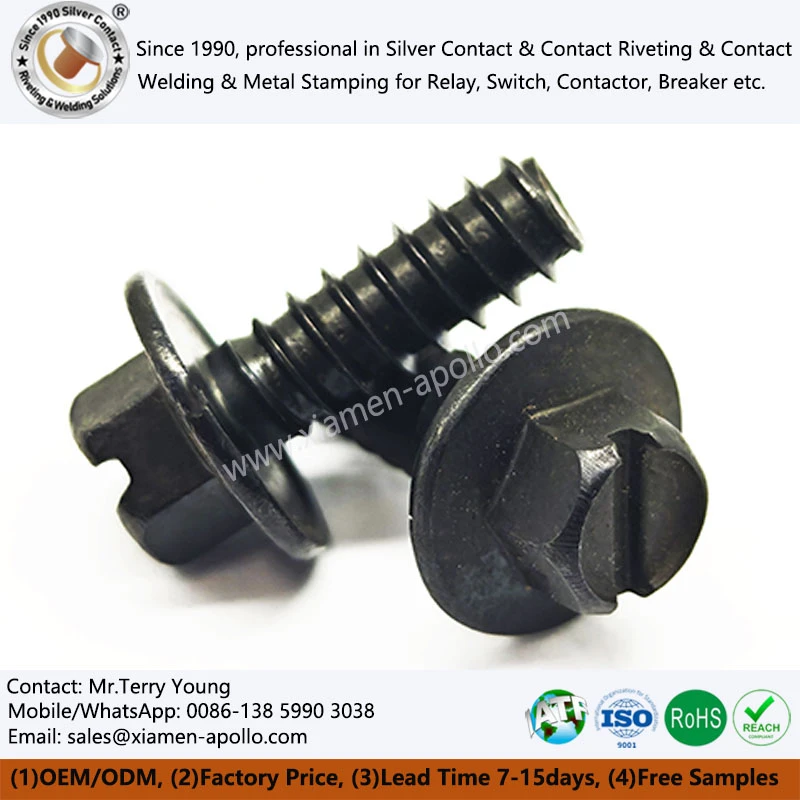
Hexagon Flange Bolts are extensively adopted in automotive assemblies. Their integrated flange under the bolt head enlarges the contact area against mating components, removing the need for separate flat washers in certain joints. These bolts are compatible with socket tools and automated tightening equipment. Compared with standard hex‑head bolts, they support higher assembly throughput, reduce part count, and stabilise stress distribution across joint interfaces.
Flanged Hexagon Head Bolt Screws are not widely used because they deliver permanent anti‑loosening performance. This fastener design combines mechanical strength, assembly efficiency, bearing capacity, anti‑loosening features, and mass‑production compatibility. Performance grade, flange form, and surface finish shall be selected according to load, vibration, temperature, corrosion conditions, and technical requirements of individual applications.
Characteristics of Automotive‑Grade Flanged Hex Head Bolt
| Structural / Performance Feature | Function in Automotive Assembly | Application Notes |
|---|---|---|
| Integrated flange under bolt head | Enlarges bearing area and distributes contact pressure | Flat washers cannot be eliminated for all joint types |
| External hex drive | Works with socket tools and automated tightening equipment | Sufficient installation clearance and socket accessibility must be ensured |
| High‑level part integration | Reduces usage of discrete flat washers and lowers risk of omitted components | Additional hardware is still required for special sealing or insulating joints |
| Toothed‑flange option | Raises contact friction and improves anti‑loosening performance under selected operating conditions | May damage paint, plating and soft‑texture workpieces |
| Available in strength classes 8.8, 10.9 and others | Satisfies load‑bearing requirements for different automotive joints | Mechanical property verification is mandatory for selected strength grades |
| Multiple surface‑treatment options | Provides corrosion protection for chassis, body and powertrain components | Friction coefficient and hydrogen embrittlement risk must be managed concurrently |
Why Hexagon Head Flange Bolt Screw Suit Automotive Structures
Automotive joints frequently employ stamped sheet metal, castings, brackets and thin‑wall components. Standard bolt heads offer limited bearing area. High preload may induce local indentation, coating damage, or plastic deformation on mating surfaces.
The flange head of a Flange-Equipped Hexagon Head Bolt expands the bearing region below the bolt head. It reduces local contact pressure and transfers clamping force more evenly onto workpiece surfaces. This characteristic applies to body brackets, seat assemblies, powertrain accessories, and selected chassis connections.
A flange face is not a universal replacement for flat washers. Dedicated washers or auxiliary structures remain necessary for joints with large workpiece bore diameter, soft substrate material, or requirements for insulation, sealing, levelling, and coating protection.
Consult Our Electrical Engineers Today
How Bolt with Flange and Hexagon Head Improve Assembly Efficiency
Automotive production lines impose strict requirements on cycle time, error‑proofing, and tightening consistency. Hexagon Flange Head Machine Screws can be installed via pneumatic tools, electric tightening spindles or robotic systems.
Where design permits, removal of discrete flat washers delivers the following benefits:
- Reduced component count for each fastener joint
- Lower probability of missing, mis‑fitting or reversed washers
- Less work for component feeding and station management
- Improved compatibility with automatic feeding and robotic gripping
- Shorter assembly time per joint point
- Lower risk of loose foreign parts falling into vehicle bodies or equipment
These advantages are marginal for low‑volume assembly. Efficiency and quality gains become significant on production lines with a large number of joint points.

Can Hexagon Head Screw with Washer Resist Vibration‑Induced Loosening
A flange face optimises bearing conditions. Standard Hexagonal Head Screws Featuring Washers cannot prevent loosening solely through enlarged contact area.
Vehicles experience road impact, transverse loads, engine vibration and temperature cycling during operation. Threaded joints may still loosen under relative interface slip, insufficient preload, or workpiece embedment deformation.
Toothed‑flange bolts increase interface friction through tooth profiles on the flange bottom surface, yet they bring corresponding side‑effects:
- Scratches on workpiece surfaces and anti‑corrosion coatings
- Shifted friction coefficient at bolt head bearing surface
- Altered torque‑to‑preload correlation
- Incompatibility with selected aluminium‑alloy, plastic and decorative surfaces
- Degraded anti‑loosening performance after repeated disassembly and reassembly
Joint anti‑loosening performance relies on combined control of preload, joint stiffness, friction coefficient, interface slip behaviour and assembly process. Relying only on flange teeth is insufficient.
Washer-equipped Hexagon Head Screws Compatibility with Automated Tightening Processes
External hex heads create large contact zones for socket tools. High tightening torque can be transmitted reliably, and automatic tightening spindles can be arranged conveniently. Stable head geometry supports accurate tool positioning and reduces line stoppages caused by damaged Phillips or hex socket drives.
Tightening equipment can log the following process data:
- Tightening torque
- Rotation angle
- Tightening duration
- Torque variation curve
- Station and workpiece identification data
- Pass‑fail evaluation results
Stable preload output does not depend solely on drive geometry. Thread lubrication, surface coating, flange‑face roughness, and friction coefficient all affect the conversion ratio from input torque to clamping force.
Rationale for Multiple Strength Grades in Hexagonal Head Screws Having Washers
Load magnitude varies widely across different vehicle positions, so one single strength grade cannot cover all applications.
Appropriate grades shall be specified for general brackets, exterior panels, and non‑critical accessory joints. Strength classes 8.8 or 10.9 may be required for chassis, suspension, powertrain, and high‑load connections.
Higher strength grade does not equal better performance for every joint. Excessively high strength raises susceptibility to hydrogen embrittlement, increases assembly control complexity and material cost. It may also shift failure modes to nuts, aluminium housings or thin‑wall threaded features. Strength grade shall be defined based on working load, preload, fatigue requirements and safety factor.
Common Surface Treatments for Hex Head Screw with Washer Assembly
Available surface treatments include electro‑galvanizing, zinc‑nickel plating, zinc‑aluminium flake coatings and other approved corrosion‑protection systems. Surface‑treatment selection shall consider multiple factors:
- Service exposure to water, sediment and de‑icing salt
- Operating temperature within engine bays or other high‑temperature zones
- Galvanic corrosion risk when coupled with aluminium and dissimilar metals
- Corrosion‑test requirements defined in project specifications
- Coating‑induced dimensional impact on thread fit
- Friction‑coefficient tolerance range
- Hydrogen‑embrittlement risk for high‑strength fasteners
Salt‑spray test duration alone cannot represent overall Hex Head Screw with Washer quality. Coatings with equivalent corrosion resistance can produce different preload values under identical tightening torque when friction coefficients differ.
contact us
Submit your Hexagon Flange Bolts drawings and application parameters to our engineering team to obtain factory‑supported sample validation and mass‑production quotation without delay.