

Modern rail transit onboard electrical systems have stringent requirements for the safety and stability of components. The performance of various electrical control components directly affects train operation safety. Electron Beam Welding Manganin Shunt, with its combined characteristics of bistable latching and integrated shunt sampling, is gradually achieving large-scale application in control circuits such as subway and high-speed rail doors, lighting, and auxiliary power supplies. Its practical application must comply with rail transit-specific technical specifications. Vehicle operating conditions are highly variable, and the design of relay products requires targeted optimization of various parameters based on the onboard operating environment.
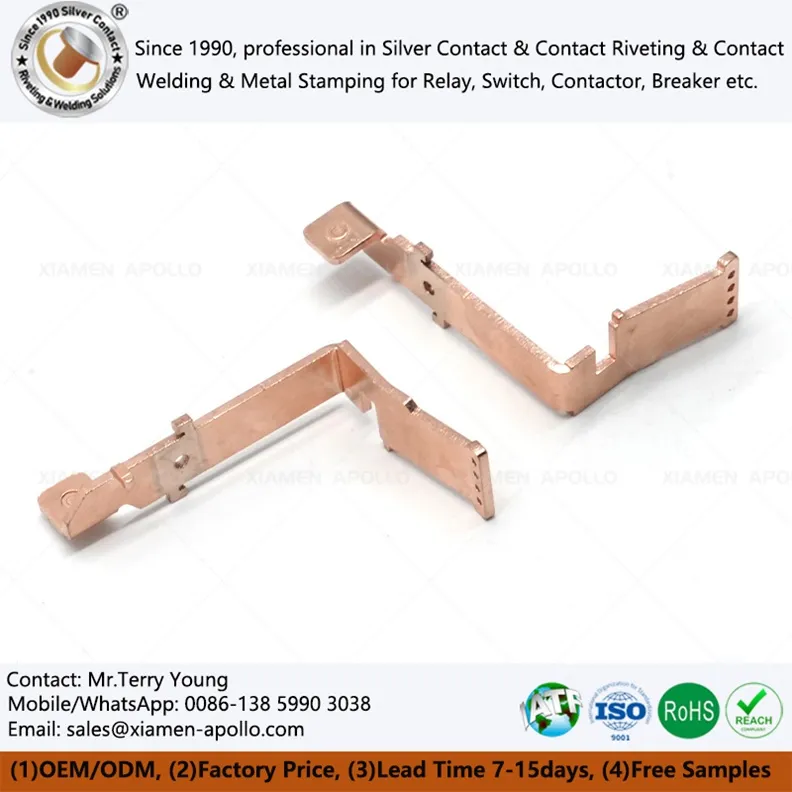
The temperature difference between outdoor and enclosed spaces in rail transit vehicles is extremely large. Components must first meet wide-temperature operating standards, and products need to operate stably in the range of -40℃ to +85℃. During the R&D phase, the Manganese Copper Resistance Shunt was calibrated according to railway environmental indicators and completed vibration and shock resistance tests according to EN 50155 standards, ensuring that contact mis-separation does not occur during vehicle start-up, stopping, and track crossing vibrations. Products used on coastal lines must also pass salt spray testing, achieving an IP65 protection rating to resist moisture, dust, and corrosive gases.
Safety design is a fundamental principle for rail transit components. The overall product design follows a fail-safe philosophy, ensuring that contacts automatically switch to preset safety levels after a power failure. The Maganin Shunt for Electronics Meter increases the insulation distance between contacts and coils, with electrical clearance parameters superior to conventional industrial products, resisting instantaneous surge voltages on board. Internal insulation materials use EN 45545 certified flame-retardant raw materials, reducing the safety hazards of fire and smoke.
Different onboard subsystems have different functional focuses for components. The lighting control system relies on relays to achieve circuit zone control, requiring components with reliable short-circuit breaking capabilities. The Three Phase Magnetic Latching Relay integrates a shunt sampling structure, simultaneously controlling on/off states and acquiring real-time circuit current. Leveraging its zero-power static advantage, it reduces the standby power consumption of the train lighting system, meeting the needs of onboard lighting equipment operating for extended periods.
The auxiliary power system frequently switches between the onboard battery and the inverter power supply. Contact bounce and unstable parameters can easily cause power outages in sensitive onboard equipment. The Maganin Shunt Resistor Shunt optimizes the internal mechanical structure, ensuring highly consistent switching actions each time. Its longer electrical lifespan allows it to adapt to high-frequency switching conditions in the power circuit. The shunt module simultaneously monitors the load current of both power supplies, facilitating real-time monitoring of the power supply status by maintenance personnel.
The door safety loop is the highest-level safety loop in the train, requiring redundant design and status feedback structures for related components. The E-beam Welding Shunt can be paired with auxiliary monitoring contacts. While controlling the on/off state of the door lock circuit, it transmits the actual operating conditions of the contacts and the shunt current data back to the vehicle control system, forming a closed-loop monitoring system for immediate detection of potential circuit anomalies.
Overall, the usage specifications for shunt magnetic latching relays used in rail transit cover multiple dimensions, including environmental tolerance, safety protection, and system customization. The entry standards are far higher than those for civilian industrial control scenarios. The Manganin Shunt For Electronic Power integrates two core technologies: shunt sampling and magnetic holding, perfectly meeting the diverse control needs of rail transit. With the continued advancement of domestic production in rail transit, the market application scope of this type of integrated component will continue to expand.
Our self-developed and mass-produced Electron Beam Welding Manganin Shunt is manufactured in strict accordance with various authoritative standards in the rail transit industry. It has undergone comprehensive reliability testing, including high and low temperature tests, vibration resistance, and salt spray tests. Parameters can be customized for different onboard scenarios, such as doors, power supplies, and lighting, balancing shunt sampling and loop control performance, and are suitable for various rail transit projects. New and existing customers are welcome to inquire about product details and discuss sample testing and bulk purchase cooperation.
contact us
