

In modern electrical and electronic systems, the tungsten rivet-serving as a core component for establishing and interrupting circuits-is widely utilized across diverse fields such as industry, agriculture, technology, and national defense, owing to its high melting point, exceptional hardness, extremely low vapor pressure, and outstanding resistance to arc erosion. As electrical equipment evolves toward higher load capacities and greater reliability, traditional tungsten rivets are gradually giving way to composite materials. Among these, Tungsten-Copper Vacuum Contacts have emerged as a critical material in high-voltage circuit breakers and vacuum switch tubes; by synergistically combining tungsten's high-temperature resistance with copper's superior electrical and thermal conductivity, they effectively ensure the safe and stable operation of power systems.

In automotive electrical systems, the application of Electric Horn Tungsten Contacts is both widespread and critical. Taking the car horn as an example: subjected to harsh environments characterized by prolonged high-frequency vibration, high humidity, and significant temperature fluctuations, Electric Horn Tungsten Contacts-thanks to their inherent resistance to oxidation and arc erosion-ensure that the horn maintains stable contact performance even under conditions of frequent, loud activation. Furthermore, within the distributors and magneto breakers of gasoline engine ignition systems, contacts must withstand the frequent switching of high-voltage currents; the superior current-interrupting capability and resistance to contact welding exhibited by tungsten materials make them the preferred choice for ensuring reliable engine ignition.
In the fields of industrial automation and machine tool electrical systems, relays and contactors serve as the core components of power-driven automatic control circuits. To withstand the impact of electrical arcs generated by high currents and frequent switching operations, engineers extensively utilize Copper-Tungsten Electrical Contacts. With this composite material, under the influence of switching arcs, the copper phase effectively absorbs and dissipates a significant amount of heat, while the tungsten matrix remains structurally stable; this mechanism substantially extends the service life of automatic switches and electromagnetic relays. For signal relays and auxiliary relays requiring precise control, Tungsten-Copper Button Contacts-distinguished by their extremely low contact resistance and exceptional wear resistance-ensure the accurate transmission of weak signals and the stability of control operations.
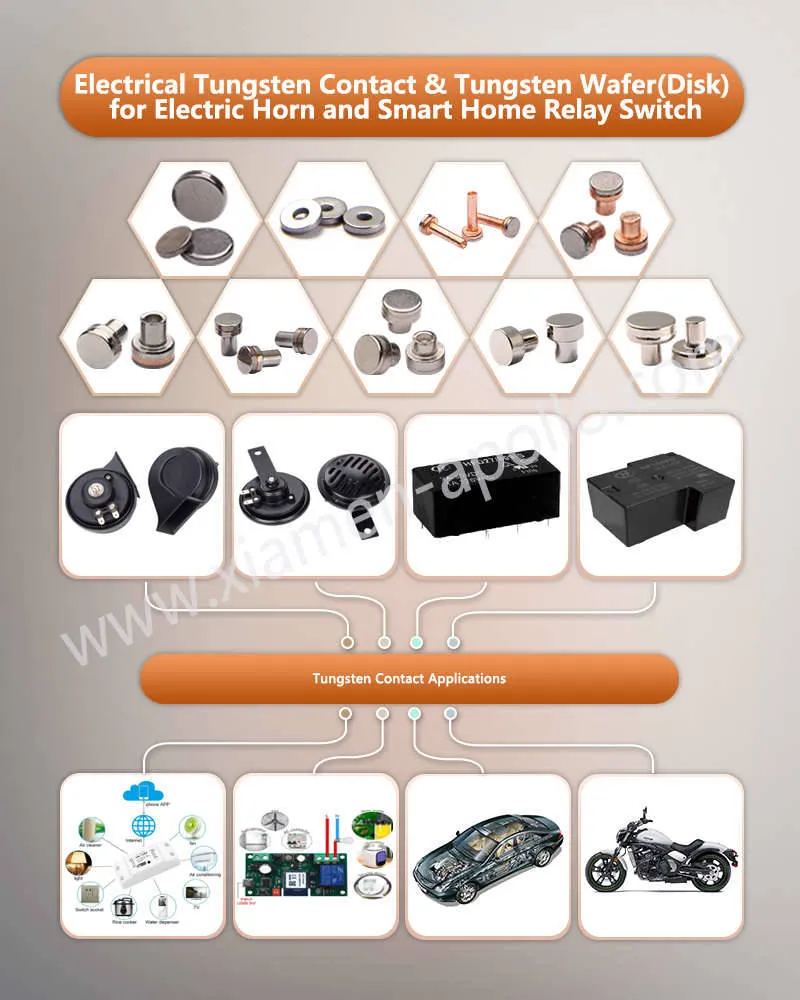
Beyond conventional electrical switches, Half Hollow Tungsten Contact Rivets play an indispensable role in specialized electronic components. For instance, in applications where space is constrained or specific mechanical strength is required, Half Hollow Tungsten Contact Rivets are widely adopted; their unique structural design not only reduces overall weight but also ensures mechanical stability during the riveting process. Concurrently, for certain customized high-voltage switching equipment, Customized Flat Tungsten Contact Rivets can perfectly fit specific mounting bases, providing a larger contact area and superior heat dissipation capabilities.
In the fields of electronic instrumentation and signal detection-such as in the pressure sensors found within gas fire suppression systems-there are exceptionally high demands regarding the response speed and reliability of electrical contacts. Such devices typically utilize Tungsten Contact Point Rivets, leveraging their high impact toughness and extremely low coefficient of thermal expansion to ensure that no misalignment or poor contact occurs, even under extreme temperature fluctuations. Furthermore, in cost-sensitive applications such as ignition systems for entry-level motorcycles, contact points made of pure tungsten or tungsten-steel continue to command significant market demand due to their simple structure, low manufacturing cost, and ease of maintenance.
As manufacturing processes continue to advance, the form factors and performance capabilities of Tungsten-Copper Solid Rivet Contacts are undergoing continuous upgrades. In heavy-duty industrial switches and high-voltage load switches, Tungsten-Copper Solid Rivet Contacts establish a robust metallurgical bond with iron or copper terminals through high-temperature brazing, effectively preventing desoldering and anomalous contact resistance. Meanwhile, in mid-to-high-end applications with more stringent requirements for electrical conductivity, Tungsten-Copper Rivet Electrical Contacts achieve a perfect balance among electrical conductivity, thermal conductivity, and arc-resistance properties through the optimization of the copper-tungsten alloy ratio.
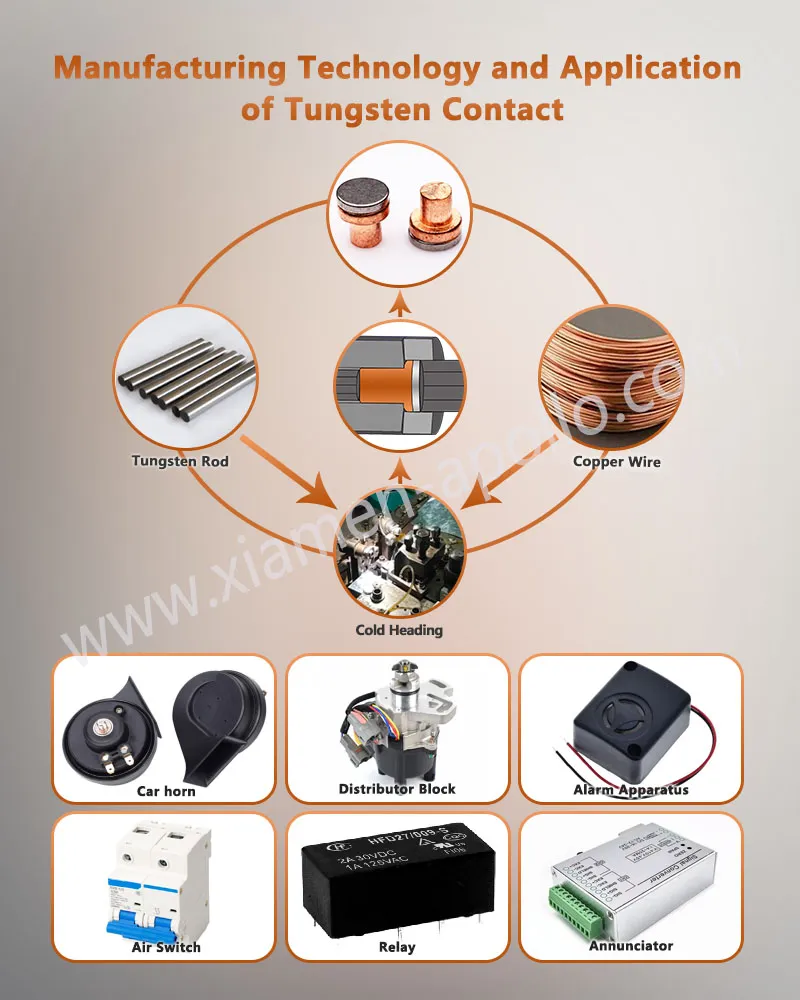
In summary, ranging from basic Tungsten Rivets to high-end Tungsten-Copper Contacts, the widespread application of these materials in electrical systems has significantly enhanced equipment performance and reliability. Whether utilized for the sound and light control of automotive alarms or for heavy-duty switching in machine tool electrical systems, these materials provide robust technical support for the electrification processes across various industries, thanks to their exceptional physical and chemical properties.
If you have specific customization requirements for Tungsten Rivets or are seeking professional solutions for electrical connections, please feel free to contact us at any time; we are ready to provide you with optimal technical support and a competitive quotation.
contact us
