

Products introduction
In the modern wave of industrial automation and intelligent manufacturing, relays are an essential part of electrical control systems. Their performance and reliability directly affect the stability and efficiency of the entire system. With the advancement of Industry 4.0 and the deepening development of intelligent manufacturing, the performance requirements for relays are getting higher. Especially in industrial control, the materials and manufacturing processes of relay cores are under greater scrutiny. This article will discuss the latest technological advancements in relay cores, focusing on the technology features and application advantages of Cold Forging Relay Cores.
Industry Hotspots
1. Demand for High-Performance Materials
As electronic devices become smaller and more powerful, the materials for the Pure Iron Core must meet higher standards. Traditional materials can no longer meet the needs for high magnetic permeability, low loss, and high stability in modern relays. Therefore, developing new high-performance soft magnetic materials has become a hot topic in the industry.
2. Trends Towards Environmental Protection and Energy Saving
Globally, environmental protection and energy saving have become important directions for manufacturing. During the manufacturing process of Soft Magnetic Iron Cores for Relays, reducing energy consumption and environmental pollution is a challenge that companies must face. Using eco-friendly materials and energy-saving processes not only aligns with global environmental trends but also reflects corporate social responsibility.
3. The Promotion of Intelligent Manufacturing
The rapid development of intelligent manufacturing technologies offers new possibilities for the manufacturing of Pure iron Relay Cores. Through intelligent production lines, it is possible to achieve high-precision manufacturing and automated production of relay cores, improving production efficiency and product quality.
Technical Advantages
1. High Precision Manufacturing
Cold forging is a high-precision metal forming technology. It can produce complex-shaped, precisely sized Iron Cores for Industrial Control Relays. Cold forging improves manufacturing precision and reduces material waste, lowering production costs.
2. Excellent Magnetic Properties
Pure Iron Cores have excellent magnetic properties, including high magnetic permeability, low loss, and good frequency characteristics. These properties make them perform well in high-frequency applications, meeting the needs of modern electronic devices for high-performance relays.
3. Good Mechanical Properties
Cold forging significantly enhances the mechanical strength and hardness of cores, providing good impact and wear resistance. These features make Soft Magnetic Iron Cores for Relays durable and reliable in industrial control applications.
4. Environmentally Friendly and Energy-Saving
Cold forging for Pure iron Relay Core is an energy-saving manufacturing technology that can complete metal forming at lower temperatures, reducing energy consumption and environmental pollution. Additionally, it minimizes material waste and improves material utilization, aligning with environmental protection and energy-saving requirements.
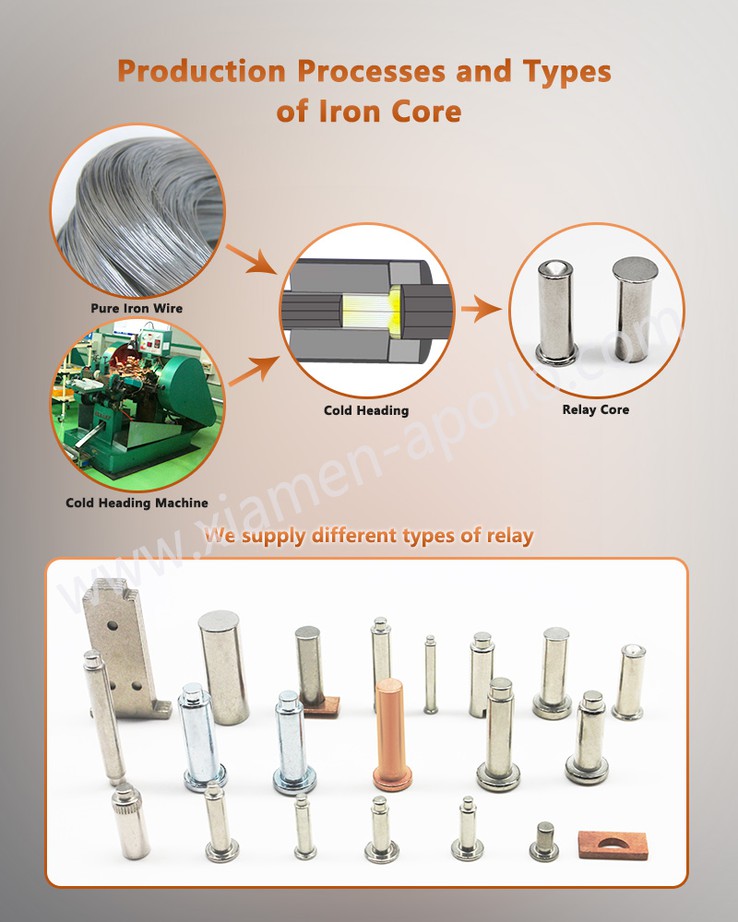
our Products
With the rapid development of industrial automation and intelligent manufacturing, the performance and reliability requirements for relay cores are increasing. Iron Cores for Industrial Control Relay, as a new type of high-performance core, have excellent magnetic properties, good mechanical properties, and are environmentally friendly and energy-saving, meeting the strict requirements of modern industrial control for relays. Our company's relay cores not only have high-quality products but also provide professional services and support, making them an ideal choice in the field of industrial control.
If you are interested in our Cold Forging Relay Core, please contact us for more information. We look forward to working with you to promote the development of industrial automation and intelligent manufacturing.

contact us
