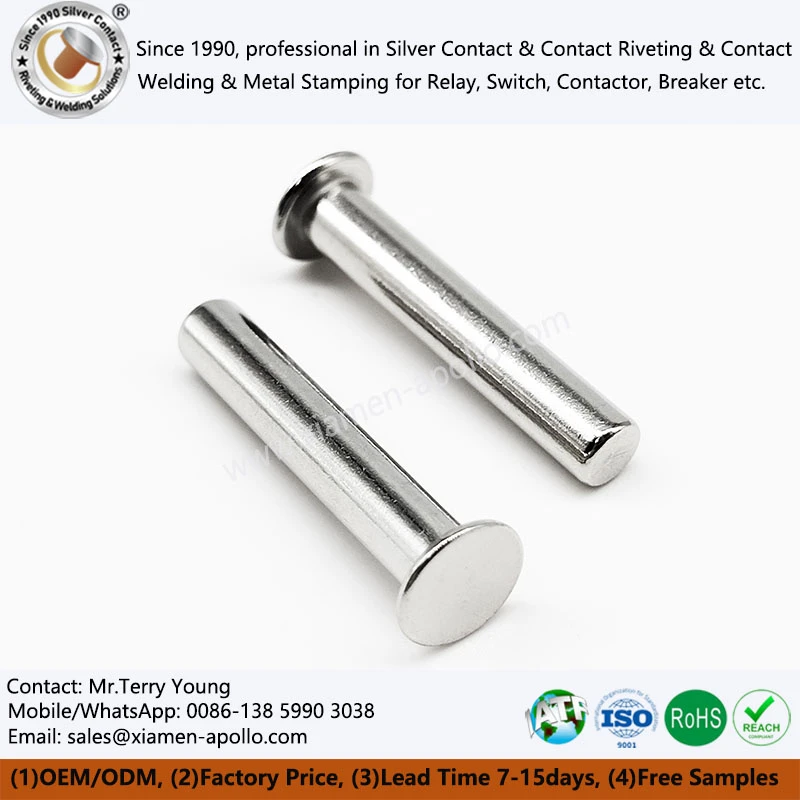
Cold heading is a metal-forming process in which dies apply pressure to metal at room temperature, inducing plastic deformation to achieve the desired shape and dimensions. Widely used in the production of fasteners, connectors, and precision structural components, this process also plays a critical role in the manufacturing of electromagnetic pure iron parts. Compared to traditional hot-working methods, cold heading eliminates the need for heating-thereby preserving the material's inherent mechanical properties-while simultaneously enhancing production efficiency and material utilization. Consequently, it serves as a primary method for the mass production of the Cold Heading Pure Iron Core.
Fundamental Principles of the Cold-Heading Process
Cold heading relies on the plastic deformation characteristics of metals. When an external force is applied, the internal crystal lattice of the metal undergoes slip and distortion, allowing the material to change shape without fracturing. Through the use of dies, the process applies operations such as extrusion, upsetting, and stretching to the raw material (typically in the form of rods or wire), inducing plastic deformation at room temperature while adhering to the principle of constant volume. For the Iron Core Relay Part, the key lies in precisely controlling die design and processing parameters to produce complex, dimensionally accurate iron cores while maintaining the soft magnetic properties of the pure iron.
Key Equipment Components
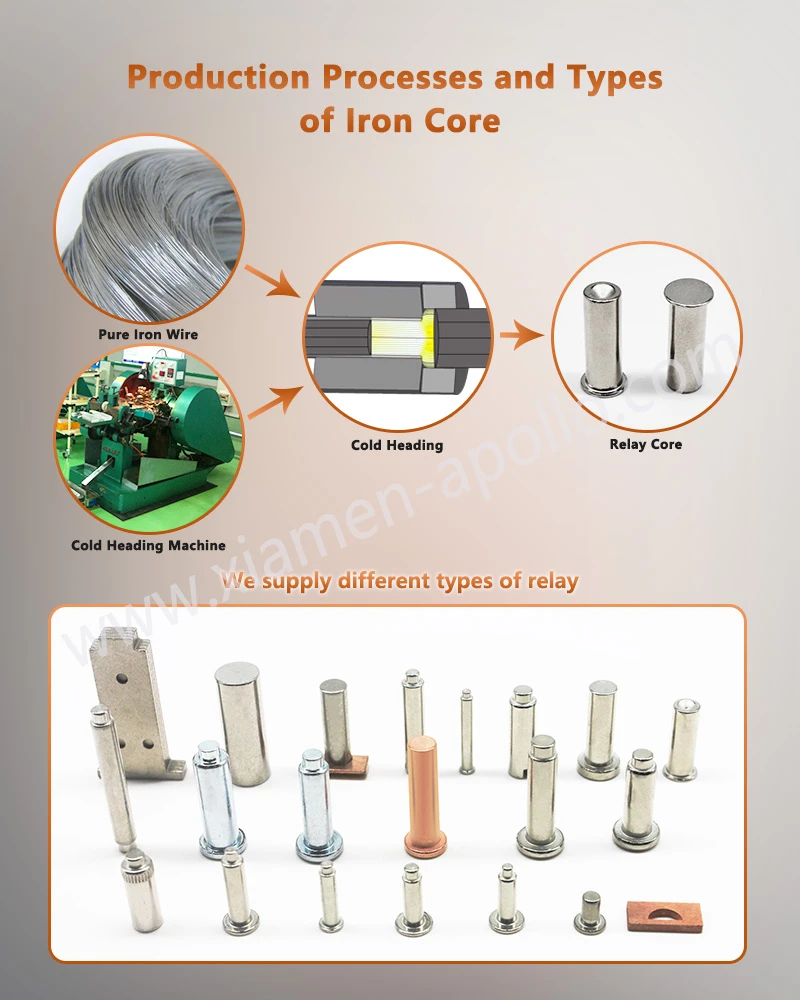
The cold-heading machine is the core piece of equipment, available in both single-station and multi-station configurations. Single-station machines are suited for the production of simple parts, whereas multi-station machines can perform multiple sequential operations, making them ideal for manufacturing complex iron cores. The equipment typically consists of a feeding mechanism, a shearing mechanism, a transfer system, and forming dies. Auxiliary equipment-including wire pay-off stands, straightening devices, lubrication systems, and quality control instrumentation-works in tandem to ensure process stability and product consistency.
Specific Manufacturing Process
1. Material Preparation: For Straight Coil Cores, electromagnetic pure iron with high plasticity (such as DT4C or DT4E) is selected. The material surface must be clean and free of defects to meet the requirements for subsequent forming and magnetic performance.
2. Wire Straightening and Feeding: Coiled wire is straightened by a straightening device and then precisely fed into the die area by a feeding mechanism.
3. Cutting (Blanking): The wire is cut into blanks of specific lengths based on the required product dimensions.
4. Forming: The blanks undergo multiple operations-such as upsetting, extrusion, and punching-within the dies to gradually achieve the final shape. A multi-station cold-heading machine can perform all these operations in a continuous sequence.
5. Post-Processing: Formed parts require secondary processing, including annealing, deburring, and surface treatment. For pure iron cores, annealing is a critical step to restore magnetic properties; it eliminates work hardening and reduces coercivity.
Technical Characteristics and Engineering Significance
1. High Material Utilization: Cold heading is a near-net-shape or net-shape manufacturing process, resulting in minimal material waste. Material utilization can exceed 95%, which is particularly advantageous given the high cost of pure iron.
2. Enhanced Mechanical Properties: The work-hardening effect increases the strength and hardness of the parts compared to the raw material; however, subsequent annealing is necessary to balance strength with magnetic performance.
3. High Production Efficiency: With a high degree of automation, the process can yield dozens to hundreds of parts per minute, making it well-suited for high-volume supply.
4. Excellent Dimensional Accuracy: The process ensures stable product dimensions and a high-quality surface finish, meeting the precision requirements for electromagnetic cores.
5. Suitable for Mass Production: It is especially ideal for the large-scale manufacturing of standardized Pure Iron Relay Cores.
Key Considerations for Material Selection
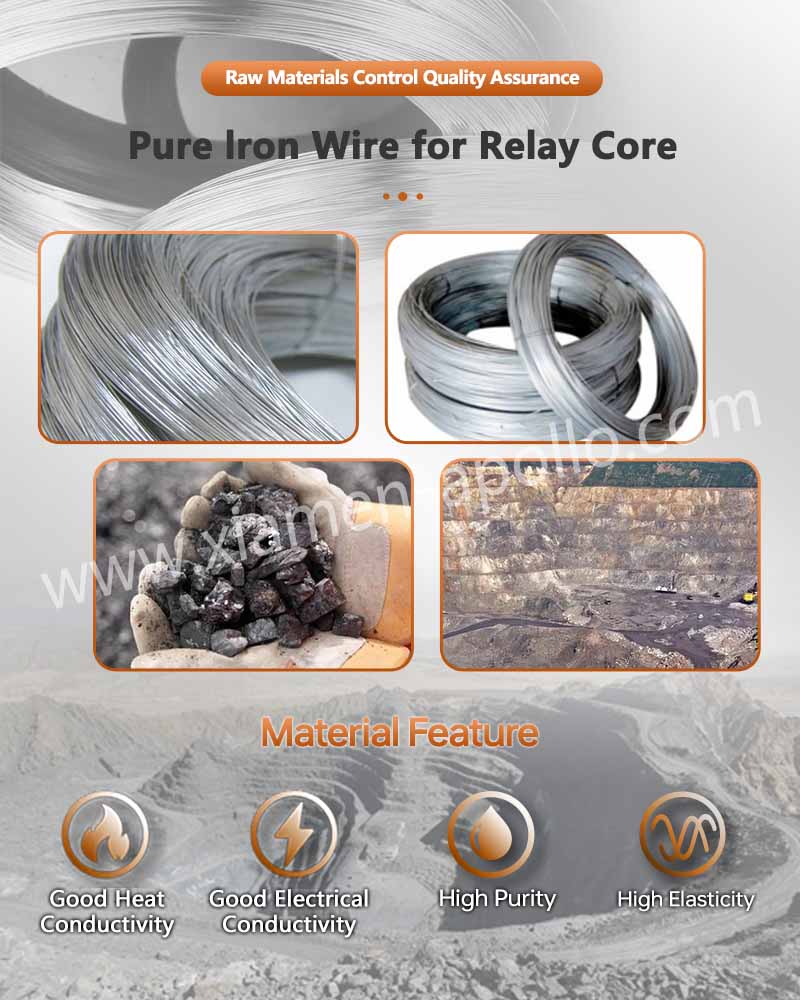
Materials suitable for cold heading must possess good plasticity. For the DT4C AC Relay Iron core, the materials typically selected are low-carbon electromagnetic pure iron or soft-magnetic stainless steel. The choice of material must take into account the operating environment, mechanical loading conditions, and cost. Since carbon content directly influences coercivity and remanence, and because pure iron cores have specific magnetic performance requirements, appropriate parameters must be determined through material inspection and process testing.
Quality Control System
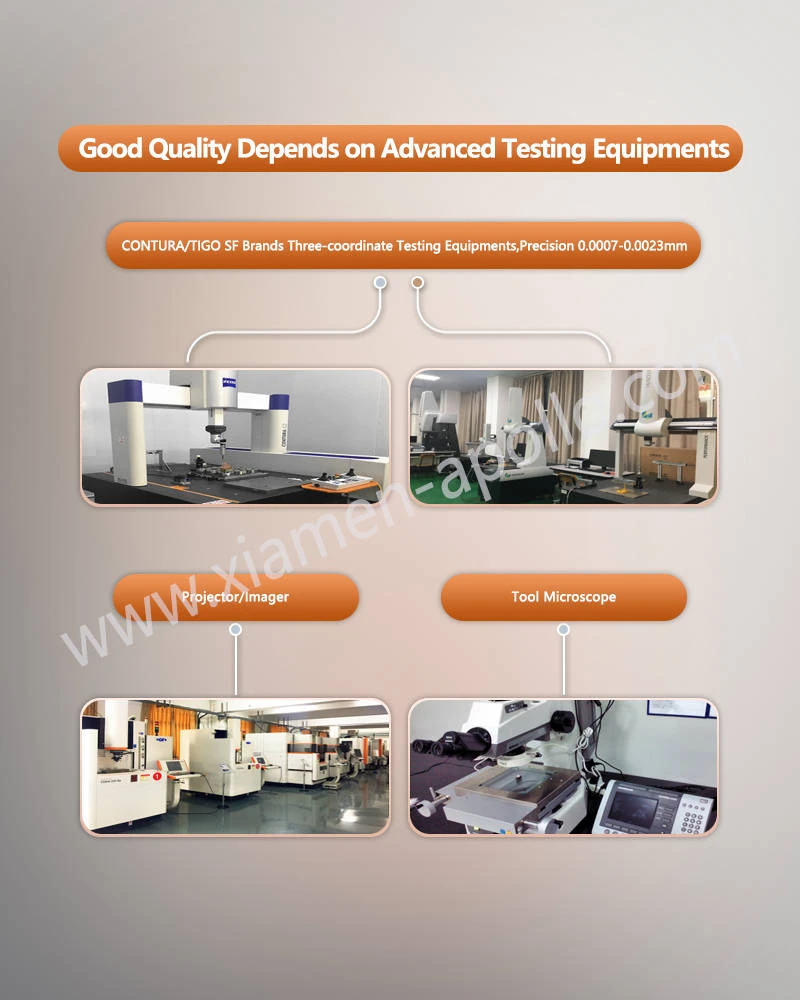
Quality control is integrated throughout the entire process. It begins with rigorous inspection of the raw materials' chemical composition and mechanical properties to ensure they meet the standards for the specified grade. During production, process parameters such as pressure, speed, and lubrication are closely monitored. Final product inspection includes dimensional measurement, surface quality assessment, and magnetic performance testing. For pure iron cores, magnetic parameters-such as coercivity and saturation magnetic induction-are just as critical as geometric dimensions; these must be verified for every batch to ensure product reliability and consistency.
Economic Analysis
Although the cold-heading process requires a higher initial investment in equipment, its high efficiency and minimal material waste offer a significant cost advantage for large-scale production. Compared to traditional machining, it can reduce material usage by approximately 30% and increase production efficiency several-fold. Furthermore, by eliminating the need for secondary processing steps, the overall production cost is reduced even further. For projects involving high annual production volumes of Soft Magnetic Iron Cores for Relays, the cold-heading process typically allows for a return on investment within a relatively short period.
Development Trends
As the demand for precision components grows, the cold-heading process is evolving toward higher precision and the production of more complex shapes. Advances in die materials and surface treatment technologies have extended tool life; intelligent control systems have enhanced process stability and production efficiency; and the adoption of eco-friendly lubricants and energy-efficient equipment has aligned the process more closely with sustainability goals. These technological advancements are driving the increasingly widespread use of cold-heading in the manufacturing of electromagnetic pure iron components.
Common Issues and Solutions
Various problems may arise during actual production: surface defects on raw materials can lead to non-conforming products, necessitating stricter incoming material inspection; mold wear can compromise precision, requiring regular checks and replacements; improper process parameters may cause cracking or dimensional deviations, which can be addressed by optimizing conditions through testing; and inadequate lubrication can result in mold overheating and surface damage, making it essential to ensure the proper functioning of the lubrication system. For the Coil Soft Iron Core, it is also critical to verify that the annealing process has sufficiently relieved internal stress to meet the required magnetic properties. By systematically analyzing the root causes of issues and implementing targeted corrective measures, stable production can be maintained.
contact us
If you require samples to verify magnetic performance and dimensional precision, please contact us today to receive a trial production plan and lead-time assessment for your Cold Heading Pure Iron Cores.