

Latching relays are a specialized type of bistable electromagnetic relay driven by pulse currents; they maintain their electrical operating state even after the external power supply is cut off. Characterized by low power consumption and high stability, they are widely used in sectors such as automated control, smart home systems, and power supply protection. Within the magnetic circuit system, the iron core is a critical component determining the relay's actuation sensitivity, switching consistency, and long-term reliability. As a mainstream, high-end soft magnetic material choice, the DT4C Iron Core for Latching Relay directly influences the performance limits of the relay unit. This article provides a comprehensive overview covering definitions, practical applications, and industry trends, while highlighting the specific properties of the iron core material.
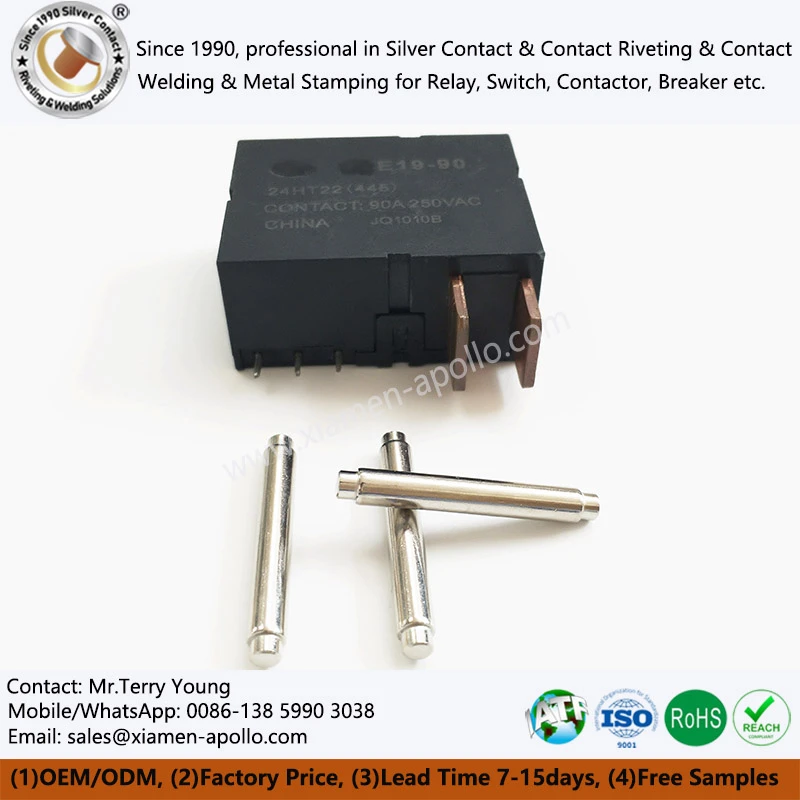
Definition of Latching Relays and the Core Role of the Latching Relay Iron Core
Latching relays are primarily composed of a coil, a permanent magnet assembly, an iron core, an armature, and a contact assembly. Their operating logic is as follows: the coil receives a forward or reverse pulse current to generate a magnetic field; the iron core concentrates the magnetic flux to drive the armature and switch the contacts; once the pulse signal ceases and power is cut, the magnetic force of the permanent magnet maintains the contacts in their current position-eliminating the need for continuous coil energization and thereby latching the circuit state.
The concentration of magnetic flux and the efficiency of the magnetization-demagnetization response within the magnetic circuit depend heavily on the iron core material. Standard carbon steel cores suffer from drawbacks such as high coercivity, significant residual magnetism, and inconsistent magnetic properties across batches, which can lead to issues like armature sticking or actuation delays. The Latching Relay Iron Core is manufactured from high-purity electric iron, offering key advantages such as high magnetic permeability, low coercivity, and extremely low residual magnetism. It responds rapidly to the coil's magnetic field for magnetization and demagnetization, minimizes hysteresis loss, ensures stable millisecond-level actuation, and mitigates the risks of sticking or malfunction, making it the preferred choice for high-end latching relay magnetic circuits.

Application Scenarios for Latching Relays and the Advantages of the Core for Latching Relays
Thanks to features such as state retention during power loss and zero static power consumption, latching relays are widely used in various industrial and consumer devices. For high-grade operational conditions, the core is commonly selected to meet rigorous environmental requirements.
Applications in Automation Control Systems
Latching relays serve as switching components in control circuits, managing the start and stop operations of equipment such as motors, valves, and conveyor belts. In the event of a power outage or transient fault, the device locks into its current operating state, preventing unexpected equipment shutdowns. High-frequency switching in automated production lines places strict demands on the magnetic flux stability and batch consistency of the iron core. The Pure Iron Core for Electric Meter Relay exhibits minimal magnetic property dispersion and negligible performance degradation after repeated actuation cycles, ensuring consistent operation across large-scale equipment deployments and reducing long-term commissioning and maintenance costs.
Applications in Power Supply Protection and Circuit Control
In scenarios involving circuit overloads or short-circuit faults, latching relays can rapidly cut off the power supply circuit to protect downstream electrical equipment; they are also suitable for timing and sequential logic control. Power supply equipment is often exposed to fluctuations in temperature and humidity, as well as vibration and shock. The DT4C electric pure iron undergoes annealing to eliminate internal stress and exhibits minimal magnetic aging; it maintains stable magnetic permeability even under cycling high and low temperatures, thereby reducing the risk of accidental relay opening or closing.
Applications in Smart Homes and Building Automation
In smart home and building automation systems, latching relays handle the remote control of terminal devices such as lighting, air conditioning, and curtains. As these devices often remain in long-term standby, the relay's zero static power consumption helps lower the system's overall energy usage. When using the core, the core responds rapidly to magnetization and demagnetization; even weak pulse signals can drive the relay to switch states, reducing the system's drive power consumption and aligning with the low-energy design requirements of smart home products.
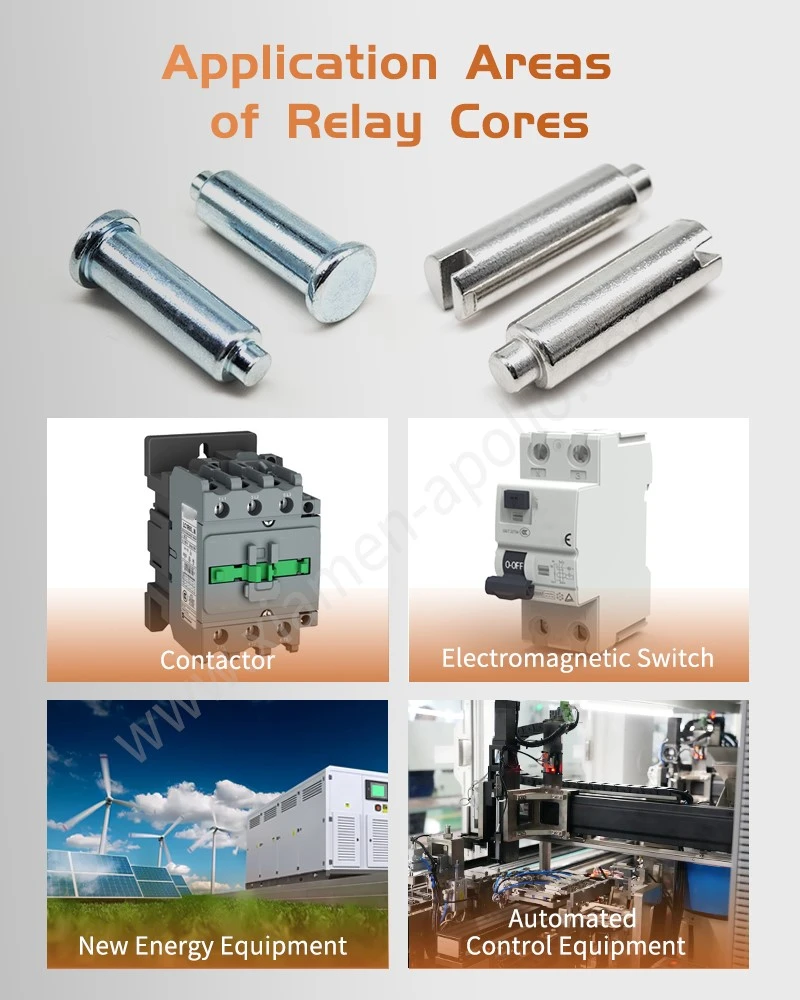
Future Trends in Latching Relays and New Requirements for Pure Iron Core for Electric Meter Relay
As downstream electronic equipment undergoes continuous upgrades, latching relays are evolving toward miniaturization, integration, high reliability, low power consumption, and intelligence; this evolution drives continuous improvements in the manufacturing processes for the core.
Miniaturization and Integration
With the ongoing miniaturization of electronic components, the structural volume of latching relays is being continuously reduced. Miniaturization leads to smaller magnetic circuit air gaps, significantly raising the requirements for iron core dimensional tolerances and surface flatness. Iron Core for Magnetic Latching Relay materials offer excellent cold-working properties, enabling precision forming at the micron level. They maintain superior magnetic permeability within smaller volumes, fitting the compact internal assembly spaces of relays and facilitating installation, wiring, and maintenance of the complete device.
High Performance and High Reliability
Industrial, automotive, and metering equipment sectors are demanding increasingly longer service lives and greater resilience against harsh environments for relays. Under conditions involving vibration, salt spray, and wide-temperature cycling, any rusting or magnetic property drift in the iron core can directly cause device failure. Passivated DT4C Iron Cores feature extremely low impurity levels and resistance to magnetic aging; their magnetic parameters remain stable even after a million switching cycles, thereby enhancing the relay's overall durability and meeting the needs of high-reliability equipment.
Low Power Consumption and Energy Efficiency
Global requirements for equipment energy efficiency are rising, driving latching relays to reduce their driving pulse current. Higher magnetic permeability in the iron core means less driving energy is required to achieve the same level of electromagnetic attraction. The high magnetic permeability of DT4C electric pure iron helps reduce driving power consumption, further amplifying the inherent energy-saving advantages of latching relays and making them suitable for battery-powered devices such as smart meters and IoT terminals.
Intelligence and Internet Connectivity
IoT and AI technologies are driving the intelligence of relays, requiring components to support remote monitoring, energy management, and coordinated control. In intelligent application scenarios, relay switching frequency increases; consequently, iron cores must exhibit low magnetic loss and stable response times. The Soft Magnetic Core for Latching Relay features low hysteresis loss, ensuring consistent response times during frequent pulse-driven operations and aligning with the timing control logic of intelligent systems.
Summary
Latching relays leverage unique bistable characteristics to serve indispensable switching functions in automation control, power supply protection, and smart home applications. Overall performance depends on more than just the coil, permanent magnet, and contacts; as a critical component of the magnetic circuit, the DT4C Iron Core for Latching Relay-specifically its material purity, magnetic properties, and machining precision-directly determines the relay's sensitivity, consistency, and service life. Looking ahead, latching relays are evolving toward greater miniaturization, reliability, and intelligence, alongside lower power consumption.
contact us
