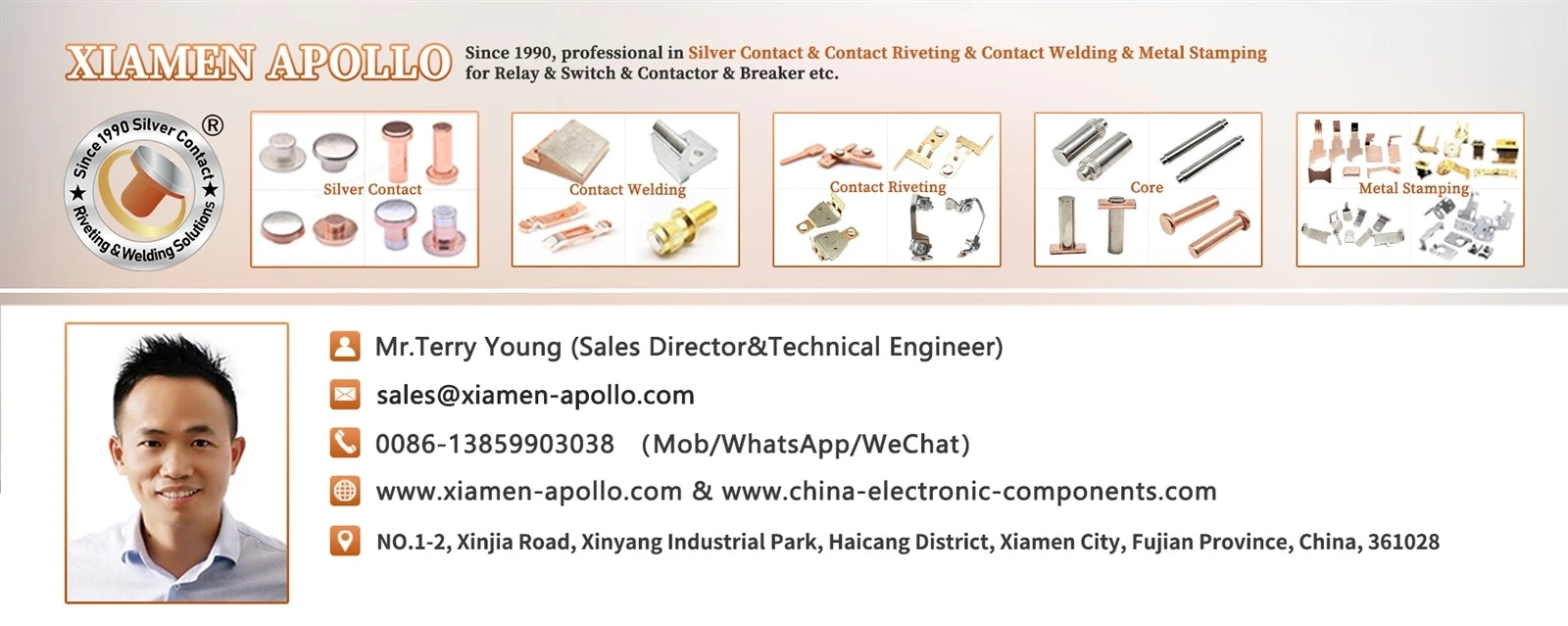
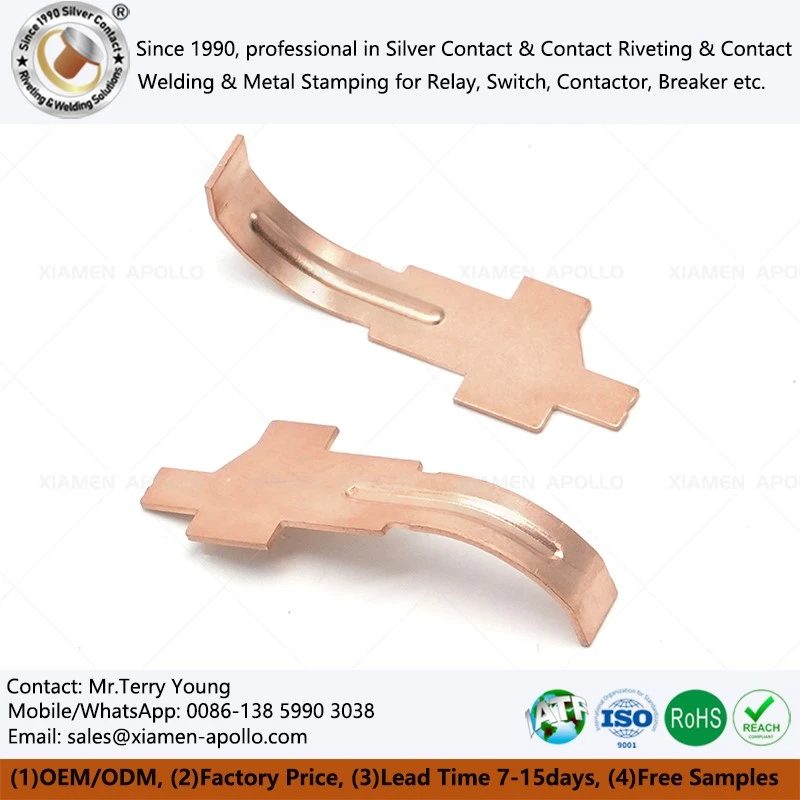
Selecting pure copper for precision stamping of Copper Stamping Parts requires more than checking its color or purchase price. Copper grade, oxygen content, temper, thickness tolerance, and forming requirements directly affect electrical conductivity, bending behavior, weldability and dimensional consistency. For most general electrical applications, T2 copper is a practical starting point; TU2 is more appropriate for applications requiring low oxygen content and controlled welding conditions.
A material specification that identifies only "red copper" or "pure copper" is insufficient for production purchasing. The correct procurement decision must identify the chemical grade, product form, mechanical temper and applicable dimensional standard before material enters the stamping process.
Copper Grade Selection: T1, T2, T3, TU2 and TP2 Under GB/T 5231
Copper grades differ in chemical purity, oxygen content, electrical properties and suitability for downstream processing. These differences matter most when manufacturing electrical terminals, busbars, conductive connectors, heat-dissipation components, and precision stamped copper parts.
T2 Copper: General-Purpose Industrial Grade with Cu ≥ 99.90%
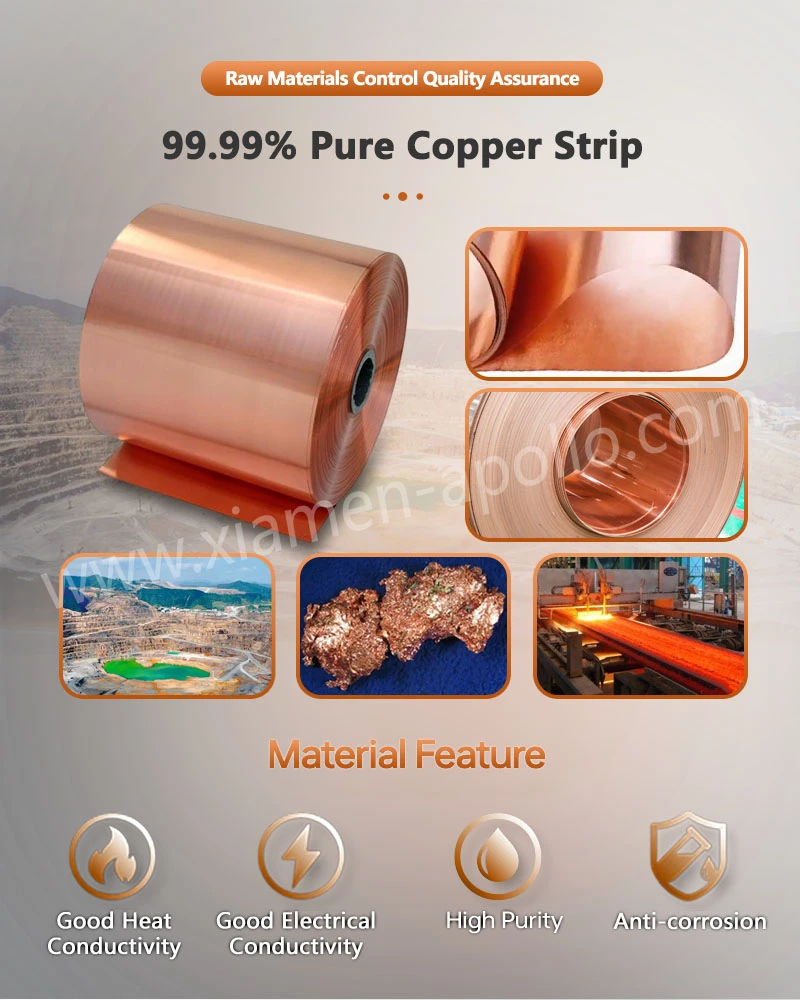
T2 copper is widely used for electrical and industrial copper components because it provides a practical balance of conductivity, thermal transfer, formability and material cost.
Its nominal copper content is at least 99.90% under the applicable GB/T 5231 chemical composition requirements.
For most conventional electrical stamping applications, T2 should be the first material evaluated rather than automatically specifying a higher-purity grade.
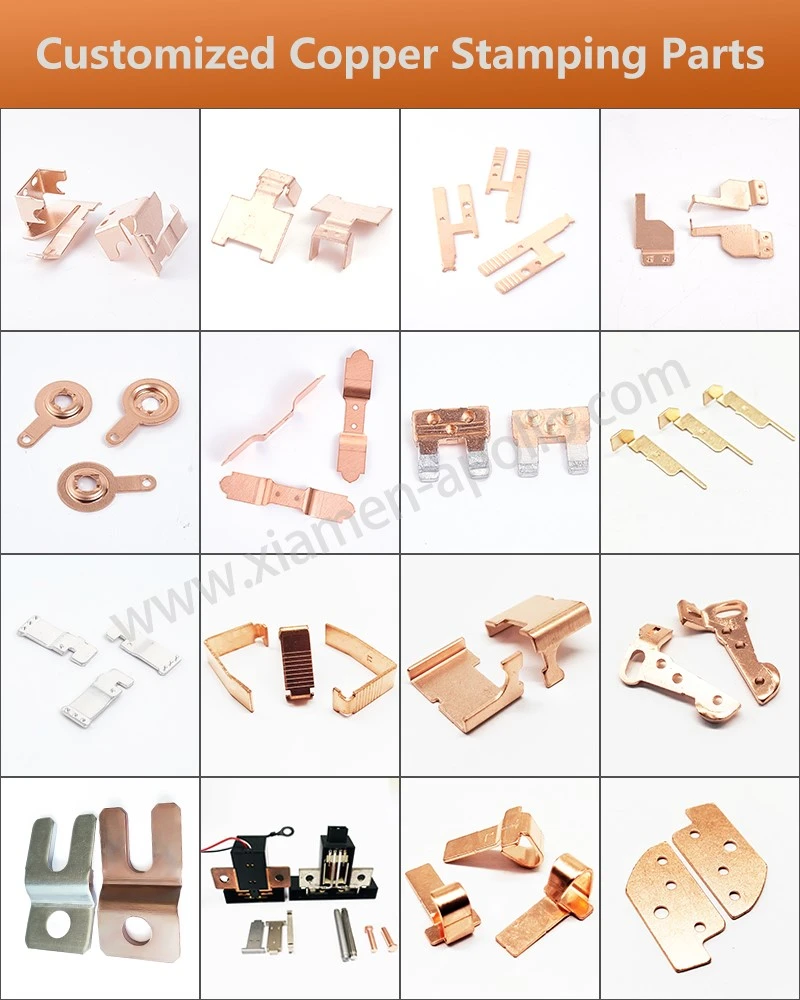
Typical applications include copper busbars, electrical terminals, conductive plates, heat sinks, copper gaskets, bent connectors and precision stamping components.
When selecting T2, procurement engineers should verify the actual chemical composition, electrical conductivity and mechanical properties against the applicable product specification. Copper purity alone does not establish the final conductivity of a processed component.
T1 Copper: Higher Purity with Cu ≥ 99.95%
T1 copper has a higher minimum copper content than T2 and is suitable for applications where tighter chemical composition requirements are specified.
Typical applications include precision electrodes, vacuum equipment components and selected electronic conductive parts.
However, the difference in nominal purity does not automatically justify a higher purchasing cost. If a component's electrical design already meets its conductivity and temperature-rise requirements with T2, upgrading to T1 may provide little measurable benefit.
The correct decision should be based on conductivity measurements, process compatibility and the component's operating environment.
T3 Copper: Lower Purity for Less Demanding Applications
T3 copper has a lower minimum copper content, generally specified at 99.70%.
Compared with T1 and T2, its higher allowable impurity content can affect conductivity, thermal performance and consistency during processing.
T3 should not be substituted for T2 in critical electrical components without engineering approval.
Potential concerns include greater variation in electrical properties, surface quality and forming behavior. Welding defects, however, cannot be attributed to copper grade alone; joint preparation, contamination, heat input and welding atmosphere must also be evaluated.
For conductive busbars, electrical terminals and precision copper stamped parts, the material should be selected according to the required electrical and mechanical acceptance criteria rather than price alone.
TU1 and TU2 Oxygen-Free Copper: Controlled Oxygen Content for Welding and Vacuum Applications
Oxygen-free copper is manufactured with tightly controlled oxygen content. TU1 and TU2 are commonly considered when the component requires controlled welding performance, vacuum compatibility or reduced susceptibility to hydrogen-related embrittlement.
Oxygen-bearing copper can develop internal steam-related defects when exposed to certain high-temperature reducing atmospheres containing hydrogen. The phenomenon is associated with oxygen in the copper reacting with hydrogen and forming water vapor within the material.
TU2 is therefore worth evaluating for vacuum fittings, precision welded copper assemblies, liquid-cooling components and applications involving controlled-atmosphere joining.
However, specifying TU2 does not eliminate all welding porosity or leakage risks. Surface contamination, joint clearance, welding parameters and material cleanliness remain important process variables.
TP1 and TP2 Phosphorus-Deoxidized Copper: Improved Welding and Tube Processing
TP1 and TP2 are phosphorus-deoxidized copper grades. Deoxidation improves their suitability for certain joining and tube-manufacturing operations.
Typical applications include heat-exchanger tubes, condenser tubing, fluid-carrying copper pipes and selected welded assemblies.
The phosphorus content must be considered because it can influence electrical conductivity. Consequently, TP1 and TP2 should not be treated as direct electrical equivalents of high-conductivity T2 copper.
Material selection should consider the balance between conductivity, welding requirements, pressure conditions and corrosion environment.
Download Contact Material Spec Sheet
Copper Temper Selection: M, Y2 and Y for Stamping and Bending
Even when the copper grade is correct, selecting the wrong temper can result in cracked bends, excessive springback, dimensional variation or deformation during assembly.
Temper describes the mechanical condition produced by processing such as annealing and cold working. It influences hardness, tensile strength, elongation and forming behavior.
For precision copper stamped parts, material grade and temper must be specified together.
Soft Temper M: Annealed Copper for Deep Drawing and Bending
M temper generally refers to an annealed condition with relatively high ductility and low hardness.
It is suitable for components requiring substantial plastic deformation, including:
- Copper flexible connectors and laminated connection components.
- Thin copper gaskets and washers.
- Bent electrical terminals with relatively large forming depths.
- Drawn copper components and formed copper tubes.
- Copper parts requiring multiple progressive forming operations.
Annealed copper generally offers greater elongation than cold-worked material. This reduces the risk of cracking during forming when the tooling radius, material thickness and forming direction are properly designed.
However, soft copper has lower resistance to deformation under external loads. Thin busbars made from soft copper may experience warping or handling deformation if their geometry and support structure are inadequate.
For this reason, M temper should not be selected automatically for flat conductive plates that require high dimensional stability.
Half-Hard Temper Y2: A Practical Balance for Precision Stamping
Y2 generally represents a half-hard condition in the relevant copper product specification.
It offers a balance between strength and ductility, making it suitable for electrical terminals, connector components and progressive die stamping applications.
During progressive stamping, the material must withstand several operations, including blanking, piercing, bending and forming. Excessively soft material may deform during feeding and positioning, while excessively hard material may crack at bending locations.
Y2 can provide a useful compromise, but its suitability must be verified through tensile testing, hardness measurements and production trials.
The required temper should be specified according to the actual strip standard and thickness range.
Hard Temper Y: Flat Conductive Parts Requiring Shape Retention
Y temper generally refers to a harder cold-worked condition.
Compared with annealed copper, hard copper usually has higher strength and hardness but lower elongation.
Typical applications include flat copper busbars, rigid conductive plates and components with limited forming requirements.
The main processing concern is bending. Hard copper can develop edge cracking or surface fractures when the bend radius is too small relative to material thickness.
A 90-degree bend should not be assumed to be acceptable simply because the material has sufficient thickness. The minimum bend radius must be established through material data and forming trials.
For rigid busbars, flatness, thickness variation and dimensional stability may be more important than maximum elongation.
Copper Temper Comparison for GB/T Product Specifications
| Temper | Typical Mechanical Condition | Formability | Recommended Applications | Main Processing Concern |
|---|---|---|---|---|
| M | Annealed, soft | High | Bending, drawing, flexible connectors | Deformation under load |
| Y2 | Half-hard | Medium | Electrical terminals, progressive stamping | Springback and bend cracking |
| Y | Hard, cold-worked | Lower | Flat busbars, rigid conductive plates | Cracking during tight-radius bending |
The actual hardness, tensile strength and elongation ranges depend on the copper grade, thickness and applicable product standard. Do not use temper symbols alone as substitutes for mechanical acceptance values.
Application-Based Material Selection: Electrical Conductivity vs Mechanical Strength
Pure copper is selected primarily for its electrical conductivity, thermal conductivity and formability. It is not a universal structural or wear-resistant material.
Its relatively low hardness and limited wear resistance make it unsuitable for many components subjected to repeated sliding contact, high impact or concentrated mechanical loading.
Where Pure Copper Is Suitable for Electrical Manufacturing
Pure copper is commonly used in components where current transfer or heat conduction is the primary functional requirement.
Typical applications include electrical busbars, battery connection plates, conductive terminals, copper electrodes, heat sinks, flexible connectors and precision copper stamped parts.
For electrical components, conductivity should be evaluated together with current density, contact resistance, cross-sectional area, operating temperature and thermal dissipation.
A copper component with high bulk conductivity can still experience excessive temperature rise if the contact interface is poorly designed.
For this reason, contact resistance, surface finish, contact pressure and joint geometry should be included in electrical validation.
Why Pure Copper Is Not Recommended for Wear-Resistant Components
Pure copper has relatively low hardness compared with engineering bronze alloys.
Under repeated friction or concentrated loading, it may undergo plastic deformation, surface wear or dimensional loss.
Applications such as bushings, sliding blocks, worm gears, wear plates and loaded bearing surfaces generally require materials with greater mechanical strength and wear resistance.
Tin bronze and aluminum bronze are common alternatives, depending on the load, lubrication conditions, friction characteristics and corrosion environment.
Using pure copper in a wear-critical component can increase maintenance frequency and replacement costs even when the initial material price is lower.
Pure Copper vs Tin Bronze vs Aluminum Bronze
| Material | Main Functional Advantage | Electrical Conductivity | Typical Applications |
|---|---|---|---|
| Pure copper | High electrical and thermal conductivity | High | Busbars, terminals, conductors |
| Tin bronze | Improved wear resistance and mechanical strength | Lower than pure copper | Bushings, sliding components |
| Aluminum bronze | Higher strength and wear resistance in suitable grades | Lower than pure copper | Loaded mechanical components, marine hardware |
These are general material comparisons. Actual performance varies significantly with alloy composition, temper, heat treatment and product geometry.
Selection Criteria for Electrical and Mechanical Components
For electrical terminals and busbars, prioritize conductivity, temperature rise, cross-sectional area and connection stability.
For formed copper components, prioritize elongation, hardness, bend radius and stamping repeatability.
For mechanical sliding or load-bearing components, evaluate bronze alloys and other engineering materials rather than specifying pure copper by default.
Material selection should follow the component's actual operating conditions rather than a general preference for higher copper purity.
Incoming Material Inspection: Authenticity, Thickness and Dimensional Tolerances Under GB/T and ASTM Standards
Material authenticity and dimensional consistency are two major factors affecting the production yield of precision copper stamping.
A copper strip may have a reddish appearance without necessarily meeting the required chemical composition. Similarly, a material certificate showing the correct copper grade does not automatically guarantee acceptable thickness, flatness or surface quality.
Incoming inspection should therefore combine document verification, dimensional measurement and material testing.
Verify the Chemical Composition Certificate and Material Traceability
Each incoming copper batch should be accompanied by a material certificate identifying the material grade, applicable standard, batch number and chemical composition.
The certificate should be traceable to the actual coil or sheet supplied.
For critical electrical components, the inspection plan may also require electrical conductivity testing and mechanical property verification.
Handheld X-ray fluorescence (XRF) equipment can help screen certain alloying elements and identify obvious material substitutions. However, ordinary XRF testing is not sufficient to reliably distinguish all high-purity copper grades because small differences in oxygen content and trace elements may not be resolved.
For accurate grade verification, use an appropriate laboratory chemical analysis method and the applicable acceptance standard.
Identify Copper-Plated Brass and Other Material Substitutions
A reddish surface is not sufficient evidence of pure copper.
Copper-plated brass or other copper-coated materials may visually resemble solid copper but have different electrical and mechanical properties.
For suspicious batches, inspectors should examine a freshly exposed cross-section and verify the underlying composition using an appropriate analytical method.
Material identification should never rely exclusively on surface color, magnetic response or supplier labeling.
Measure Thickness and Width Before Progressive Stamping
Copper strip thickness directly affects stamping clearance, burr height, forming geometry and final component dimensions.
A small thickness deviation can change the clearance between the punch and die, resulting in unstable cutting conditions and increased burr formation.
For critical components, thickness should be measured at multiple positions across the strip width and along the coil.
The inspection record should include:
- Nominal thickness and permitted tolerance.
- Strip width and width tolerance.
- Thickness variation across the strip.
- Surface condition and edge quality.
- Flatness and coil shape.
- Burr direction and maximum permitted burr height after stamping.
Do not assume that a material described as full-thickness or zero-negative-tolerance automatically complies with the dimensional requirements. The acceptance limits must be written into the purchase specification.
Copper Surface Defects and Their Effects on Stamping
Surface defects can influence both tooling life and finished-part appearance.
Common defects include oxidation, scratches, dents, inclusions, edge cracks and rolling marks.
For electrical contacts and conductive terminals, surface contamination may also increase contact resistance or affect subsequent welding and plating operations.
For this reason, the incoming inspection standard should define the acceptable surface condition according to the finished component's functional requirements.
Applicable Standards for Copper Material Procurement
The following standards may be relevant depending on the copper product form and destination market:
- GB/T 5231: Designations and chemical composition requirements for wrought copper and copper alloys.
- GB/T 2059: Copper and copper alloy strips.
- ASTM B152/B152M: Copper sheet, strip, plate and rolled bar.
- ASTM B187/B187M: Copper bus bar, rod and shapes.
- ISO 9001: Quality management system requirements.
- IATF 16949: Automotive quality management system requirements, where applicable.
- RoHS and REACH: Substance compliance requirements for applicable markets.
The correct standard depends on the material form, application and contractual specification. Chemical composition standards and dimensional product standards should not be treated as interchangeable.
Consult Our Electrical Engineers Today
Frequently Asked Questions
Q1. How can buyers verify whether T2 copper is genuine rather than copper-plated brass?
Request a batch-specific chemical composition certificate and verify its traceability. For suspicious material, inspect a freshly exposed cross-section and conduct laboratory chemical analysis. Surface color and ordinary handheld XRF screening alone cannot conclusively establish high-purity copper grade.
Q2. Which copper temper should be selected for precision progressive die stamping?
Y2 is a practical starting point for many electrical terminals and connector components because it balances strength and ductility. However, the final selection depends on strip thickness, forming depth, bend radius and die geometry. Validate the material through first-article stamping trials.
Q3. What information should be included when ordering copper stamping materials from a Chinese manufacturer?
Specify the copper grade, temper, product standard, thickness, width, dimensional tolerance, surface requirements, chemical composition certificate and traceability conditions. For automotive or electrical components, also define conductivity, mechanical properties and inspection requirements.
contact us
If your project requires Copper Stamping Electrical Precision Parts or custom conductive copper components, submit your technical drawing and material requirements for an engineering review.