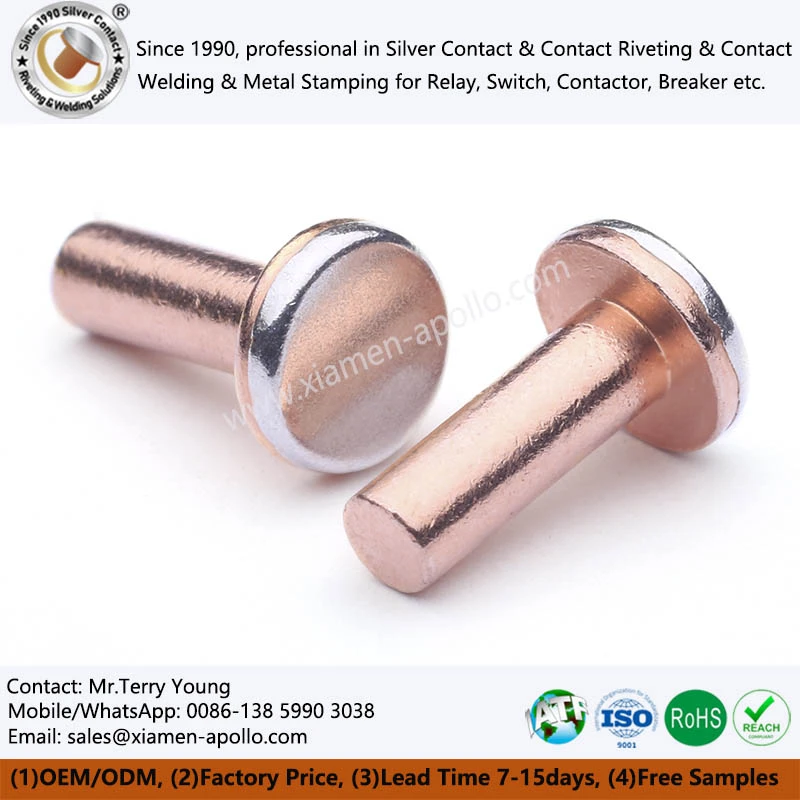
Silver accounts for a significant proportion of the raw material cost in many electrical contact assemblies. When LBMA silver prices and LME copper prices rise simultaneously, manufacturers face higher material costs, particularly for solid silver contacts, silver-tipped rivets and copper-based electrical terminals. A practical silver contact procurement strategy should combine Bimetal Electronic Contacts construction, controlled silver consumption, stamping scrap reduction and transparent metal price indexing rather than relying solely on unit-price negotiations.
For procurement managers, the objective is not simply to purchase silver at a lower price. It is to maintain the required contact resistance, arc erosion resistance and switching life while controlling the amount of precious metal consumed per finished component.
How Silver and Copper Price Fluctuations Affect Electrical Contact Manufacturing
Silver Price Increases and Their Impact on Contact Unit Costs
Silver is a key conductive material in relays, circuit breakers, contactors and other switching devices. Its market price directly affects the material cost of electrical contact components.
For solid silver contacts, the relationship between silver price and material cost is relatively direct. A higher silver price increases the cost of each contact according to its actual silver weight.
The calculation can be expressed as:
Silver Material Cost = Net Silver Weight × Silver Unit Price
For example, assume a contact contains 0.20 g of silver.
If the silver price increases by USD 0.20/g, the additional raw material cost per contact is:
0.20 g × USD 0.20/g = USD 0.04
At an annual purchasing volume of 2 million pieces, this represents an additional USD 80,000 in silver material cost, before considering processing losses, manufacturing overhead and other expenses.
The impact becomes more significant for products with high silver content or large annual production volumes.
Copper Price Fluctuations and Composite Contact Costs
Copper is widely used as the conductive base material in electrical contact assemblies.
Common applications include:
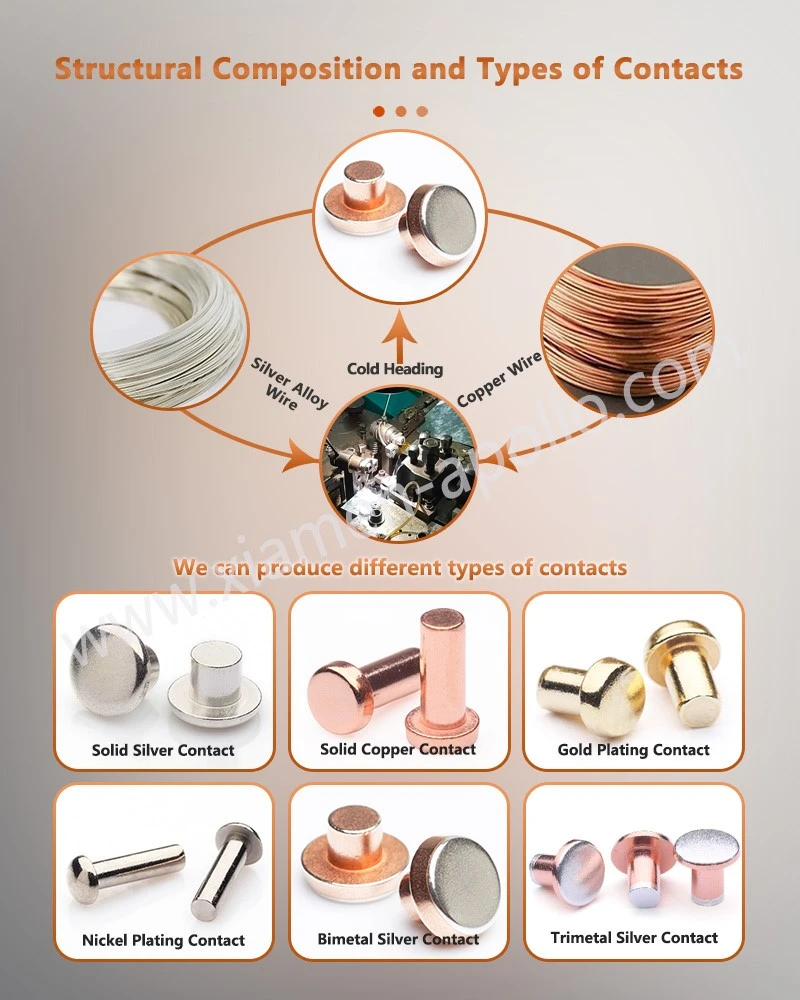
- Copper shanks for Electrical Silver Bimetal Contact Rivets.
- T2 copper substrates for silver-tipped electrical contacts.
- Copper terminals and stamped conductive components.
- Copper carriers used in relay and contactor assemblies.
Changes in LME copper prices affect the manufacturing cost of these components, especially when copper consumption represents a substantial share of the finished product weight.
For bimetal contacts, both silver and copper prices influence the total material cost. Procurement teams therefore need to evaluate the two metals separately instead of treating the finished component as a fixed-price commodity.
Raw Material Cost Structure and Procurement Exposure
The following table illustrates how different electrical contact structures respond to metal price changes.
| Contact Structure | Main Material | Exposure to Silver Price | Exposure to Copper Price |
|---|---|---|---|
| Solid silver contact | Ag | Very High | Low |
| AgSnO2 contact | Silver-based alloy | High | Low to Medium |
| Bimetal silver rivet | Ag alloy + Copper | Medium to High | Medium to High |
| Silver-tipped copper terminal | Ag alloy + T2 Copper | Medium to High | High |
| Copper stamped terminal | T2 Copper / Brass | None | High |
The actual cost exposure depends on silver content, copper weight, material yield and the proportion of each material in the finished component.
Procurement implication: A supplier quotation should identify the metal content and processing cost separately. Otherwise, buyers cannot determine whether a price increase comes from commodity movements, material consumption or manufacturing charges.
Three Engineering Strategies to Reduce Silver Contact Procurement Costs
Reducing silver consumption does not mean simply reducing the silver content of an electrical contact. Any material substitution must preserve the electrical and mechanical properties required by the switching application.
Three manufacturing strategies can directly reduce precious metal expenditure.
Replace Solid Silver Contacts with Bimetallic Silver Contacts
Bimetal cold heading combines a silver-based contact head with a copper shank through controlled forming and metallurgical bonding.
Compared with a solid silver rivet of equivalent external dimensions, a Bimetal Silver Contact uses silver only in the functional contact region. The copper shank provides mechanical support and an electrical conduction path.
The principal cost advantage comes from replacing unnecessary silver volume with copper.
For example, a relay contact assembly that does not require a fully silver body may be redesigned using an AgSnO2 contact head and a copper shank.
However, material substitution must consider:
- Contact material compatibility with the switching load.
- Bonding strength between the silver head and copper shank.
- Electrical resistance across the contact interface.
- Contact temperature rise under rated current.
- Arc erosion and material transfer during switching.
- Mechanical deformation during riveting and assembly.
The silver head must retain sufficient thickness throughout the specified contact service life.
A reduction in silver consumption is only commercially meaningful if the revised contact passes the required electrical endurance and mechanical validation tests.
Optimize Silver Layer Thickness According to Contact Performance
Silver layer thickness is another direct cost variable in composite electrical contacts.
Excessive silver material increases raw material expenditure, while insufficient silver thickness may accelerate substrate exposure, increase contact resistance and shorten electrical service life.
The appropriate thickness should be determined by operating conditions rather than by applying one universal specification.
Engineering evaluation should include:
- Rated current and continuous current density.
- Switching voltage and load characteristics.
- Electrical endurance requirements.
- Contact force and contact area.
- Arc duration and switching frequency.
- Silver alloy composition and expected erosion behavior.
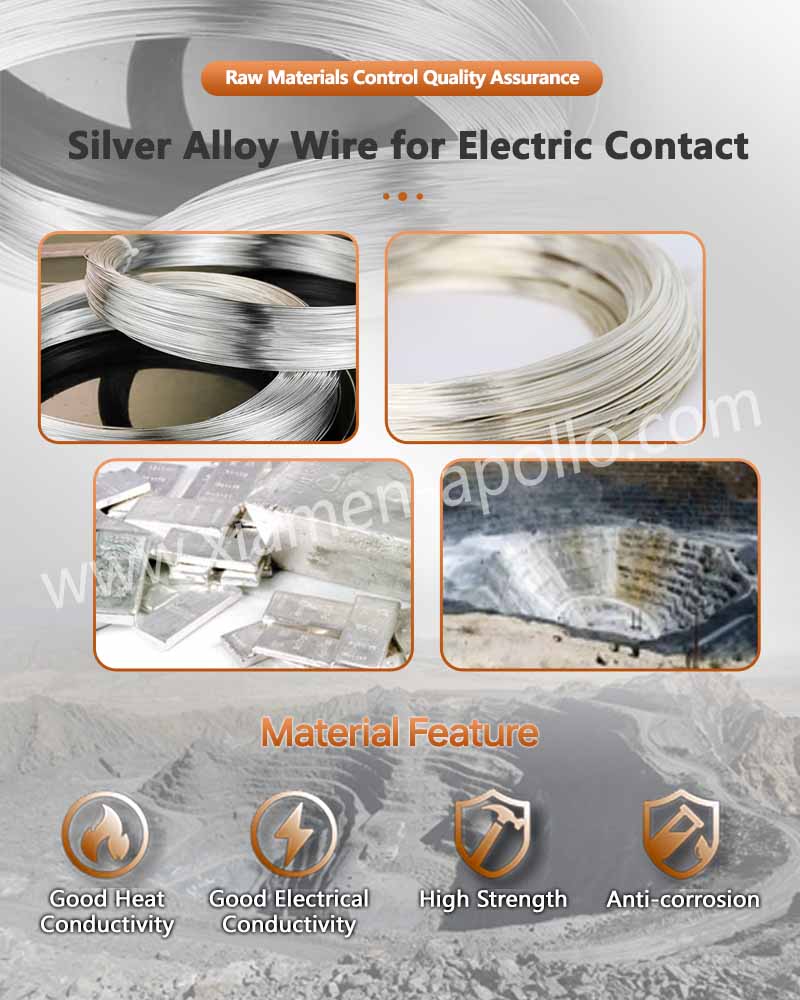
For AgSnO2 and AgNi contacts, the contact material must be selected according to the actual electrical load.
AgSnO2 is commonly considered for applications requiring resistance to arc erosion and material transfer. AgNi is used in applications where its conductivity, contact behavior and switching characteristics meet the design requirements.
Reducing the silver-bearing layer without evaluating the contact's operating conditions can increase the total lifecycle cost, even when the initial purchasing price decreases.
Reduce Silver Scrap Through Progressive Die Stamping and Material Yield Control
Material utilization is another important factor in silver contact procurement.
During progressive die stamping, scrap may be generated through strip layout, carrier connections, punching clearance and component geometry.
For silver-bearing strip materials, unnecessary scrap directly increases the effective material cost per finished component.
Manufacturing optimization should focus on:
- Strip layout optimization to increase material utilization.
- Accurate punching clearance to reduce burr formation.
- Progressive die alignment to maintain dimensional consistency.
- Stable feeding to prevent material displacement.
- Scrap segregation and recovery for silver-bearing materials.
- Statistical monitoring of material consumption per production batch.
For silver contacts manufactured from strip stock, the material yield should be calculated using:
Material Utilization Rate = Net Finished Part Weight ÷ Total Input Material Weight × 100%
The calculation should distinguish recoverable silver-bearing scrap from actual material loss. Recovered scrap has economic value, but it still creates handling, refining and recycling costs.
| Material | Main Characteristics | Engineering Considerations | Typical Application |
|---|---|---|---|
| Pure Silver | High electrical and thermal conductivity | Mechanical strength and arc erosion requirements | Low-resistance contact applications |
| AgSnO2 | Arc erosion resistance and resistance to contact welding | Contact resistance, switching load and processing compatibility | Relays and circuit breakers |
| AgNi | Conductivity and stable switching behavior in suitable applications | Contact transfer, welding tendency and electrical endurance | Relays and switching devices |
| Ag/Cu Bimetal | Reduced silver consumption through composite construction | Bond strength, silver layer thickness and interface resistance | Silver contact rivets and terminals |
These materials are not interchangeable on a one-to-one basis. Selection should be validated against IEC 60947 where applicable, together with the product-specific electrical endurance requirements.
Transparent Metal Price Indexing: Linking Procurement Quotes to LBMA and LME Benchmarks
Engineering cost reduction addresses the amount of metal consumed. Price indexing addresses the amount paid for that metal.
For electrical contact manufacturers and component buyers, a transparent quotation mechanism should separate commodity prices from conversion costs.
Use LBMA Silver and LME Copper as Reference Benchmarks
The London Bullion Market Association (LBMA) publishes the LBMA Silver Price, which is widely used as a reference for silver transactions.
The London Metal Exchange (LME) publishes copper reference prices used in international industrial metal trading.
These benchmarks provide a common reference for both parties when negotiating long-term supply agreements.
A quotation should specify:
- Benchmark source: LBMA Silver Price or LME Copper.
- Reference date or averaging period.
- Currency and applicable exchange rate.
- Silver or copper content per component.
- Material conversion and manufacturing charges.
- Processing loss and agreed material yield.
- Price adjustment frequency.
- Effective date of revised quotations.
Without these details, a metal-linked quotation can still produce disputes because the buyer and supplier may use different reference dates or calculation methods.
Establish a Transparent Raw Material Price Adjustment Formula
A practical indexed quotation can separate metal costs and processing costs.
Indexed Unit Price = Silver Cost + Copper Cost + Conversion Cost + Agreed Additional Charges
For a Bimetallic Rivet Contact, the calculation can be expressed as:
P = (Ws × Rs) + (Wc × Rc) + F
Where:
- P = Finished component unit price.
- Ws = Silver alloy payable weight per component.
- Rs = Agreed silver reference price per unit weight.
- Wc = Copper payable weight per component.
- Rc = Agreed copper reference price per unit weight.
- F = Conversion and other agreed manufacturing charges.
The calculation should define whether Ws represents the actual silver content or the gross weight of the silver alloy head. If the alloy contains tin oxide or nickel, the payable silver weight must reflect the agreed material composition.
Similarly, the copper component should be calculated according to the agreed copper content and material specification.
The following example illustrates the structure of an indexed quotation.
| Cost Element | Reference | Calculation Basis |
|---|---|---|
| Silver material | LBMA Silver Price | Agreed payable silver weight |
| Copper material | LME Copper Price | Agreed payable copper weight |
| Conversion cost | Contracted manufacturing rate | Processing cost per component |
| Additional charges | Contract agreement | Packaging, testing or other specified costs |
The example is a pricing framework rather than a universal market quotation. Actual benchmark values, conversion rates and settlement terms must be agreed between the buyer and supplier.
Define the Price Adjustment Cycle in Long-Term Supply Agreements
Daily metal price movements do not necessarily require daily changes to finished component quotations.
For recurring orders, buyers and suppliers can agree on a monthly or quarterly reference period.
A practical agreement should establish:
- A fixed quotation validity period.
- A defined LBMA and LME averaging window.
- A price adjustment threshold.
- A clear mechanism for upward and downward adjustments.
- The treatment of existing purchase orders.
- The effective date of each adjustment.
For example, both parties may agree to revise the metal component of the quotation when the agreed reference price changes by more than a specified percentage.
The threshold should be contractually defined rather than assumed by either party.
This approach makes raw material price changes traceable and reduces disputes caused by unilateral quotation adjustments.
Separate Metal Price Risk from Manufacturing Performance
Commodity prices are market-driven, but manufacturing costs can be controlled through process management.
A transparent quotation should distinguish between:
Market-driven variables
- Silver benchmark price.
- Copper benchmark price.
- Foreign exchange rate.
- Agreed material composition.
Manufacturing variables
- Silver and copper consumption per part.
- Material utilization rate.
- Cold-heading process efficiency.
- Progressive die stamping yield.
- Inspection and testing costs.
- Packaging and logistics charges.
This separation allows procurement teams to identify whether a price increase results from metal market movements or changes in manufacturing efficiency.
Consult Our Electrical Engineers Today
Supplier Evaluation: Controlling Silver Consumption and Material Traceability
A competitive quotation is not sufficient to establish a stable procurement relationship. Buyers also need to verify material specifications, manufacturing controls and the traceability of silver-bearing components.
Verify Silver Alloy Composition and Material Certificates
Silver contact materials should be specified according to their chemical composition and application requirements.
Common material information includes:
- Silver purity and alloy composition.
- AgSnO2 or AgNi material designation.
- Incoming material batch number.
- Material supplier certificate.
- Applicable RoHS and REACH compliance documentation.
For silver-based materials, the declared composition should be supported by appropriate material inspection records.
The procurement specification should also identify whether the quoted weight refers to the complete alloy material or the actual silver content.
Monitor Silver Layer Thickness and Bonding Quality
For Bimetallic Contact Rivets, the silver-bearing head and copper shank require consistent dimensional and bonding control.
Inspection items may include:
- Silver head diameter and height.
- Silver layer or head geometry.
- Copper shank dimensions.
- Bonding interface integrity.
- Shear or pull-off strength.
- Contact resistance.
Metallographic cross-section inspection can help identify interface defects, incomplete bonding and material discontinuities.
Bond strength acceptance limits should be defined by the component drawing or customer-approved specification rather than applying an unsupported universal value.
Establish Batch-Level Material Traceability
For recurring relay and circuit breaker production, each incoming material batch should be traceable to the corresponding production lot.
A traceability system should connect:
- Raw material purchase records.
- Incoming inspection reports.
- Production batch records.
- Process inspection results.
- Finished product inspection reports.
- Shipment records.
ISO 9001 and IATF 16949 provide relevant quality management frameworks, with IATF 16949 particularly applicable to automotive supply chains where required by the customer.
For electrical switching components, IEC 60947 provides relevant product requirements depending on the equipment category.
These systems and standards should be applied according to the actual certification scope, customer requirements and product classification.

Frequently Asked Questions
Q1. How can manufacturers reduce silver consumption in electrical contact components without affecting switching performance?
Manufacturers can evaluate Ag/Cu bimetal contact construction, optimize silver head dimensions and improve material utilization. Any design change must pass contact resistance, temperature rise, mechanical bonding and electrical endurance validation under the specified operating conditions.
Q2. How are LBMA silver prices and LME copper prices used in electrical contact quotations?
LBMA silver and LME copper prices serve as agreed commodity benchmarks. Suppliers calculate the metal portion using the applicable payable metal weight and reference price, then add the contracted conversion and manufacturing charges.
Q3. What material documents should buyers request when purchasing bimetal silver contact rivets?
Buyers should request material composition certificates, incoming inspection records, batch traceability information and applicable RoHS and REACH declarations. Bonding inspection and dimensional reports should also be provided according to the approved component specification.
contact us
Send your Bimetal Electronic Contacts drawings and annual volume requirements now to obtain a material cost assessment and a factory-direct quotation for your next production program.