

In today's rapidly developing electronic devices, silver plated contacts, as key connection components, are playing an increasingly important role. With the widespread application of new energy equipment and 5G communication technology, the technological advantages of silver plated contacts have been fully demonstrated. Silver plated contacts, with their superior conductivity and corrosion resistance, have become the preferred solution in modern electronic connection fields.

The Conductivity Advantages of Silver Plated Contacts
Silver is the most conductive metal, with a conductivity 1.06 times that of copper. In high-speed data transmission and high-frequency signal processing, the advantages of silver-plated contacts are particularly evident. Silver electrical contacts can significantly reduce contact resistance and improve signal transmission efficiency, making them especially suitable for 5G communication equipment and high-speed data transmission scenarios. Compared to gold-plated contacts, silver-plated contacts are less expensive but offer comparable conductivity, making them a cost-effective solution.
Applications of Silver-Plated Contacts in the New Energy Sector
According to the latest market data, in 2025, the application rate of silver-plated contacts in new energy DC load equipment reached 35%, an increase of 12% compared to 2023. This is mainly due to the excellent performance of silver-plated contacts in scenarios requiring high current and high stability. In new energy vehicle charging systems, energy storage equipment, and smart grids, silver-plated contacts (Silver Plated Copper Contacts) can effectively reduce energy loss and improve system efficiency.

Process and Technical Characteristics of Silver-Plated Contacts
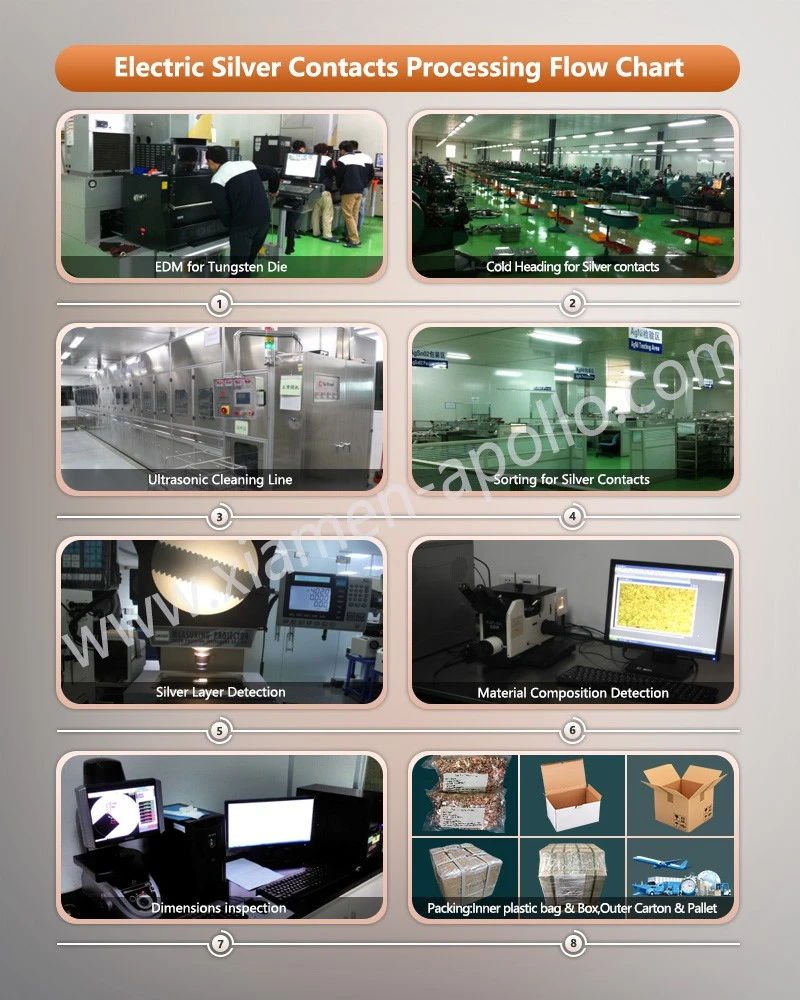
Silver plating (Silver Plating for Electrical Contacts) is a key technology for improving the performance of metal parts. By plating silver onto the surface of copper or aluminium conductors, a dense, non-porous protective layer can be formed, effectively isolating the substrate material from external contact and preventing oxidation and corrosion. The silver plating thickness is typically greater than 0.001 inches, ensuring long-term reliability. In electronic connector manufacturing, the hardness and wear resistance of silver-plated contacts enable them to withstand frequent mating and unmating operations, extending their service life.
Comparison of Silver-Plated Contacts and Gold-Plated Contacts
In the field of electronic connections, silver-plated contacts and gold-plated contacts are two mainstream choices. Gold-plated contacts perform excellently in high-frequency communication and precision instruments, but are more expensive, while silver-plated contacts achieve a good balance between cost and performance. Silver-plated contacts have slightly better conductivity than gold-plated contacts, and their cost is only 1/10 of gold-plated contacts, making them particularly suitable for large-scale applications.
Latest Development Trends of Silver-Plated Contacts
As the requirements for connection reliability in electronic devices increase, silver-plated contact technology is constantly innovating. The application of new silver alloy coating technologies (such as AgSnO₂) has reduced the contact resistance of silver-plated contacts by 40% and increased their service life to over 100,000 cycles. At the same time, the application of silver-plated contacts in emerging fields such as industrial control equipment and smart home appliances is becoming increasingly widespread.
Future Prospects of Silver-Plated Contacts
With the rapid development of 5G communication, new energy, and the Internet of Things, the demand for silver-plated contacts will continue to grow. Silver-plated electrical contacts will evolve towards thinner, more uniform, and more environmentally friendly designs. With the impact of silver price fluctuations on the industry, alternative solutions such as silver-copper composites will also become research hotspots, providing broader development prospects for silver-plated contact technology.
In conclusion, as a key component in the field of electronic connections, silver-plated contacts are becoming an indispensable part of modern electronic devices due to their excellent conductivity, corrosion resistance, and cost advantages. With the rapid development of new energy, 5G communication, and smart devices, silver-plated contact technology will continue to innovate, providing more reliable connection guarantees for electronic devices. Under the trend of miniaturisation and high performance in electronic devices, the application prospects of silver-plated contacts will be even broader.
contact us
