Stainless steel CNC machining is a subtractive manufacturing process in which computer-controlled cutting tools remove material from stainless steel stock to produce components with specified dimensions, surface finishes and geometric features. Depending on the component design, CNC milling, turning, drilling, tapping and multi-axis machining can achieve dimensional tolerances around ±0.01 mm, subject to material grade, part geometry, machine capability and inspection requirements.
CNC machining stainless steel parts is widely used for components that require corrosion resistance, mechanical strength, dimensional consistency, and controlled surface quality. The process is particularly suitable for custom components, small-to-medium production batches and precision parts with complex geometries.
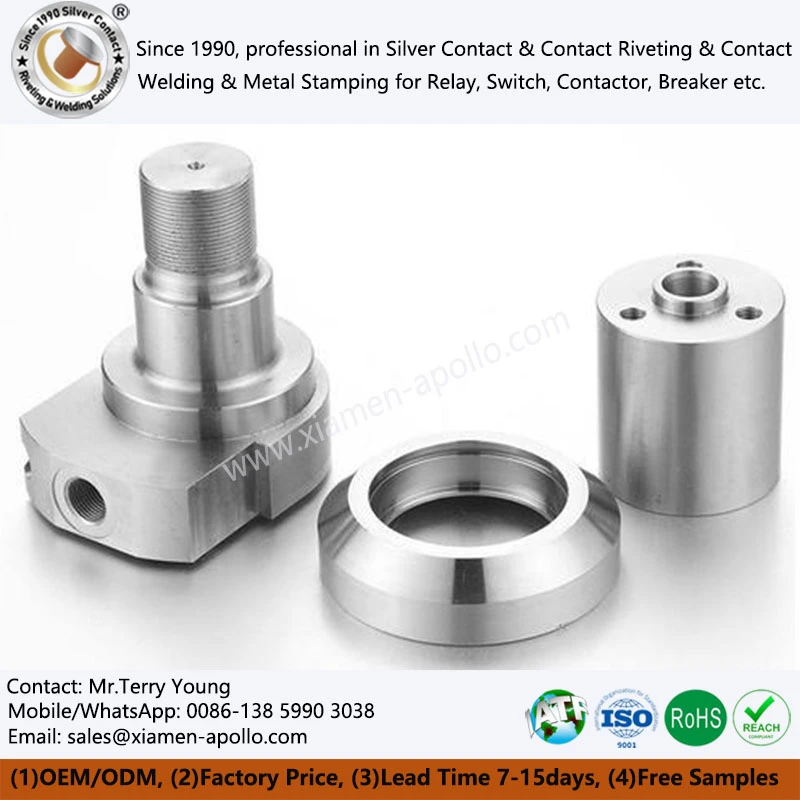
Core Advantages of Stainless Steel CNC Machining
The advantages of CNC machining stainless steel parts come from the combination of programmable tool movement, controlled material removal and the inherent properties of stainless steel. These characteristics make the process suitable for precision components across multiple industrial sectors.
Dimensional Accuracy and Geometric Control
CNC machining can produce complex profiles, precision holes, threaded features, slots and stepped surfaces within controlled dimensional limits.
For suitable part geometries and production conditions, dimensional tolerances of ±0.01 mm are achievable. Tighter tolerances may require additional process controls, specialized fixtures, temperature compensation and secondary finishing operations.
Typical inspection requirements include:
- Linear dimensions and hole diameters verified using calibrated micrometers and bore gauges.
- Position and concentricity evaluated using a coordinate measuring machine (CMM).
- Flatness and parallelism measured against drawing-defined geometric tolerances.
- Surface roughness checked using a profilometer, with Ra 0.8–3.2 μm commonly specified for different machined surfaces.
ISO 2768 may be used for applicable general tolerances, while critical dimensions and GD&T requirements should be specified directly on the engineering drawing.
Automated Production and Processing Efficiency
CNC machining reduces dependence on manual tool positioning and allows machining sequences to run automatically once the program, fixture and process parameters have been validated.
Multi-axis CNC equipment can complete several machining operations in one setup, reducing repeated positioning errors and intermediate handling.
For stainless steel parts, cycle time depends on:
- Material grade and initial hardness.
- Component dimensions and material removal volume.
- Cutting tool material, coating and geometry.
- Required surface finish and dimensional tolerance.
- Number of setups and machining operations.
Carbide cutting tools are commonly used for stainless steel because they provide suitable hot hardness and wear resistance. However, cutting speed and feed rate must be established according to the specific grade, tool manufacturer recommendations and machine rigidity.
Repeatability and Process Consistency
Once a CNC program and machining process have been qualified, the same machining sequence can be repeated across production batches.
Consistency depends on more than the CNC program itself. Tool wear, workpiece clamping, material batch variation, thermal expansion and machine condition must also be controlled.
For production requiring statistical quality control, manufacturers can establish:
- First Article Inspection (FAI) before batch release.
- In-process dimensional sampling.
- Statistical Process Control (SPC) for critical dimensions.
- CMM inspection for complex geometric features.
- Tool-life monitoring and preventive maintenance.
ISO 9001 quality management requirements provide a framework for documented production control and inspection records.
Corrosion Resistance and Mechanical Performance
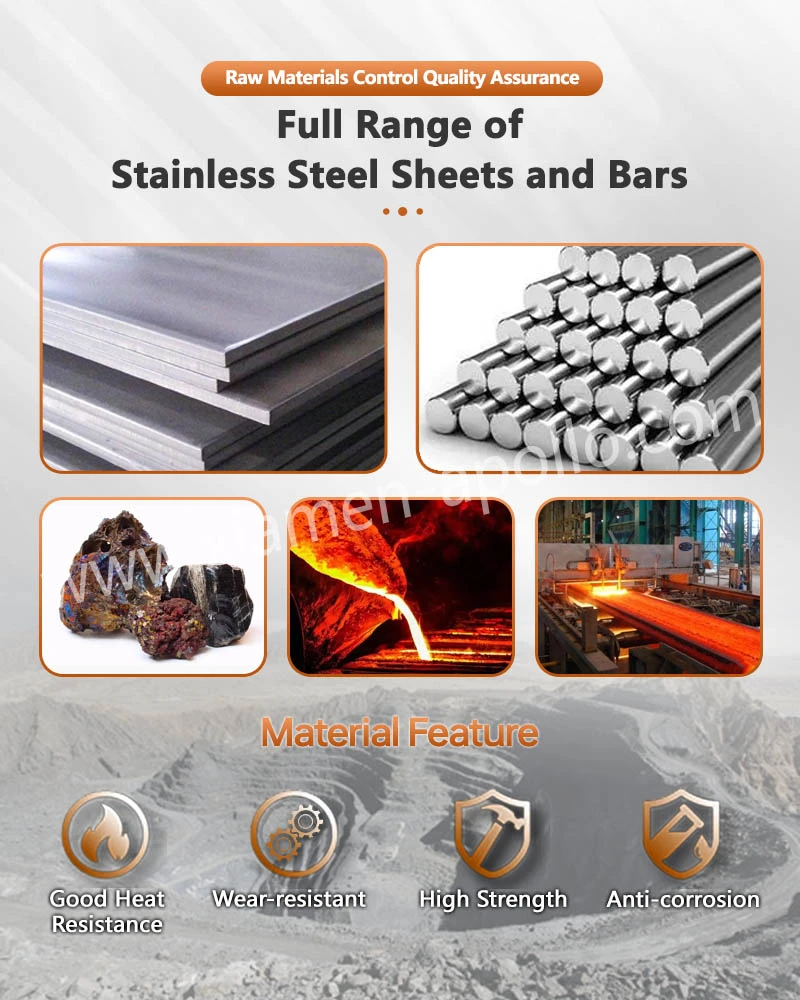
Stainless steel contains sufficient chromium to form a passive chromium-rich oxide film on its surface. This film helps protect the underlying metal against corrosion in suitable operating environments.
Different grades provide different combinations of corrosion resistance and mechanical properties.
| Stainless Steel Grade | Main Material Characteristics | Typical CNC Machining Applications |
|---|---|---|
| 304 | General corrosion resistance, good ductility, work-hardening tendency | Housings, brackets, shafts and equipment fittings |
| 316 | Molybdenum-bearing grade with improved chloride resistance | Marine fittings, fluid-handling parts and chemical equipment |
| 303 | Improved machinability due to sulfur additions | Precision shafts, threaded components and fittings |
| 410 | Heat-treatable martensitic stainless steel | Mechanical shafts, valve components and wear-related parts |
| 17-4 PH | Precipitation-hardening grade with high strength | Structural fittings, precision mechanisms and aerospace-related components |
Material selection should be based on the actual service environment rather than the assumption that all stainless steel grades offer equivalent corrosion resistance.
Download Contact Material Spec Sheet
Industrial Applications of Stainless Steel CNC Machining Parts
Stainless steel CNC parts are used in industries where components must withstand mechanical loads, environmental exposure, repeated operation or strict dimensional requirements.
The required material grade and machining method vary according to the component's operating conditions.
Aerospace and Aviation Equipment
Aerospace machining requires close dimensional control, material traceability and documented inspection procedures.
Stainless steel CNC machined parts are used in selected structural fittings, instrument components, fastening systems and mechanical assemblies.
Typical engineering considerations include:
- Dimensional tolerances defined by component drawings and GD&T.
- Material certification and heat-number traceability.
- Controlled surface finish to reduce stress concentration at machined features.
- Verification of critical holes, threads and mating surfaces.
For high-strength applications, precipitation-hardening grades such as 17-4 PH may be considered when their strength, corrosion resistance and operating-temperature limits meet the design requirements.
Automotive and Mechanical Manufacturing
Automotive applications include precision shafts, threaded fittings, valve components, mounting brackets and transmission-related hardware.
CNC machining steel parts can produce functional features that require accurate alignment, controlled clearances and repeatable assembly dimensions.
Important manufacturing considerations include:
- Shaft diameter and concentricity control.
- Thread dimensions and engagement depth.
- Bore tolerances for bearing or bushing installation.
- Surface finish on sliding and mating interfaces.
- Material hardness after any specified heat treatment.
For components exposed to road salt, moisture or chemical cleaning agents, 304 or 316 stainless steel may be selected according to the corrosion environment and mechanical requirements.
Electronic Equipment and Electrical Components
Stainless steel CNC parts are used in electrical enclosures, instrument housings, mounting structures, precision connectors and mechanical support components.
In electronic equipment, dimensional accuracy directly affects assembly alignment, enclosure sealing and the positioning of internal components.
Common machining features include:
- Precision mounting holes and threaded inserts.
- Milled slots for component positioning.
- Connector interfaces and stepped bores.
- Thin-wall housings and custom mechanical supports.
For electrical applications, stainless steel should not be treated as a substitute for copper or silver in current-carrying contact interfaces. Its electrical conductivity is substantially lower. Stainless steel is generally more suitable for structural, protective and mechanical functions.
Medical Equipment and Industrial Hardware
Medical equipment and industrial hardware often require corrosion-resistant surfaces, accurate mechanical interfaces and controlled finishing processes.
Typical applications include instrument brackets, surgical equipment components, fluid-handling fittings, valve bodies and equipment fasteners.
Manufacturing requirements may include:
- Material grade verification against ASTM A240 or the applicable material specification.
- Burr removal from holes, slots and sharp edges.
- Surface roughness inspection according to the component drawing.
- Cleaning to remove cutting fluids, chips and machining residues.
- Passivation where required by the design and applicable ASTM A967 requirements.
For components intended for repeated cleaning or sterilization, the stainless steel grade and surface condition must be evaluated against the actual cleaning chemicals, temperatures and exposure cycles.
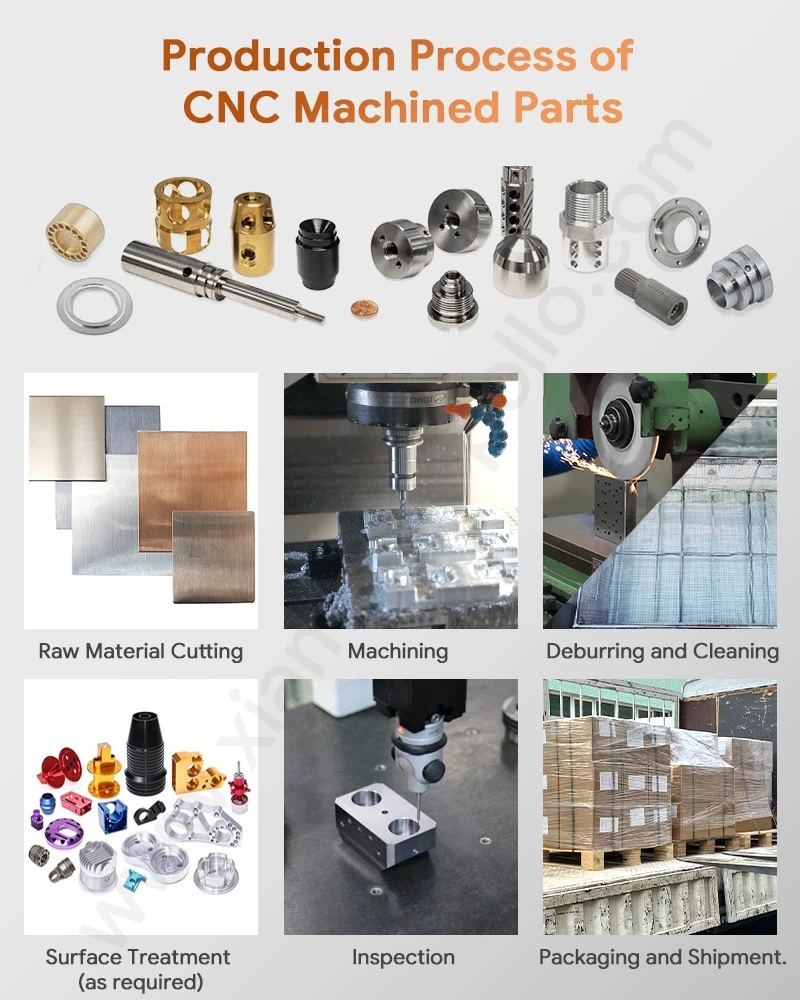
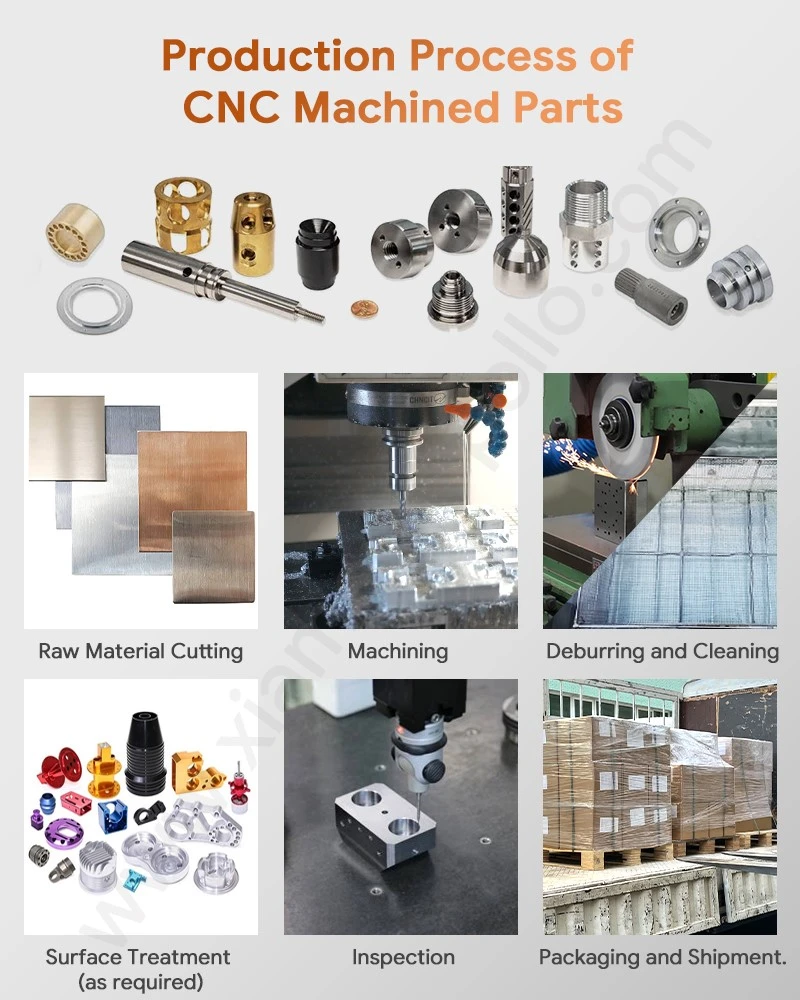
Stainless Steel CNC Machining Process and Quality Control
The production of stainless steel CNC parts requires coordinated control of engineering drawings, material selection, machining parameters, workholding and inspection. A qualified manufacturing process should establish measurable acceptance criteria before batch production begins.
CAD Drawing Review and Design Verification
Production begins with a 2D engineering drawing or 3D CAD model.
Before machining, the engineering team reviews:
- Overall dimensions and critical tolerances.
- Hole positions, diameters and thread specifications.
- Wall thickness and structural geometry.
- Surface roughness requirements.
- Material grade and heat-treatment condition.
- Surface finishing and passivation requirements.
Design review should also identify features that may cause machining difficulties, including deep narrow cavities, thin walls, sharp internal corners and difficult-to-access surfaces.
CNC Programming and Toolpath Optimization
The CAD model is imported into CAM software to generate machining tool paths.
Programming engineers determine the machining sequence based on material properties, component geometry and the required production output.
For 304 and 316 stainless steel, toolpath planning should account for work hardening, heat generation and chip evacuation.
Common machining operations include:
- Face milling for reference surfaces.
- End milling for slots, pockets and external profiles.
- CNC turning for cylindrical components.
- Drilling and boring for precision holes.
- Tapping for threaded features.
- Chamfering and deburring for edge preparation.
Carbide inserts and end mills are commonly selected for production machining. Tool geometry, coating and cutting conditions must be matched to the specific stainless steel grade.
Workpiece Clamping and CNC Machining
Stainless steel stock is secured in a fixture or machine vise to prevent movement during cutting.
Clamping force must be sufficient to resist machining loads without deforming thin-wall or slender components.
During machining, the operator or automated monitoring system should control:
- Spindle speed and feed rate.
- Cutting depth and tool engagement.
- Coolant supply and chip evacuation.
- Tool wear and cutting-edge condition.
- Workpiece temperature and dimensional stability.
For austenitic stainless steel, stable cutting conditions are especially important. Excessive tool rubbing can cause localized work hardening, while poor chip evacuation can damage the machined surface and cutting edge.
Deburring, Surface Finishing and Secondary Processing
After material removal, stainless steel parts may require secondary operations to meet assembly and surface requirements.
Common finishing methods include:
- Mechanical deburring to remove sharp edges.
- Grinding to correct selected surface conditions.
- Brushing to produce a directional surface texture.
- Polishing to reduce surface roughness.
- Passivation to improve the corrosion performance of the surface.
- Electropolishing for applications requiring controlled surface finishing.
The finishing process must not compromise critical dimensions, thread engagement or functional mating surfaces.
Where passivation is specified, ASTM A967 provides relevant guidance for chemical passivation treatments of stainless steel parts.
Dimensional Inspection and Final Quality Verification
Final inspection verifies whether the machined component conforms to the approved engineering drawing and purchase specifications.
| Inspection Item | Measuring Method | Typical Requirement or Reference |
|---|---|---|
| Linear dimensions | Digital caliper and micrometer | Drawing tolerance, such as ±0.01 mm |
| Hole diameter | Bore gauge and pin gauge | Drawing-defined diameter and tolerance |
| Geometric accuracy | CMM | Position, flatness, and concentricity tolerances |
| Surface roughness | Surface profilometer | Drawing-defined Ra, such as 0.8–3.2 μm |
| Material composition | Material certificate or chemical analysis | Specified stainless steel grade |
| Corrosion-related finishing | Applicable passivation testing | ASTM A967, where specified |
Inspection frequency should be determined by production volume, component risk, drawing requirements, and the agreed quality plan.
Frequently Asked Questions about CNC stainless steel parts
1. What dimensional tolerance can stainless steel CNC machining achieve?
For suitable component geometries and stable machining conditions, ±0.01 mm is achievable. Tighter tolerances depend on material grade, machine accuracy, workholding, thermal control and inspection capability. Critical dimensions should be identified on the engineering drawing.
2. Which stainless steel grade is most suitable for CNC machining?
Grade 303 offers better machinability, while 304 is widely used for general corrosion resistance. Grade 316 is preferred for many chloride-exposed environments. The correct grade depends on corrosion exposure, mechanical loading, hardness and component function.
3. What information is required to obtain a stainless steel CNC machining quotation?
Provide a 2D drawing or 3D CAD file, stainless steel grade, dimensional tolerances, surface finish, heat-treatment or passivation requirements and estimated order quantity. These details support machining feasibility review, process planning and quotation accuracy.
contact us
Have a stainless steel CNC component ready for production? Submit your CAD drawings and technical specifications for an engineering review and factory quotation. Production planning, CNC milling, CNC turning, secondary finishing and dimensional inspection can be coordinated according to your component requirements.