

Gold plating is a surface treatment technique that utilizes electrolytic or chemical methods to uniformly deposit a thin layer of gold onto the surface of a metal or other substrate. Due to gold's rarity, exceptional chemical stability, and superior electrical conductivity, a gold-plated layer serves not only as a decorative finish and a safeguard against corrosion but also significantly reduces contact resistance and enhances conductive efficiency. In modern industry, the quality of the gold-plating process is determined not merely by factors such as adhesion, uniformity, and luster; rather, the most critical metric is the thickness of the gold layer. This article will systematically elucidate the principles, application scenarios, and key technical parameters of gold plating-focusing on the two primary process routes: electroplating and electroless plating-while placing particular emphasis on the engineering value of gold-coated contacts within the electrical sector.

Electroplating is currently the most prominent and widely utilized gold-plating process. Its fundamental principle involves designating the product to be plated as the cathode and immersing it in a plating bath containing gold ions. An external electric current is then applied to generate an electric field; as a result, gold ions acquire electrons, undergo reduction, and deposit onto the product's surface, thereby forming a uniform and dense gold coating. The plating bath is typically formulated as a viscous liquid using pure gold-with a purity exceeding 99.98%-that has undergone a melting process. Additives such as sodium cyanide, phosphates, and nickel or cobalt salts are subsequently introduced to regulate the bath's properties and enhance the hardness of the resulting coating.
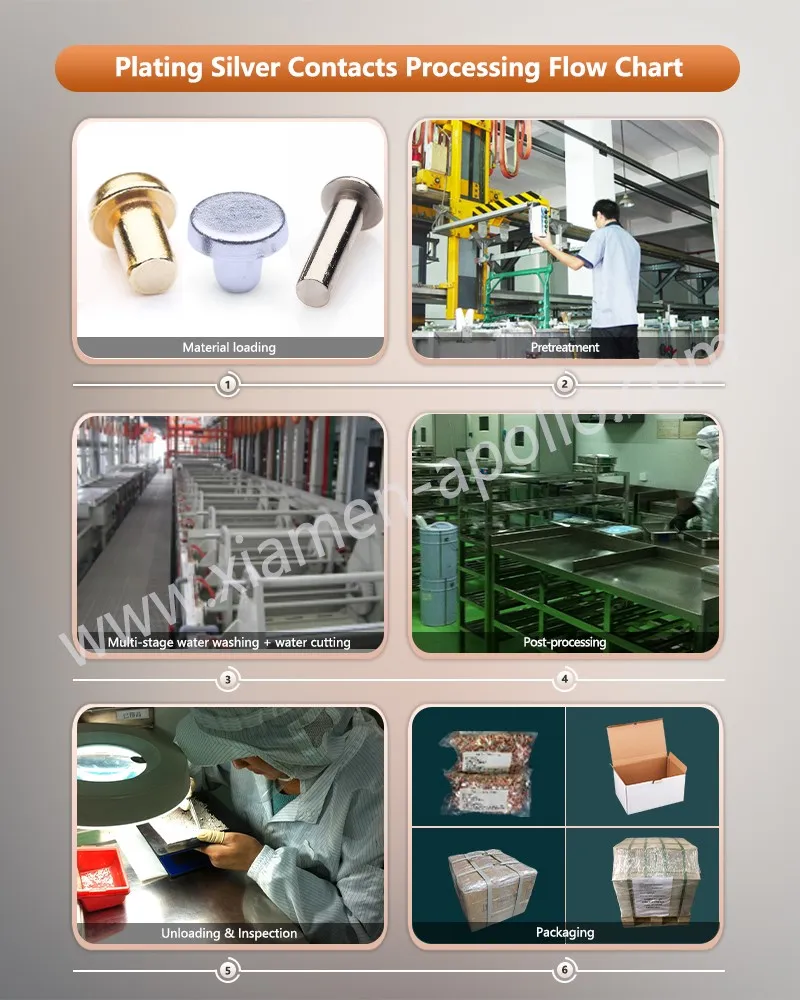
The electroplating process is applicable to a diverse range of substrates, including metals, resins, glass, and ceramics; however, the specific pre-treatment procedures required for different materials vary significantly. For instance, in the manufacture of gold-plated bimetal contacts, copper-based or copper-alloy contacts typically undergo a sequence of pre-treatments-including degreasing, acid pickling, and nickel pre-plating-before the actual gold electroplating takes place. This sequence serves to enhance the adhesion between the gold layer and the substrate while simultaneously preventing the diffusion of copper ions. In the specific context of gold plating for electrical contacts, the thickness of the electroplated gold layer is generally controlled within a range of 0.2 to 5 micrometers; thicker gold layers are typically reserved for applications involving frequent insertion and extraction cycles or for high-reliability connectors, whereas thinner gold layers are utilized in cost-sensitive consumer electronics products.
In actual manufacturing, the production of gold-plated copper rivets represents a typical process for creating electrical contacts. The process begins by shaping pure copper or brass material into a rivet-shaped contact base, followed by the deposition of a gold layer onto its surface via electroplating or electroless plating. These gold-plated copper rivets are widely utilized in thermal overload relays, microswitches, and automotive electrical components. For applications with more stringent cost or performance requirements, gold-plated bimetal contacts employ composite base materials-typically copper/silver or copper/nickel-to minimize the consumption of precious metals while simultaneously ensuring excellent conductivity and solderability.
To further reduce production costs, the "gold flash plating" process utilizes an extremely brief electroplating duration to form an ultra-thin gold layer, typically ranging in thickness from just 0.025 to 0.1 microns; this technique is primarily applied to disposable consumer electronics or devices with low mating-cycle requirements. In the realm of precision micro-components, the mechanical riveting of gold-plated contacts onto terminal brackets facilitates both mass production and convenient field replacement, making this solution widely applicable in household appliance control switches and various instrumentation devices.
In industries such as low-voltage electrical appliances, automotive electronics, communication equipment, and relays, industrial gold-plated contacts are widely utilized in applications demanding high reliability and low contact resistance. Gold itself is resistant to oxidation and possesses excellent ductility and corrosion resistance; these properties enable gold-plated contacts to maintain stable conductivity even when handling minute currents and signal-level voltages.
More specifically, gold-plated contacts for relays typically employ thin-gold or flash-plating processes, resulting in a gold layer thickness ranging from 0.05 to 0.2 micrometers. These contacts are primarily used in signal relays and low-power control relays to ensure that contact failures do not occur under light load conditions. Conversely, regarding gold-plated contacts for contactors-given the high current flow within the contactor's main circuit-gold plating is generally applied only to auxiliary contacts or control terminals to strike a balance between cost-effectiveness and reliability. In the realm of switch products, gold-plated contacts for switches are commonly found in miniature pushbuttons, DIP switches, and keyboard switches; here, the gold plating effectively prevents corrosion of the contact surfaces caused by moisture from human fingers or environmental sulfides.

Whether the application involves gold plating on electrical contacts or industrial gold plating in a broader sense, understanding the differences between electroplating and electroless plating-as well as their respective application scenarios and process parameters-is a prerequisite for ensuring product quality. For electrical contact components specifically, particular attention must be paid to gold layer thickness, porosity, substrate type, and compatibility with subsequent riveting or welding processes. Only by selecting the appropriate plating process and specifications can gold-plated contacts truly deliver their full value in terms of corrosion resistance, low electrical resistance, and high reliability.
Thank you for reading this technical article. If you have further inquiries regarding the selection of Electrical Contact Gold Plated, gold layer thickness standards, or substrate material compatibility, please feel free to contact us at any time; we would be pleased to provide you with professional technical consultation and product services.
contact us
