

In modern high-precision electronic and electrical systems, gold-plated contacts serve as critical components for ensuring lossless signal transmission and the long-term stable operation of equipment, thanks to their exceptional conductivity, extremely low contact resistance, and superior resistance to oxidation and corrosion. Whether in high-frequency communication devices, precision instrumentation, or high-reliability aerospace and medical electronics sectors, gold-coated contacts play an indispensable role. However, the physical thickness of the gold plating is typically measured in microns-or even sub-microns-making it extremely delicate and fragile. Consequently, during the usage, cleaning, and maintenance of these products, ensuring the integrity of the plating and the cleanliness of the contact interface constitutes a fundamental body of industry knowledge that every engineer and technician must master.
The conductive reliability of bimetal contacts with gold plating is predicated upon a dual premise: the integrity of the plating and the cleanliness of the interface. Any improper cleaning procedure-particularly the use of cleaning tools containing abrasive particles or solvents that leave behind strong polar residues-can lead to the premature wear of the plating at a microscopic level or result in the formation of micro-furrows. This not only compromises the surface flatness of the contacts but also causes contact resistance to undergo irreversible drift early in the equipment's normal service life. Therefore, when cleaning and maintaining gold-plated electrical contacts, the primary objective must always be the "non-destructive removal of contaminants," while simultaneously balancing operational efficiency with the preservation of the plating.
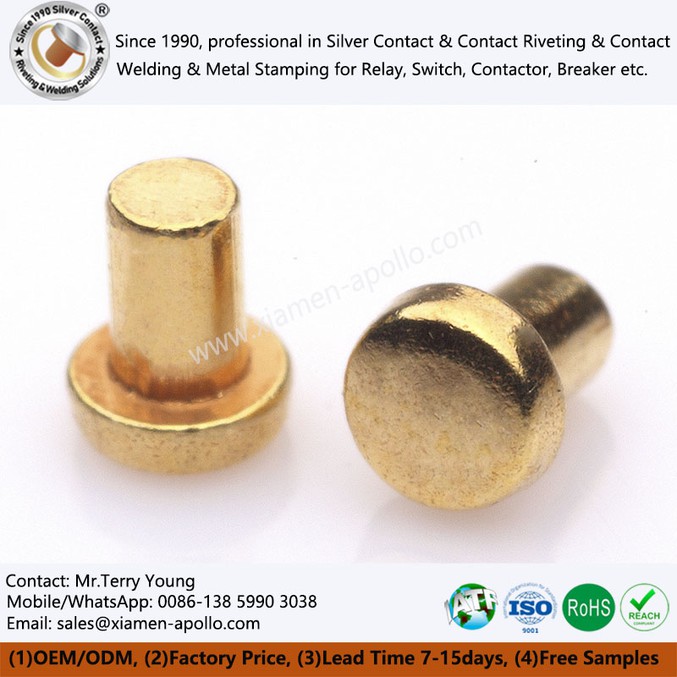
During routine cleaning, the proper selection of solvents and cleaning techniques is paramount. It is recommended to use high-purity isododecane or high-purity ethanol with a volume fraction of ≥99.5% as the cleaning solvent. When performing the cleaning, use a lint-free cloth dampened with a small amount of solvent to gently wipe the contact surface once, using a "single-direction sweeping" motion along the contact's longitudinal axis; under no circumstances should a back-and-forth rubbing motion be applied to the same spot. This unidirectional wiping technique effectively prevents contaminants from being repeatedly ground into the contact surface, thereby preventing microscopic mechanical damage to the gold-plated contacts.
If the contact surface is contaminated with stubborn substances-such as silicone-based mold release agents or specific industrial oils-simple physical wiping may not be sufficient to remove them completely. In such cases, the surface may first be wetted for 5 seconds with a 0.2% neutral surfactant solution to soften and break down the organic film; this step must be immediately followed by purging with dry nitrogen (dew point ≤-40°C) to ensure that no liquid film residue remains on the surface. Upon completion of the cleaning process, it is recommended to perform a spot check within 30 seconds using a four-wire impedance meter (with a test current of 10 mA) at three different locations on the contact. If the contact resistance of the gold-plated electrical contacts is found to have increased by more than 1 mΩ, the aforementioned cleaning procedure must be repeated, but with the solvent volume reduced by half to prevent excessive dissolution that could lead to microscopic hairline cracks in the gold plating.
Throughout the entire cleaning and maintenance process, operator safety and protective measures must not be overlooked. Operators are required to wear powder-free nitrile gloves at all times; direct contact between bare hands and the contact surfaces is strictly prohibited. Should natural oils secreted by human skin be transferred to the gold-plated surface, they will form an insulating organic film exceeding 10 nm in thickness within 24 hours; such a film is extremely difficult to remove completely using conventional solvents and will severely compromise the electrical conductivity of the gold-plated contacts. Furthermore, when inserting, extracting, or assembling gold-plated contacts, ensure proper alignment of the connectors and handle them gently to prevent mechanical stress from causing scratches to the plating or deformation of the base material.
To extend the service life of gold-plated contacts, establishing a systematic and regular maintenance schedule is essential. It is recommended to store contact assemblies in a storage cabinet purged with dry nitrogen (oxygen content ≤ 0.5%, relative humidity ≤ 15%) and to implement a dual-cycle maintenance strategy consisting of "weekly inspections plus monthly measurements." The contact surfaces should be visually inspected weekly using a 10x microscope; if any continuous scratch penetrating the gold plating is observed to exceed 0.3 mm in length, the component must be designated as a priority item and subjected to the monthly electrical performance measurement procedure.

In the field of precision connectors, gold plating on electrical contacts serves not only to facilitate electrical conductivity but also bears the critical responsibility of preventing fretting corrosion. During mating cycle testing or following extended periods of service, instances of unstable contact resistance are frequently attributed to fretting corrosion resulting from wear on the plating layer. In such cases-beyond merely replacing the contacts-optimizing the connector's locking mechanism to minimize relative micro-motion constitutes an effective strategy for safeguarding the gold-plated contacts.
Products Description
1. Why does contact resistance increase on Gold Coating Electrical Contacts?
Common causes include plating wear, surface contamination, fretting corrosion, and oil residue from human contact.
2. Can I touch Electrical Contact Gold Plated directly with my hands?
It is not recommended. Human skin oils can form an organic film on the contact surface, affecting conductivity and increasing contact resistance.
3. What is fretting corrosion on Industrial Gold Plated Contacts?
Fretting corrosion is caused by long-term minute vibrations or displacements of the connector, leading to plating wear, resulting in unstable contact and fluctuating resistance.
contact us
If you require further information regarding industrial gold-plated contacts, please do not hesitate to contact us. We offer comprehensive, one-stop services-ranging from material analysis and process design to technical support-to help your products achieve exceptional electrical performance and reliability.
