

The Function and Basic Definition of Contactors
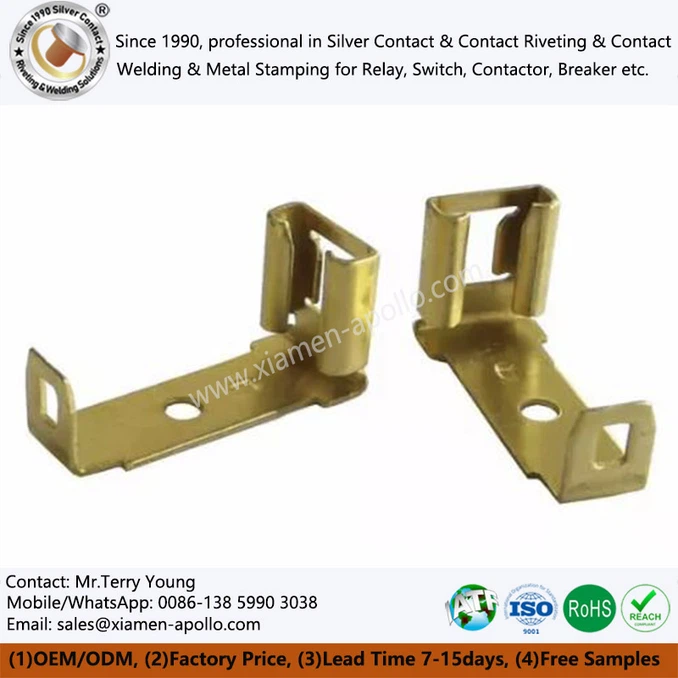
A contactor is an automatic control device used to make or break AC and DC main circuits as well as control circuits. Its primary controlled loads are electric motors, though it can also be utilized for other electrical loads, such as electric heaters and welding machines. The function of a contactor is similar to that of a knife switch; however, a contactor offers capabilities beyond merely making and breaking circuits. It possesses distinct advantages, including undervoltage release protection, zero-voltage protection, high control capacity, suitability for frequent switching operations and remote control, operational reliability, and a long service life-features notably absent in knife switches, which also require manual operation at close range. Consequently, the contactor is the most widely utilized electrical device within automatic control circuit systems. At the interface where the contactor's internal terminals connect with external conductors, brass sheet metal terminal parts serve the critical function of facilitating the input and output of both control signals and power; the electrical conductivity and corrosion resistance of these components directly determine the long-term operational reliability of the contactor.
Working Principles and Classification of Contactors
A contactor is an electrical device that utilizes the interplay between electromagnetic attraction and spring reaction forces to open or close electrical contacts. When the electromagnetic coil is energized, the iron core generates a magnetic force that attracts the armature, thereby actuating the contact system; conversely, when the coil is de-energized, the reaction springs return the armature and contacts to their original positions. Based on whether the contacts control alternating current (AC) or direct current (DC), contactors are classified into AC contactors and DC contactors; the primary distinction between the two lies in their respective arc-extinguishing methods. AC contactors typically employ grid-type or magnetic blow-out arc suppression, leveraging the natural zero-crossing characteristic of AC power to facilitate arc extinction. DC contactors, however, require more robust arc-extinguishing measures, as DC arcs lack natural zero-crossing points and therefore persist for longer durations. Within the aforementioned connection circuit linking the electromagnetic mechanism and the contact system, the "Relay Pin Brass Terminal" serves as a critical node for signal transmission; typically stamped from brass and treated with tin or silver plating, these terminals ensure the stable transmission of signals within the control circuit.
Selection of Brass Components for Contactor Contact Systems
A contactor's contact system comprises both main contacts and auxiliary contacts. The main contacts carry the current of the main circuit and therefore require high electrical conductivity and resistance to contact welding; the auxiliary contacts are utilized in control circuits and demand even greater stability in contact resistance. Regarding the connection between contacts and wiring terminals, "Brass Contact Plug Pins for Electric Switch Socket Parts" are manufactured from brass rods or strips; these components combine excellent electrical conductivity with robust mechanical strength, making them ideal for test ports or pluggable wiring terminals that undergo frequent insertion and extraction cycles. For connection solutions requiring crimp-based fastening, "Brass Contacts Crimp Terminal Block Assemblies for Socket Switches" feature brass contacts pre-assembled with crimp terminals. This design facilitates automated wire assembly, reduces the need for manual soldering, and simultaneously ensures the gas-tightness and pull-out strength of the crimped connection zone.
The Widespread Application of Brass Sheet Stamped Parts in Contactor Accessories
Contactors are frequently utilized in conjunction with accessories-such as thermal overload relays, pushbuttons, and indicator lights-to form complete motor starting and control circuits. Within these accessories, brass sheet stamped parts are extensively employed to serve as conductive connection strips, terminal tabs, and binding posts. This category of brass metal stamped components for electrical accessories encompasses a wide range of specifications, ranging from pushbutton contact strips to indicator light pins; the materials typically selected are C2680 or C2600 brass, known for their excellent formability and elasticity. The brass sheet stamping process is executed using progressive dies to complete multiple operations-including blanking, punching, bending, and cutting-ensuring high dimensional consistency during mass production and making the parts ideally suited for use in large-scale assembly lines. For projects requiring a high degree of customization, custom-stamped brass electrical contact parts can be manufactured according to client-provided drawings, allowing for the precise specification of material grade, thickness, surface finish, and critical dimensional tolerances to meet the diverse and differentiated requirements of various contactor accessory products.

Manufacturing Processes and Quality Control for Brass Sheet Metal Stamping
The quality of brass sheet metal stampings directly impacts the reliability of electrical connections within contactors and their associated accessories. The production workflow for brass stamped parts encompasses several stages: uncoiling, leveling, stamping and forming, deburring, cleaning, and inspection. Stamping speeds typically range from 150 to 400 strokes per minute; consequently, die designs must incorporate adequate compensation for material springback-a critical consideration, particularly for parts requiring precise bending angles. As versatile stamped components, these brass parts are widely utilized within contactor bases for fixed terminals, jumper strips, and grounding tabs.
For switch and socket applications, electrical brass stamped parts require additional validation via salt spray testing to verify their corrosion resistance; plating thickness is typically maintained within a range of 3 to 8 microns. Furthermore, brass sheet metal components-a general classification for parts fabricated from brass sheet stock-find extensive application in contactor auxiliary contact blocks, mechanical interlock mechanisms, and enclosure grounding terminals.
For further information regarding electrical brass components suitable for contactors and control devices, as well as customized metal stamping solutions, please contact us to obtain technical selection guides and sample support.
contact us
