

The Automatic Transfer Switch (ATS) serves as a core power distribution component in commercial and industrial facilities requiring continuous power supply. Its primary function is to safely switch between a normal power source and an emergency backup source, thereby preventing equipment downtime and business interruptions caused by power outages. Metal Stamping Parts-specifically those made of electric-grade copper-act as the critical structural support ensuring the switch operates with precision and stability; leveraging their superior electrical conductivity and structural integrity, they provide a robust hardware foundation for the reliable operation of the ATS. When selecting an ATS, engineers must carefully consider a multitude of factors-including system installation requirements, operational modes, and switching mechanisms-to determine the optimal configuration that precisely meets the specific needs of the application scenario.
In the realms of industrial manufacturing and commercial operations, many facilities require continuous, 24-hour operation, placing extremely high demands on the continuity of the power supply. As a critical piece of power distribution infrastructure, the ATS plays a pivotal role, and the appropriateness of its configuration directly determines the overall reliability of the power supply. Given that different operational scenarios present varying load characteristics and safety requirements, the corresponding ATS configurations must also differ accordingly. Copper Stamping Parts, serving as core internal connectors within the switch, have a precision and performance level that directly impacts the switch's switching efficiency and operational lifespan; consequently, they constitute a critical ancillary component that must be carefully evaluated and factored into the selection process.
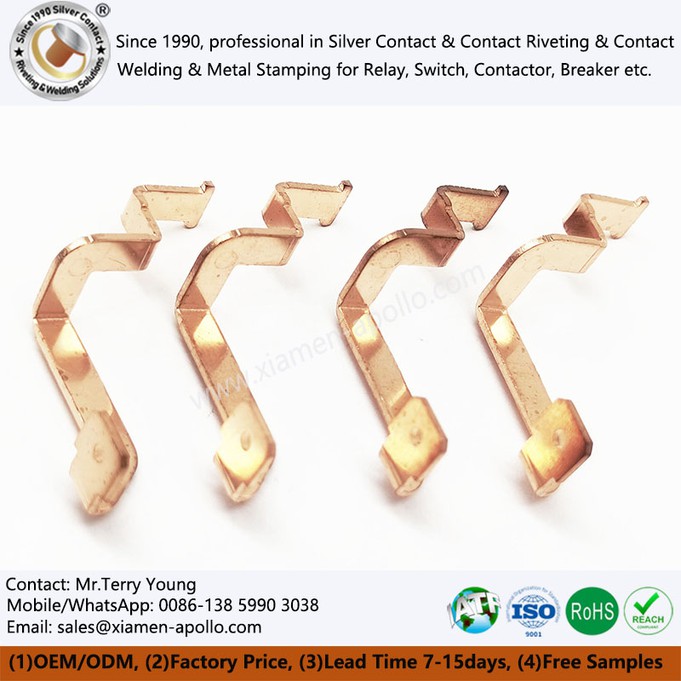
The core configuration differences in automatic transfer switches (ATS) center on their switching methods, which are broadly categorized into two main types: open transition and closed transition (parallel switching). Each method possesses distinct operational logic and is suited to specific application scenarios; consequently, engineers must select the appropriate switching configuration by carefully considering the criticality of the load function and the associated safety requirements. Thanks to their excellent electrical conductivity and high forming precision, Copper Strip Stampings are ideally suited for the switch structures of various switching methods, ensuring stable circuit connections during the transfer process and preventing faults caused by poor contact.
Open transition is a break-before-make switching mode. Its defining characteristic is that, during the transfer process, there is a brief disconnection interval between the normal power source and the emergency power source; during this interval, the downstream load experiences a temporary power interruption. This mode is further subdivided into two specific types: open delayed transition and open in-phase transition. Through precision stamping, Copper Stamped Components are engineered to meet the linkage requirements of open transition mechanisms, ensuring that the disconnection and connection actions are precise and controllable, thereby safeguarding the safety of the switching process.
The primary advantage of open delayed transition is its high level of safety. During a transfer, a preset pause is introduced between the disconnection of the current power source and the connection of the new one. This delay duration can be adjusted based on load voltage fluctuations or a predetermined time setting, effectively preventing the inrush current generated during power switching from damaging equipment. OEM Factory Customized Copper Metal Stamping Parts can be tailored to specific switch models and application scenarios, precisely fitting into delayed transition mechanisms to ensure accurate timing and enhance overall switching safety.
Closed transition (parallel switching) employs a make-before-break logic: during a transfer, the load is first connected to the new power source before the original source is disconnected. Throughout this entire process, the load remains continuously powered with no interruption gap, making it the preferred configuration for scenarios where uninterrupted power supply is absolutely critical. Copper Stamping Processing for Connections enhances the structural integrity of internal switch connections, ensuring a seamless transition between the connection of the new power source and the disconnection of the old one during parallel switching, thereby preventing power source conflicts.
A core requirement of closed transition is power synchronization; the transfer switch must automatically execute the transfer only after the phase, voltage, and frequency of the two power sources are synchronized. Furthermore, the period during which the two power sources operate in parallel must not exceed 100 milliseconds-a requirement designed to comply with local grid interconnection regulations and prevent any adverse impact on the power grid. Cross Copper Metal Stampings are engineered to meet the high-precision demands of closed transition systems, ensuring the stability of the switch's internal conductive structures and guaranteeing the accuracy and safety of the synchronized transfer process.
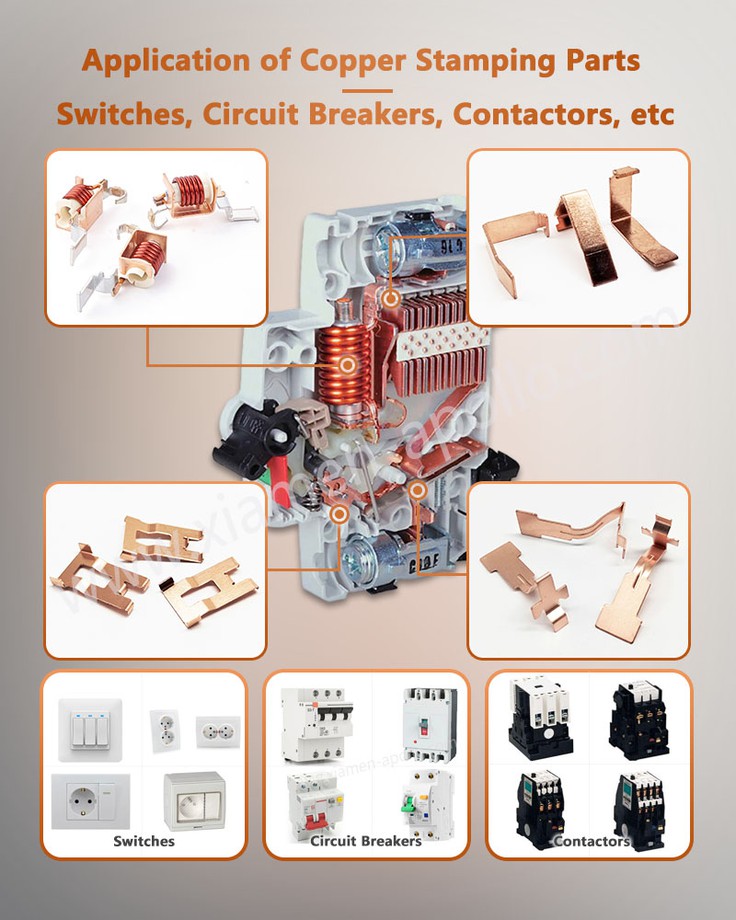
When selecting a configuration, it is essential to clearly define the core requirements of the load: for scenarios demanding high safety standards and the ability to tolerate brief power interruptions, an open-transition configuration is the preferred choice; conversely, for scenarios where continuity of power supply is paramount-and where even the slightest power interruption is unacceptable-a closed-transition (parallel) configuration must be selected. Copper Stamping Spring Contacts for Electrical Switches serve to optimize the contact performance of the switch, ensuring stable circuit conduction and disconnection regardless of the specific switching method employed.
In summary, the configuration selection for an Automatic Transfer Switch (ATS) requires a comprehensive assessment that integrates the switching method, specific application scenarios, and load characteristics. Furthermore, pairing the ATS with high-quality Copper Stamped Components is crucial to fully realize its intended function of ensuring a reliable power supply. Proper selection not only mitigates the risk of power-related downtime but also enhances the overall safety and stability of the power distribution system, thereby safeguarding the continuous operation of industrial and commercial facilities.
We specialize in the R&D and manufacturing of Cross Copper Metal Stampings specifically designed for use in Automatic Transfer Switches. Our product range encompasses a wide variety of specifications as well as custom-engineered solutions, allowing for precise compatibility with the requirements of various switching methods. Should you require consultation regarding product selection, technical specifications, or potential collaboration opportunities, please do not hesitate to contact us; we are committed to providing prompt, professional, and efficient one-stop service.
contact us
