

Pure aluminum possesses characteristics such as low density, low melting point, and excellent plasticity. Its density is about one-third that of iron, and its face-centered cubic structure gives it good formability, making it easy to roll into sheets and extrude into profiles. It also exhibits excellent corrosion resistance in natural environments. However, pure aluminum itself has relatively low strength, making it difficult to use directly in aluminum machining services. To expand its applications, industry strengthens it by adding alloying elements and using heat treatment, creating a series of aluminum alloys. While retaining its lightweight advantage, aluminum alloys achieve high strength, with a specific strength superior to many alloy steels, making them ideal structural materials for machinery manufacturing, transportation, power equipment, and aerospace. Aircraft fuselages, skins, compressors, and other components are extensively made of aluminum alloys. Replacing steel welding with aluminum alloys can reduce structural weight by more than 50%, significantly improving equipment performance.
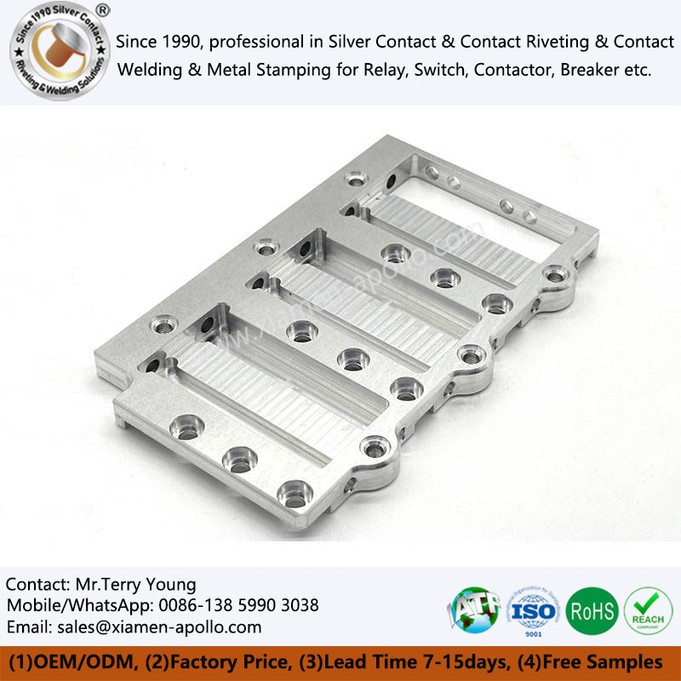
With the rapid development of industrial technology and manufacturing, the demand for aluminum machined parts continues to grow, driving the continuous deepening of aluminum alloy processing technology. The mutual promotion of material application and processing technology has made aluminum alloy smelting, casting, rolling, and precision machining key research areas in the industry, providing ample space for high-end manufacturing fields such as aluminum precision machining.
The first critical process in CNC milling aluminum parts is smelting, primarily to prepare qualified ingots for subsequent plastic processing. Gas-fired or oil-fired reverberatory furnaces are commonly used in industrial production, with capacities ranging from 20 to 40 tons. Smaller production lines also use resistance reverberatory furnaces with capacities of approximately 10 tons. To improve melting efficiency and reduce gas intake and oxidation inclusions, tilting top-charge circular furnaces are widely used. The smelting process requires real-time monitoring and adjustment of the composition using a rapid analyzer, while a protective coating is provided using powdered flux, primarily potassium chloride and sodium chloride, at a dosage of 0.4% to 2% of the furnace charge weight. The smelting temperature is stably controlled at 700–750℃.
After melting, the molten aluminum requires refining and filtration to remove hydrogen and non-metallic inclusions, improving the purity of the molten aluminum. Refining methods for aluminium CNC turning are divided into solid refining and gas refining. Traditional chlorine purification is effective but highly polluting; currently, environmentally friendly refining agents such as nitrogen-chlorine mixtures and inert gases are commonly used. The oxygen and moisture content in the gas must be strictly controlled below 0.03% and 0.3 g/m³, respectively. Vacuum dynamic degassing can efficiently remove gas and sodium. Filtration processes commonly use media such as glass mesh, microporous ceramics, and alumina particles, and can also be combined with electrofluids for deep impurity removal.
The casting process for custom billet aluminum parts often employs vertical or horizontal water-cooled semi-continuous casting. To optimize microstructure and surface quality, advanced processes such as electromagnetic crystallizers and hot-top casting are becoming increasingly common. Water-cooled semi-continuous casting uses a crystallizer for rapid cooling and shaping; the casting temperature is typically 50–110°C above the alloy's liquidus line, and the casting and cooling rates are maximized. Since its introduction in the mid-20th century, continuous casting and rolling technology for aluminum sheet and strip has become a crucial production method for thin sheets and aluminum foil blanks.
Aluminum turned parts sheet and strip processing is centered on flat roll rolling, encompassing hot rolling, cold rolling, heat treatment, and finishing processes. Before hot rolling, hard aluminum alloys require homogenization treatment at a temperature slightly below the low-melting-point eutectic temperature, held for 12–24 hours, and can be clad with aluminum as needed, with the cladding layer thickness approximately 4% of the sheet thickness. Hot rolling is mostly completed above the recrystallization temperature. Large production lines employ multi-stand continuous rolling, capable of processing ingots into 2.5–3.5 mm hot-rolled coils with a total deformation rate exceeding 90%.
Cold rolling is performed at room temperature, yielding high-precision, high-surface-finish thin strips. Combined with hydraulic pressing and shape control systems, dimensional accuracy can reach the micron level. The cold rolling process generally employs full oil lubrication and segmented cooling to ensure surface quality and strip flatness. Subsequent finishing, straightening, and leveling processes further improve the dimensional stability of CNC aluminum parts. Leveling after quenching must be completed within the aging incubation period, and the deformation must be controlled within 2%.
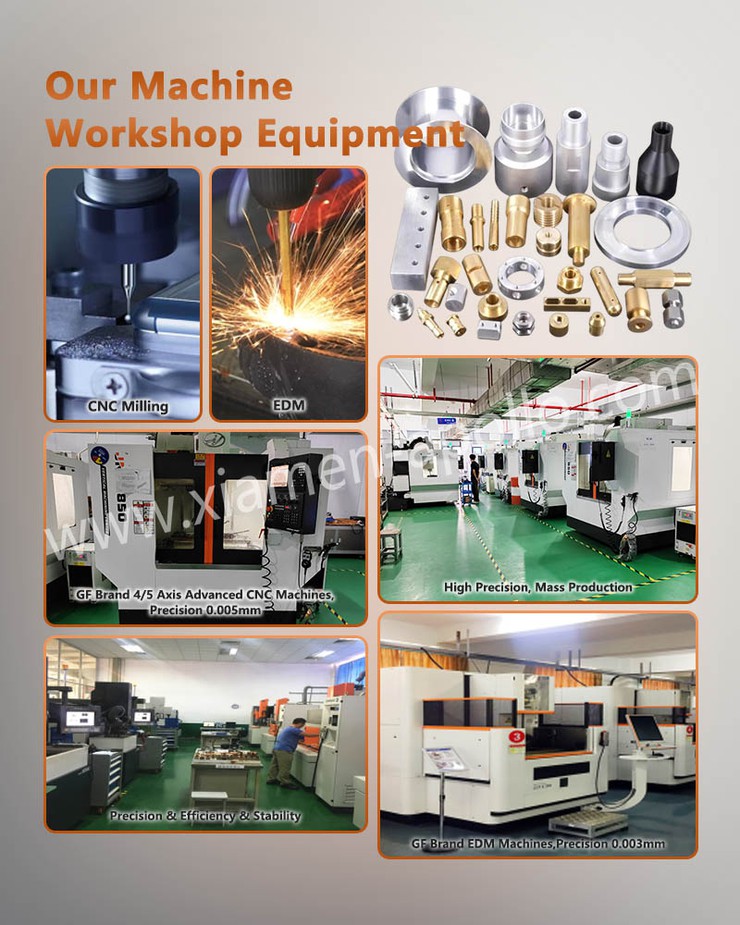
The excellent comprehensive properties and mature processing system of aluminum alloys make them widely used in CNC machined aluminum parts, structural components, and functional parts. From melting and casting to rolling and forming, and then to precision machining, a complete process chain supports the diversified manufacturing of aluminum alloy products and continuously drives the development of lightweight structural components towards higher precision and higher performance.
Contact Us
If you need aluminum CNC parts machining solutions, customized services, or process technology support, please contact us for professional solutions.
