

Stainless steel, with its excellent comprehensive mechanical properties and environmental adaptability, has become a commonly used metal material in the manufacture of precision structural parts such as CNC steel parts. Compared with low-carbon steel, brass, and most aluminum alloys, stainless steel has higher tensile strength, can withstand repeated bending, torsion, and impact loads, and can maintain dimensional stability and structural integrity under long-term service conditions. Some austenitic stainless steels still possess good toughness at low temperatures, and their strength indicators may even be improved, giving them irreplaceable advantages in special working conditions.
Meanwhile, the chromium contained in the material can form a dense oxide protective film on the surface, giving it excellent corrosion resistance and enabling it to adapt to complex environments such as humidity, acids and alkalis, and high and low temperatures, effectively extending the service life of milling 316 stainless steel. Furthermore, stainless steel naturally exhibits a uniform silvery-white metallic luster, is not prone to discoloration or rust over long-term use, and has a clean and modern appearance after processing, balancing structural performance and visual appeal. Therefore, it is widely used in precision manufacturing, equipment components, medical devices, and everyday hardware.
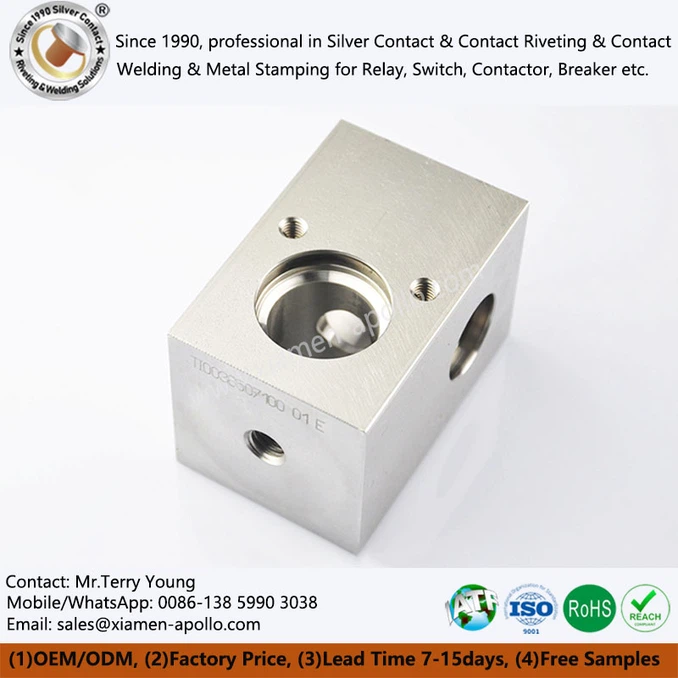
Despite the significant advantages of stainless steel, a series of typical technological challenges remain in its CNC machining of stainless steel turning parts. Stainless steel has a low thermal conductivity, making it difficult for heat to dissipate quickly during cutting. This heat tends to accumulate in the cutting area, leading to overheating, rapid tool wear, and even affecting machine tool stability and the dimensional accuracy of the milling stainless steel. Furthermore, the selection of surface treatment options for stainless steel is complex. Different treatments have significantly different effects on the workpiece's aesthetics, corrosion resistance, electrical conductivity, and weldability, making appropriate selection difficult.
The machining process demands strict adherence to process parameters and operator experience. Improper matching of the stainless steel mill cutting speed and feed rate, or inappropriate tool selection, can all cause workpiece scratches, hardening, or scrapping. In addition, stainless steel undergoes rapid work hardening during cutting, has high toughness, and is difficult to chip break, further increasing the difficulty of machining control and requiring targeted process solutions for stable production.
To address these challenges and achieve efficient and stable machining of stainless steel milling parts, optimizations can be implemented in tool selection, thermal management, cutting strategies, and workpiece protection. High-speed steel cutting tools containing molybdenum and tungsten are preferred. These tools have high red hardness and strong wear resistance, enabling them to withstand the cutting stress during stainless steel cutting, while also contributing to improved workpiece surface finish. Ordinary, easily worn cutting tools should be avoided to prevent decreased machining efficiency and increased costs due to tool failure.
Regarding thermal management, appropriately reducing the cutting speed and using sufficient coolant to promptly dissipate cutting heat will prevent damage to the workpiece and cutting tools due to overheating. If necessary, segmented machining can be used to control temperature rise. During machining, interpolation and chip-breaking cycles should be used appropriately to improve chip morphology, preventing long chips from entangled and scratching the surface of the milling 303 stainless steel. Tool wear should be checked regularly, and deteriorated tools should be replaced promptly. Simultaneously, strict control of the speed and feed rate matching is crucial to prevent workpiece deformation exceeding tolerances due to tool runout and uneven cutting forces, ensuring the accuracy of stainless steel milling parts meets standards.
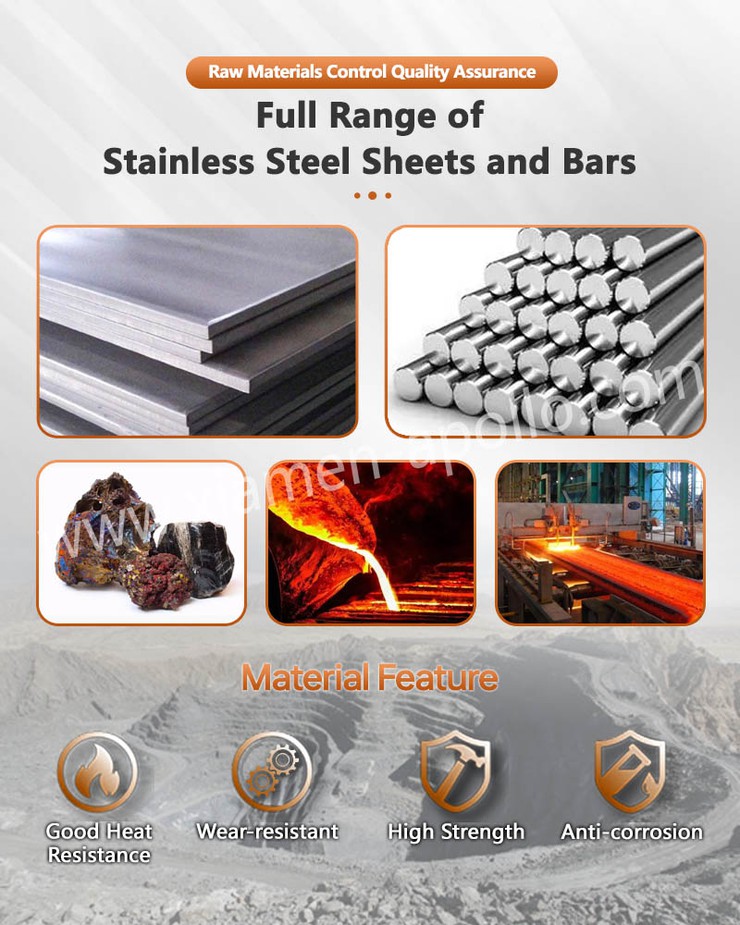
In actual production, the processing characteristics of different grades of stainless steel vary significantly, requiring appropriate material selection based on the application scenario. 17-4 PH stainless steel is a precipitation-hardening martensitic material with a high chromium content, possessing both high strength, high toughness, and good corrosion resistance. It is suitable for aerospace turbines, petroleum equipment, and nuclear power-related components, but it is sensitive to processing heat, necessitating strict control of milling stainless steel cutting temperatures. 303 free-machining austenitic stainless steel offers excellent processing performance, moderate procurement costs, and corrosion resistance suitable for general working conditions. It is widely used for bolts, nuts, aerospace parts, and electronic hardware, but it cannot be strengthened through heat treatment and is unsuitable for marine environments.
304 stainless steel is the most widely used general-purpose grade, offering good weldability and formability at a moderate cost. It is extensively used in building structures, heat exchangers, food processing equipment, and automotive stainless steel mills, but it carries a risk of pitting corrosion under certain environmental conditions. 416 stainless steel boasts the best machinability and outstanding strength, making it suitable for shafts, gears, valves, and pump components. However, it exhibits moderate corrosion resistance, poor weldability, and is unsuitable for chlorinated environments and marine settings.
By appropriately matching material grades, tooling options, and cutting parameters, the inherent challenges of machining 316 stainless steel can be effectively overcome, enabling stable, high-precision, and high-efficiency production to meet the requirements of various precision structural components.
Contact Us
If you require precision machining solutions for stainless steel, process parameter optimization, or custom CNC stainless steel parts support, please contact us for professional technical services.
