Industrial assembly teams often face unexpected downtime and component damage when replacing dual-drive fasteners. Engineers and procurement specialists report frequent fit failures on Flanged Hexagon Head Bolt Screw, even when thread specifications appear identical on paper.
These combined cross-recess and external hex fasteners support two fastening methods in one head design. The cross recess works with screwdriver bits for tight spaces, while the outer hex profile accepts sockets for higher torque. However, the dual-drive structure creates a common misconception: one working tool does not guarantee the second drive interface will also fit properly. Tool mismatch can strip the cross slot, round the outer hex corners, or stop the flange from seating fully against the substrate.
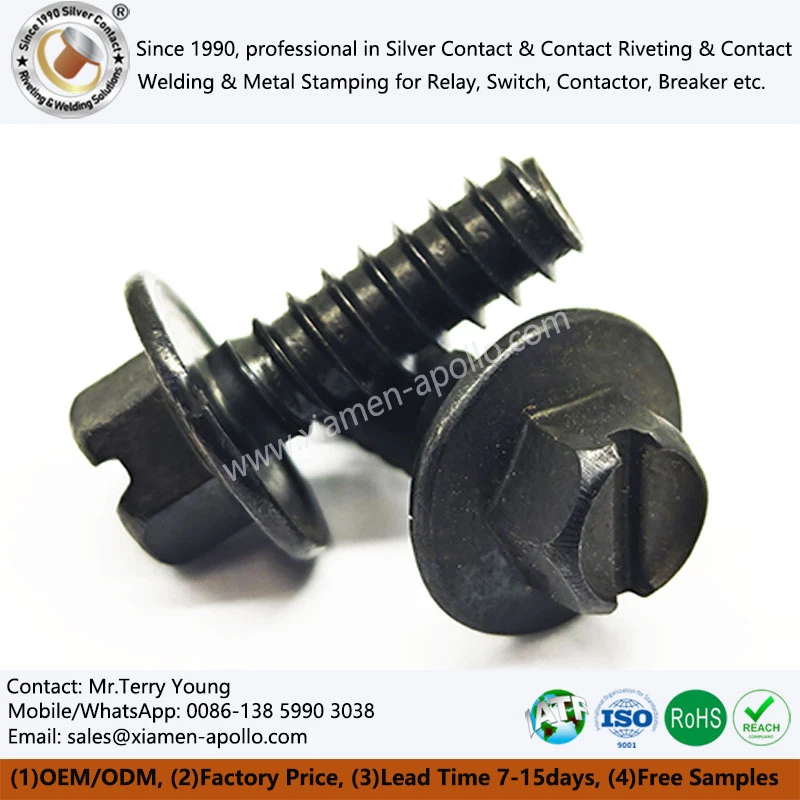
Separate Identification Required For Two Drive Interfaces
The internal cross recess and external hexagon feature independent geometry. Buyers cannot infer hex across-flat size simply from thread diameter, nor treat all cross recess profiles as interchangeable.
Space constraints on equipment assemblies often allow access to only one drive type. Production teams must confirm whether the screwdriver bit can fully engage along the bolt axis, and whether the socket has sufficient clearance around the hex head. Special features including anti-slip serrations or ribs under the flange also require physical verification; these details cannot be ignored when replacing existing fasteners.
Full Dimension Checklist For Reordering
Procurement and QA teams should inspect these key dimensions before placing repeat orders.
| Feature | Items to Verify | Potential Risks |
|---|---|---|
| Cross Recess | Recess type, size, depth and condition | Bit cam-out or incomplete engagement |
| External Hex | Across-flat dimension, head height | Loose or tight socket fit, no access |
| Flange | Outer diameter, thickness, contact surface texture | Changed bearing area, interference with adjacent parts |
| Thread | Diameter, pitch, effective thread length | Poor thread engagement or incorrect clamping length |
| Surface Finish | Material grade and plating | Corrosion risk and friction variation during torque control |
Before finalizing orders, technicians should test both bit and socket on clean, undamaged sample parts. Worn bolt samples are unreliable as reference parts, because deformed slots and rounded hex edges may produce false pass results.
Consult Our Electrical Engineers Today
Match Fastener Specs To Actual Assembly Tools
Manual screwdrivers are used in some stations, while pneumatic or electric sockets operate on other lines. Even if the flanged hexagon head bolt screw fits one tool, the second drive may not align with on-site hardware. Operators should avoid increasing torque when a tool slips, or switching arbitrarily between bit and socket without engineering approval.
Troubleshooting should isolate the root cause: worn tools, incorrect fastener dimensions, or limited operating clearance at the mounting location. Retain failed fastener samples and record slip incidents at specific workstations to separate tooling issues from specification errors.
Document Drawings And Sample References For OEM Orders
Suppliers require clear front and side view drawings with fully dimensioned head geometry. Buyers should explicitly state which drive method will be used in production. Otherwise, visually similar fasteners may arrive with incompatible drive profiles, causing costly batch rework.
Frequently Asked Questions
Q: If thread size stays the same, will the socket still match the flanged hexagon head bolt screw?
A: Not necessarily. Socket size depends on the hex across-flat measurement, not thread specification. Identical threads do not guarantee matching head dimensions.
Q: Can I confirm cross recess compatibility just by inserting a screwdriver bit?
A: No. Users must check bit size, insertion depth, and side clearance. Worn bits can slide into mismatched recesses and create false confirmation.
Q: If the hex socket slips during tightening, can I switch to the cross recess for torque?
A: Only when the cross recess profile is fully matched, and enough axial space is available. Dual drive does not mean the two interfaces are interchangeable under load.
Q: Does flange outer diameter affect replacement suitability?
A: Yes. Flange diameter and surface design alter bearing pressure and gap clearance with surrounding components, so they must align with the original assembly design.
Maintain Complete Records For Fastener Reorders
Engineers should log cross recess type, hex dimensions, flange geometry, and thread parameters for every dual-drive fastener. Physical fit testing against approved samples before mass delivery reduces procurement mistakes caused by visual similarity. Lock in drawings and part numbers once samples pass assembly validation to keep reorders consistent over multiple production runs.
Reach out to our factory today for custom drawings and sample validation of your Flanged Hexagon Head Bolt Screw to avoid costly assembly delays.
contact us