

Amid the accelerating pace of global electrification, the market for electrical contacts and contact materials is demonstrating steady and sustained growth. Authoritative market research data indicates that the market size is projected to reach $3.76 billion in 2025, with steady increases to $3.83 billion in 2026 and $3.91 billion in 2027. Looking further ahead, the market is expected to reach approximately $4.55 billion by 2035, reflecting a compound annual growth rate (CAGR) of about 1.93% between 2026 and 2035. This robust growth is primarily driven by the urgent demand for durable, highly reliable contact materials in smart grid systems, industrial automation, and energy-efficient electrical equipment. Within this vast market, high-quality silver electrical contacts-valued for their exceptional conductivity-serve as fundamental components underpinning the efficiency and safety of global power networks.

In terms of material composition, silver-based materials hold a leading industry position with a market share exceeding 45%, driven by their high electrical conductivity and superior resistance to wear and corrosion; meanwhile, copper-based materials account for nearly 41% of the market, leveraging their cost advantages and ready availability. The trend toward electrification in the transportation and industrial sectors has contributed over 36% to overall global market growth, significantly fueling market expansion. Notably, more than 65% of industrial enterprises are integrating advanced contact materials-particularly in switchgear and relay systems-to enhance durability. Within these high-reliability applications, solid silver electrical contacts account for over 55% of total market demand due to their exceptionally low contact resistance and excellent arc resistance, serving as core components that ensure consistent electrical conductivity and thermal performance in industrial systems.
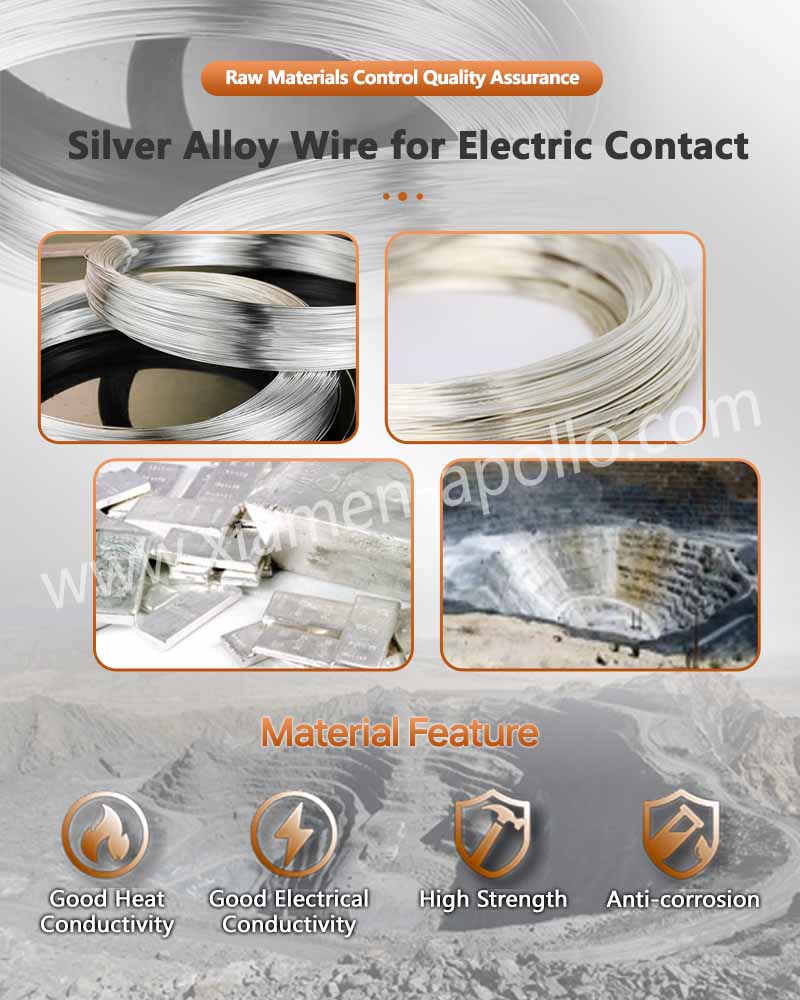
Driven by the miniaturization of electronic products and the expansion of smart grid installations, approximately 29% of product development is shifting toward greater precision. In extreme environments-such as those found in aerospace and defense-the use of copper-tungsten and silver-graphite composites has risen by 30% to withstand intense thermal and mechanical stresses. Concurrently, the adoption rate of hybrid cermet contact materials has grown by over 22%. Regarding the manufacture of specific electrical connection components, solid silver contact rivets are widely utilized in various precision switches. Through precise riveting processes, these rivets ensure a seamless bond between the silver layer and the copper substrate, effectively suppressing arcing in frequently operated circuits and extending equipment service life.
In the automotive and new energy sectors, components for conventional and electric vehicles account for roughly 35% of total usage, particularly in contactors, connectors, and battery protection circuits. More than 60% of electric vehicle manufacturers are transitioning to high-performance electrical contact materials to ensure durability and efficiency under high-load cycles. To meet these rigorous electrical connection requirements, solid silver contact rivets for relays have become critical components. Furthermore, the trend toward miniaturization in consumer electronics has driven a 28% increase in demand for precision contact materials used in micro-connectors and circuit boards; for instance, solid silver contact rivets for sockets play an indispensable role in ensuring stable signal transmission within high-density circuits.

Despite the market's vast potential, the volatility of raw material supplies imposes significant constraints on the industry. Price fluctuations and supply chain inconsistencies regarding key metals-such as silver, copper, tungsten, and graphite-have caused operational bottlenecks for over 48% of manufacturers. Geopolitical instability and tightening environmental regulations have further impacted mining activities and global output. To address these challenges and maintain profit margins, manufacturers are exploring alternatives that often entail higher costs or inferior performance, thereby limiting production scalability. Consequently, securing reliable sources for solid silver contacts to ensure a stable supply of raw materials has become a top priority in supply chain management for many enterprises.
Furthermore, rising manufacturing and customization costs present formidable challenges. More than 42% of small and medium-sized enterprises (SMEs) report significant increases in the costs of tooling and precision manufacturing processes, while high-temperature metallurgical processes for advanced contact composite materials have driven up energy expenses for 38% of manufacturers. Additionally, customer demand for miniaturized, highly durable contacts has substantially raised R&D and prototyping costs. Amidst this complex competitive landscape, alloy silver contacts have emerged as a preferred choice for manufacturers seeking to optimize product designs, thanks to their balanced performance and cost-effectiveness. Through continuous innovation and enhancements in lifecycle performance, the industry is striving to drive the ongoing advancement of electrical contact technology while maintaining compliance with environmental regulations.
Please feel free to contact us if you have any technical requirements regarding material selection, customization, or electrical life assessment for pure silver contacts. We are ready to provide professional material solutions and technical support to help your electrical products achieve superior performance.
Contact Us
