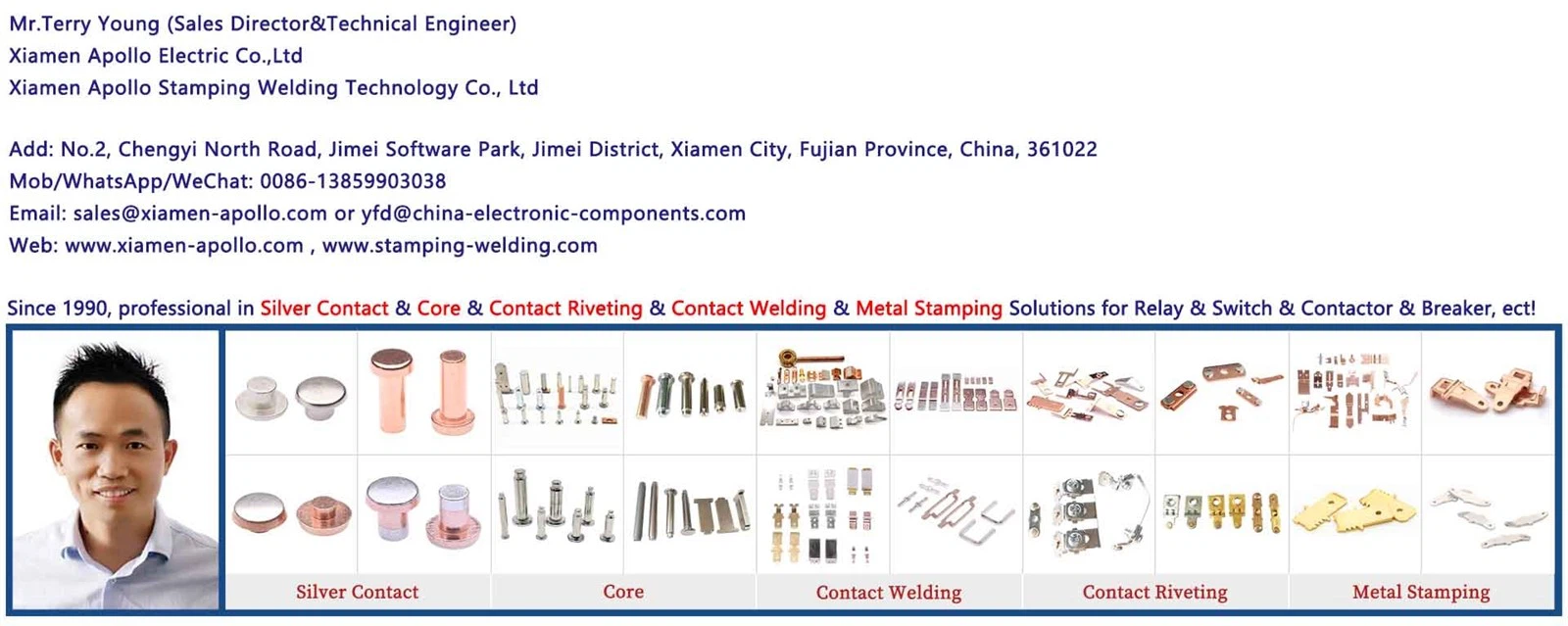
Silver Brazed Electrical Contacts are key components used in electronic devices to transmit current or signals. Their production process is complex. The following is a detailed introduction:
- Material preparation
Select metal materials such as highly elastic copper alloys or silver alloys, and conduct strict quality inspections after procurement to ensure that their performance indicators such as hardness and conductivity meet the requirements, and eliminate unqualified materials to lay the foundation for subsequent production.
- Mold making
According to the product design drawings, engineers use professional software to design punch press molds, and then carefully make them through high-precision CNC machining, EDM and other processes. During the manufacturing process, the dimensional tolerances, surface roughness and assembly accuracy of each component are strictly controlled, and repeated debugging is performed to ensure that the mold accuracy and quality are in the best state, meeting the requirements of stamping processing for product consistency and stability.
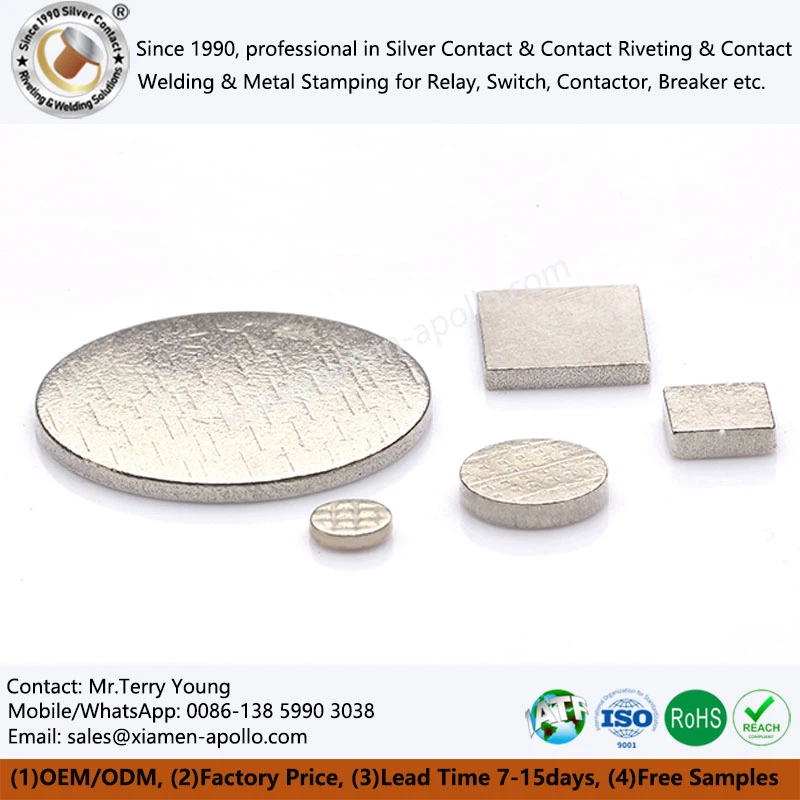
- Stamping processing
After the mold is completed and passed the quality inspection, the pre-treated metal material is placed in the mold and the punch press is started. Precisely control parameters such as punching machine pressure, speed, and die closing height to ensure that the material is cut into a shape and size that meets the design requirements, while avoiding defects such as cracks and deformation, and ensuring that the stamped Silver-Brazed Electrical Connectors meet high standards in size, shape, and surface quality.
- Gear cutting (if any)
Some Silver Brazed Contact Points require surface cutting of gears to enhance conductivity. Use precision cutting equipment to fix the semi-finished product on a special fixture, and program the tool to finely cut according to the preset gear parameters. Optimize tool selection, cutting speed, feed rate, and cutting depth to ensure that the dimensional accuracy of the gear's tooth shape, pitch, tooth thickness, etc. meets the standard, and improve the conductivity and overall quality of the contact.
- Surface treatment
Brazed Silver Alloy Contact Points require surface treatment to enhance corrosion resistance and aesthetics. For example, tin plating forms a dense tin layer on the surface through electrochemical deposition to prevent oxidation corrosion and improve welding performance; heat treatment uses high-temperature heating and cooling processes to form a hard oxide film to improve surface hardness and wear resistance; spray painting forms a weather-resistant paint film by selecting appropriate paint and process to improve aesthetics and protective performance. Strictly control various process parameters during the processing to ensure stable results.

- Assembly
This is the last step of production. In a clean and anti-static environment, operators use professional tools to accurately assemble and connect contacts with insulating gaskets, pins and other components according to assembly drawings and process requirements. Strict quality inspection is carried out on each connection to ensure that there are no looseness, short circuits and other problems. After assembly, comprehensive functional testing and performance testing are carried out, including electrical, mechanical and environmental adaptability testing. Only when all tests are qualified and the products fully meet quality standards and customer requirements can they be shipped and sold, providing guarantees for the stable operation of electronic equipment.
The production of Silver Brazed Contact Terminals requires precision equipment, exquisite craftsmanship and strict quality control. Each link is closely linked. Any negligence may affect product quality and performance. Only when every link is done to the extreme can we produce products that meet standards and customer needs, gain a foothold in market competition, and help the development of the electronics industry.