

In the field of modern electronic manufacturing, the quality of connection technology directly affects the performance, quality and production efficiency of Electrical Contacts with In-Mold Riveting. As an advanced and efficient mechanical connection method, Silver Contact In-Mold Automatic Riveting Technology is gradually emerging in the industry, especially in metal secondary processing, such as the stamping process, playing a key role.
In the connection link between electronic conductive contacts and springs, the traditional riveting process has many disadvantages. In the past, operators needed to manually assemble the riveting machine before performing riveting operations. This process not only consumes a lot of manpower and time but also has extremely low production efficiency. In addition, due to the differences in manual operations, the quality of the riveting is uneven and the stability is poor. This not only increases the defective rate but also lays hidden dangers for the performance and reliability of subsequent Molded-in Riveting Electrical Contacts.
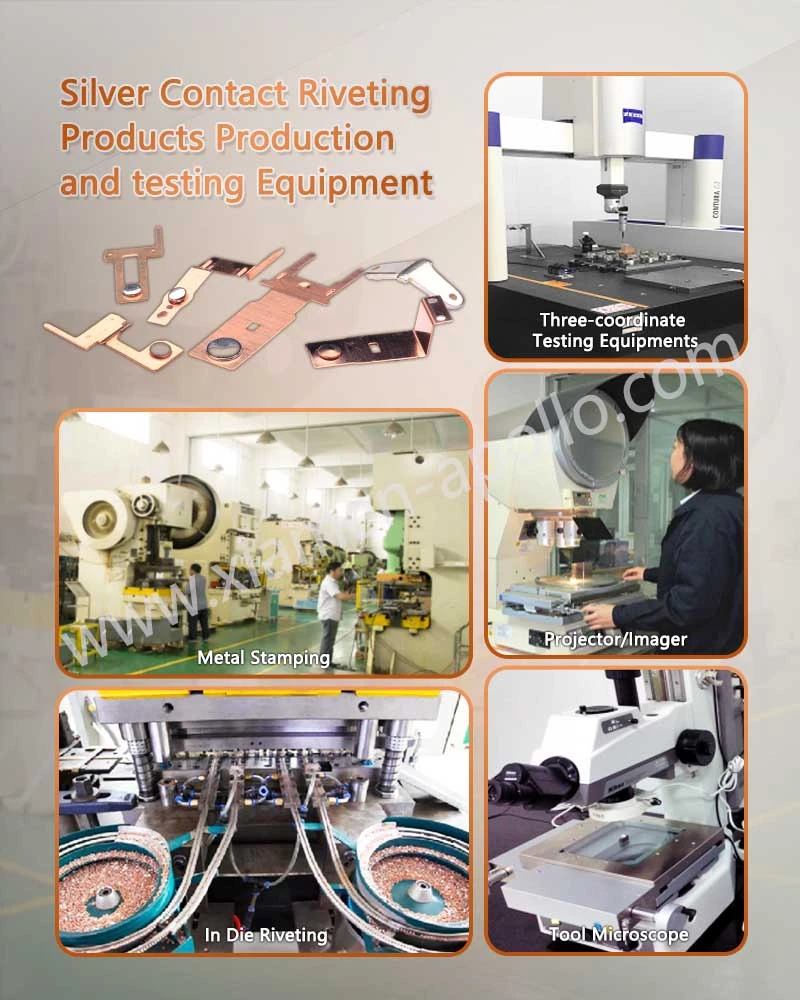
Silver Contact In-Mold Automatic Riveting Technology has brought about a breakthrough change. From the process steps, it first uses progressive die strips to produce strips. This method can realize continuous and automated production, greatly improving the production speed and accuracy of the strip material. Subsequently, the strip material undergoes the key steps of Silver In-Die Riveting Connections and forming in the mold. In this process, the mold is like a precise "craftsman", accurately riveting the silver contacts to the specified position and completing the forming process of the entire component.
To achieve this high-precision in-mold riveting, the technical requirements are extremely strict. On the one hand, the processing accuracy requirements for mold parts have reached extremely high standards. Every detail and every dimension of the mold must be accurate, because even extremely small errors may be magnified in the subsequent riveting process and affect the quality of the final product. On the other hand, the cooperation between the vibration plate and the mold is crucial. The vibration plate can orderly transport the In-Mold Silver Riveting Contacts to the riveting station of the mold to achieve automatic riveting, which not only improves production efficiency but also further ensures the stability of the riveting quality. In addition, the gap and step difference requirements for the riveted silver contacts and springs are also very high. Precise gaps and step differences ensure good electrical connection and mechanical stability between the silver contacts and the springs, thereby ensuring the performance of the entire assembly.

Products produced through in-mold silver contact riveting technology have various names, such as components, contact assemblies, Copper Beryllium Riveting Silver Contact, stampings, etc. These products are widely used in various electronic devices, from daily mobile phones and computers to automated control systems in industrial production.
Silver contact in-mold automatic riveting technology has brought new development opportunities to the electronics manufacturing industry with its high efficiency and precision advantages. With the continuous advancement and improvement of technology, it is believed that it will be applied in more fields and promote the electronics manufacturing process to a higher level.
