

As a core component in the field of electrical control, the relay is undergoing technological iterations that are driving the industry toward greater intelligence and high precision. While traditional electromagnetic relays face limitations regarding lifespan and response speed, new-generation relays-by incorporating solid copper contacts-have extended their operational life to between 500,000 and 1 million cycles, while optimizing response speeds to a range of 1 to 100 microseconds. This technological breakthrough not only reduces power consumption but also meets the high-efficiency demands of Industry 4.0, thereby serving as a significant benchmark for technological advancement within the sector.

Regarding market expansion, relays are demonstrating robust growth potential in emerging sectors such as new energy, smart grids, and rail transit. Taking new energy vehicles (NEVs) as an example, high-voltage DC relays have been replaced by more specialized alternatives; the global market size for these components reached $3.521 billion in 2024 and is projected to grow to $16.961 billion by 2030. In the smart grid sector, China's total smart meter tenders amounted to 95.28 million units in 2024, driving a 16.1% year-on-year increase in the relay market size to 6.12 billion RMB. As for rail transit, China's operational railway mileage expanded from 139,000 kilometers in 2019 to 162,000 kilometers in 2024; non-polarized relays, commanding a dominant position due to their high reliability, have seen Copper Rivet Contact Elements market size expand in tandem.
The competitive landscape is characterized by a "monopoly at the high end and fragmentation at the low-to-mid end." International giants such as Siemens and Schneider have erected barriers to entry in the high-end market through advanced technologies-specifically, the use of electrical copper rivets-while Chinese enterprises dominate the low-to-mid-range market by leveraging cost advantages and large-scale production capabilities. In terms of technical barriers, high-end relays involve the interdisciplinary convergence of fields such as materials science and electromagnetic design; new entrants must achieve breakthroughs in core performance metrics-such as operational lifespan and anti-interference capabilities-while the application of innovative materials, such as copper-silver contact rivets, further reinforces these technical moats.
Investment opportunities are driven by the dual forces of technological trends and policy direction. China's "14th Five-Year Plan" explicitly targets a smart meter coverage rate exceeding 98% by 2025, alongside a goal for the production and sales of new energy vehicles to surpass 10 million units-both of which promise to provide long-term incremental growth for the relay market. Amidst the upgrading of demand, customers are shifting away from solutions offering only basic protection functions toward integrated solutions encompassing "precise monitoring, intelligent diagnostics, and active defense." In this context, electrical solid copper contact technology-which enhances monitoring precision through superior conductivity-has emerged as a core competitive differentiator in the high-end market.
Regarding agency models, the landscape is characterized by a coexistence of low entry barriers and high levels of support; however, prospective investors must remain mindful of technical barriers and the complexities of channel management. Investors are advised to carefully assess their own channel resources and regulatory compliance capabilities to mitigate the risk of non-compliance. For instance, effective channel management mandates a prohibition on the independent sale of OEM-branded products to safeguard the established pricing structure and maintain market order. Risk control must focus on technical certification and ecosystem layout; specifically, certifications such as CUL, CE, and CCC serve to construct a technical moat, while the "hardware + software + services" model drives ecosystem-based competition in system solutions for Integral Copper Contact Rivet.
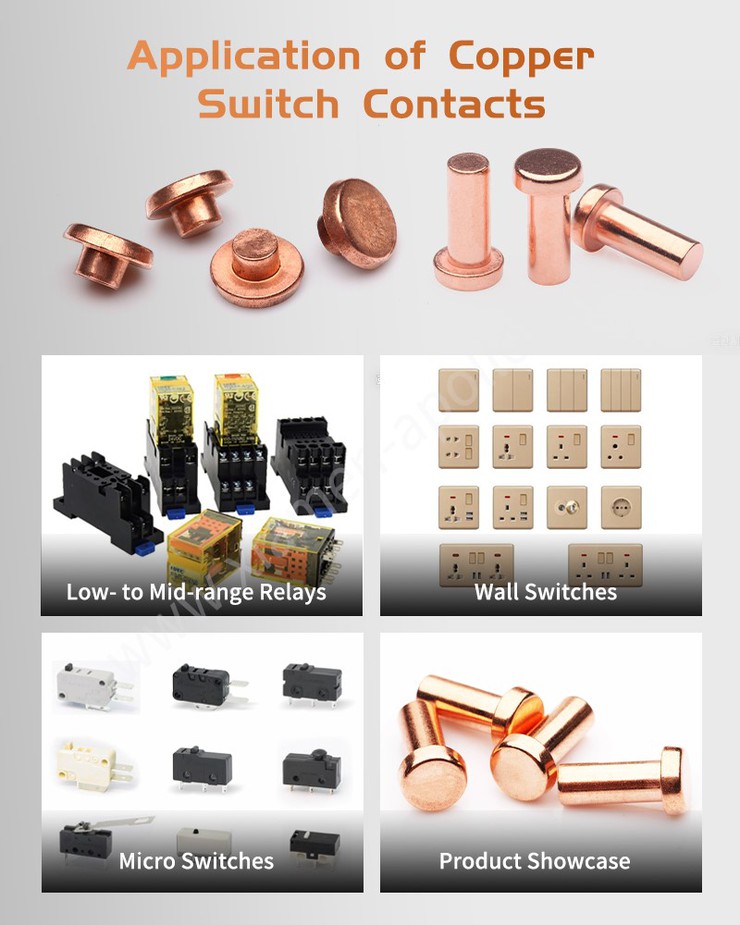
Looking ahead, the convergence of technology and ecosystem-based competition are emerging as the dominant themes. The relay industry is shifting from a focus on standalone products to providing comprehensive system solutions-such as the "hardware + software + services" model-which integrate functions like motor protection and energy management to construct a closed-loop industrial ecosystem. Within this context, Electrical Copper Rivet Contact technology enhances system stability through its high reliability, while Integral Copper Contact Rivets optimize modular design to meet the demands of digital transformation. For investors, partnering with enterprises that possess strong technical integration capabilities and a strategic ecosystem layout will be the key to capitalizing on the industry's growth dividends.
If you wish to learn more about the development details and key investment strategies within the relay industry-or if you have inquiries regarding core components such as Solid Copper Contacts-we invite you to contact us for professional technical guidance and investment reference support.
Contact Us
