

Within the vast landscape of modern manufacturing, metal stamped parts have emerged as indispensable foundational components across industries such as automotive, electronics, and home appliances-distinguished by their exceptional cost-effectiveness, remarkable production efficiency, and superior forming precision. Whether involving complex three-dimensional curved surfaces or simple flat structures, the manufacturing process for these parts embodies a profound level of industrial ingenuity. Taking Stainless Steel Sheet Metal Stamping as an example: prior to the commencement of formal production, the formulation of a scientifically rigorous processing plan serves as the primary prerequisite for ensuring product conformity. Engineers must comprehensively evaluate the product's geometric characteristics and performance requirements to determine the most suitable manufacturing workflow, thereby laying a solid foundation for subsequent precision processing.
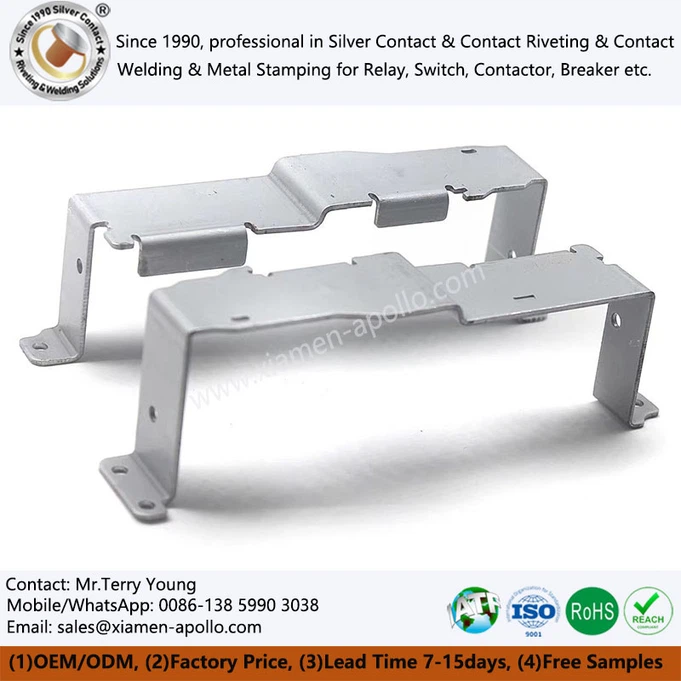
The starting point of the stamping process lies in the meticulous preparation of materials. Metal sheets of different compositions possess vastly different physical properties; therefore, selecting the appropriate raw materials and subjecting them to rigorous pre-treatment is of paramount importance. High-quality progressive stainless stamping relies not only on advanced tooling but also demands that raw materials undergo precise cutting, thorough cleaning, and meticulous deburring. These seemingly basic procedures effectively eliminate surface contaminants and microscopic defects, preventing them from triggering cracks or surface scratches during subsequent high-pressure forming, thereby significantly enhancing the overall quality of the final product.
Upon entering the core stamping phase, various stamping presses and high-precision dies begin to play a decisive role. Through a combination of processes-such as blanking, bending, and deep drawing-flat metal sheets are transformed into specific shapes and dimensions. At this stage, the production of stainless steel sheet metal stamping parts requires strict control over critical parameters, including die clearance, stamping speed, and blank-holding force. Proper parameter configuration not only ensures that part dimensions meet design tolerances but also effectively extends the service life of expensive tooling, facilitating efficient and stable continuous production.
Beyond meeting requirements for mechanical strength and electrical performance, a product's aesthetic appeal significantly influences its acceptance in the end market. Consequently, surface treatment constitutes an indispensable link in the stamping workflow. For OEM custom stainless steel sheet metal stamping parts, post-processing techniques-such as polishing, painting, plating, or embossing-can vastly improve a workpiece's corrosion resistance and visual texture. These refined surface finishes not only conceal minor imperfections that may have arisen during processing but also endow the components with enhanced environmental resilience, enabling them to operate stably over the long term, even under harsh working conditions.
Quality control permeates every stage of production; rigorous inspection and standardized packaging serve as the final line of defense prior to product delivery. Every batch of carbon steel galvanized deep-drawn metal stampings must undergo multi-dimensional scrutiny, including dimensional measurements, visual inspections, and necessary salt spray testing. Only after all parameters have been verified as accurate is professional protective packaging applied, ensuring that the products remain shielded from impacts, oxidation, or moisture during long-term storage and transit, arriving in the customer's hands in pristine condition.
To stand out amidst fierce market competition, enterprises must continuously undertake in-depth optimization of their production processes. Upgrades to mold structures and machine tool performance serve as the core drivers for enhancing efficiency. For micro-precision components-such as custom small stainless steel sheet metal stamping parts for industrial applications-the integration of multi-station progressive dies with high-speed automated equipment enables the completion of complex, multi-stage processes within extremely short timeframes. This approach significantly reduces production cycle times while simultaneously ensuring exceptional consistency and yield rates.
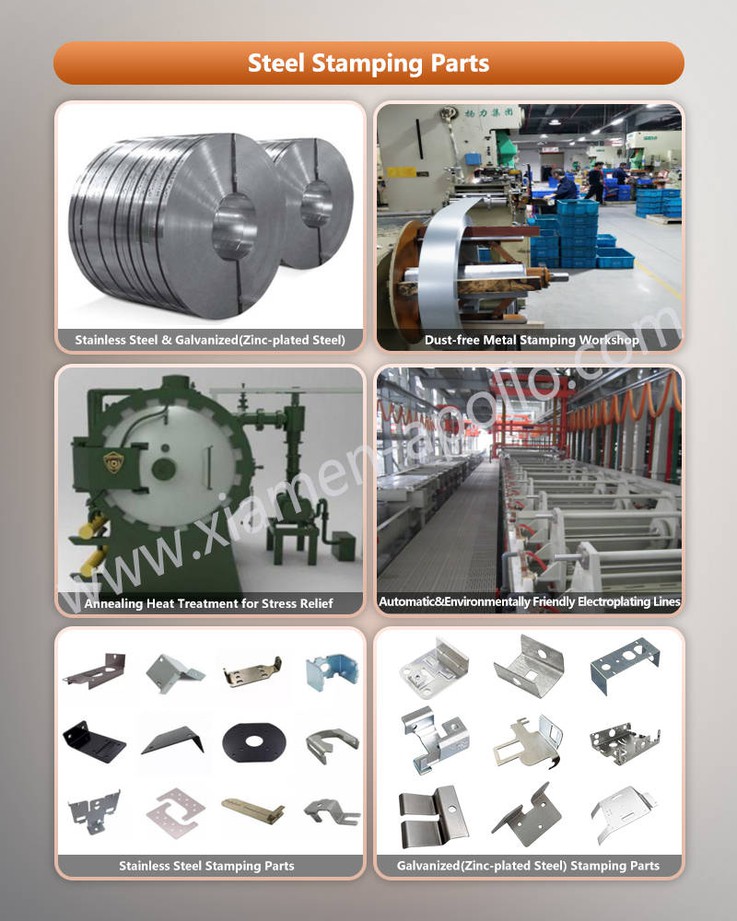
Ultimately, all process optimizations and technological innovations converge on a single objective: to deliver superior Zinc Coated Steel Stamping solutions. By deeply integrating new material technologies, digital monitoring tools, and lean manufacturing principles, manufacturing enterprises can not only significantly boost production efficiency and product quality but also advance steadily along the path of green manufacturing, thereby making a substantial contribution to the sustainable development of global industry.
Frequently Asked Questions
Q1: What are the primary causes for the appearance of burrs or cracks on the surface of steel welded and stamped parts?
A: These issues are typically caused by improper die clearance, worn cutting edges, or insufficient material plasticity. It is necessary to promptly adjust the die clearance to within a reasonable range, regularly sharpen the cutting edges, and select raw materials with adequate elongation properties.
Q2: How can production efficiency for stainless steel sheet metal stamped parts be improved through process optimization?
A: It is recommended to utilize multi-station progressive dies to minimize process transfers, introduce automated feeding and part-handling robots, and implement preventive equipment maintenance to reduce downtime and failure rates.
Q3: How can the issue of scrap lifting during the progressive stamping of stainless steel effectively be resolved?
A: This can be achieved by adding air vents to the punch to equalize atmospheric pressure, or by increasing the surface roughness within the die cavity. For high-speed stamping operations, ejector pins can also be installed to forcibly push the scrap downward.
Contact Us
If you are seeking professional solutions for optimizing zinc-coated steel stamping processes, we invite you to contact us at any time. Our team of seasoned engineers will provide you with comprehensive technical support and one-stop solutions to help bring your project to successful fruition with maximum efficiency.
