In modern manufacturing production sites, automated assembly lines have become the core approach for enhancing production capacity, ensuring quality stability, and reducing reliance on human labor. However, in the assembly process, the fastening technique is often regarded as a time-consuming, labor-intensive, and inevitable step. Especially in the connection of metals, plastics, and composite materials, the selection of screws not only affects the assembly line's rhythm but also directly relates to the structural safety and cost control of the products. Among various fastening solutions, "Thread-Cutting Screws" are emerging as an efficient choice for automated assembly.
The traditional threaded connection requires drilling, tapping, and then using ordinary screws to be screwed in. This process involves at least two or three steps and requires different tools and manual cooperation. This not only increases the production time but also enhances the complexity of assembly. The design feature of Thread-Forming Screws lies in their built-in cutting or shaping function, which enables them to form stable threads directly in the substrate during the screwing process.
This technological integration means that on the automated assembly line, the pre-drilling step can be omitted, enabling the fastening operation to become a continuous and uninterrupted process. Taking the production of a certain automotive component as an example, after adopting Self-Piercing Screws for assembly, the assembly time was reduced by approximately 30%, while the proportion of human-machine collaboration decreased, and the overall production rhythm of the line improved significantly.
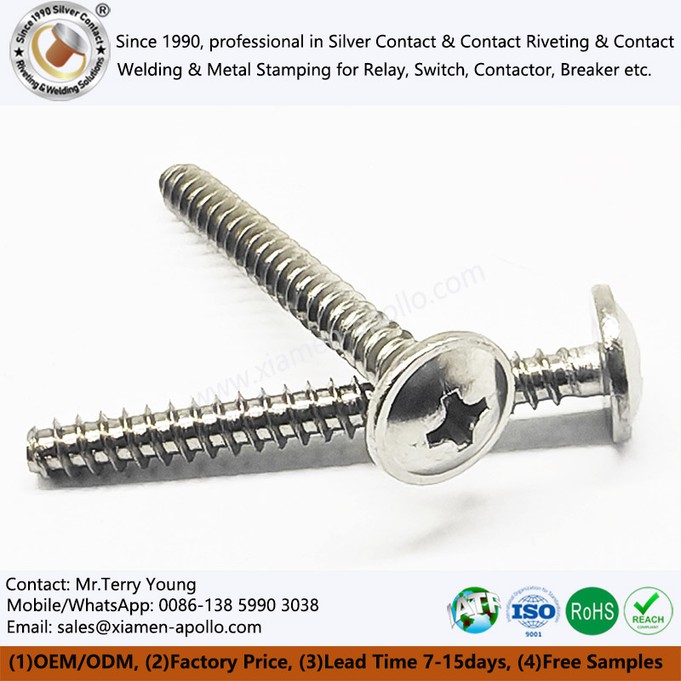
Automated robots or multi-station machines have strict requirements for the compatibility of fasteners, including dimensional stability, material consistency, and the controllability of torque parameters. The structural design of Tapping Fasteners conforms to the working principle of automated tightening tools. Especially in mass production, their precisely formed threaded cutting edges can maintain consistent driving speed and torque peak, which is conducive to the standardization of robot programs.
Furthermore, on automated assembly lines made of different materials such as plastic casings, thin sheet metal, and aluminum profiles, Self-Tapping Thread-Forming Nails can meet various application scenarios through different screw thread angles, tooth shapes, and surface treatments. This enables enterprises to reduce the variety of fastener inventory, simplify supply chain management, and achieve centralized optimization in storage and procurement.
The proportion of labor costs in the total manufacturing costs has been increasing year by year, especially in the assembly processes that require high technical proficiency. The use of the screws not only reduces the preparatory procedures but also decreases the reliance on skilled workers during the assembly process. Automated equipment combined with Self-Drilling Self-Cutting Screws can enable a small number of operators to complete large-scale assembly tasks - they only need to be responsible for equipment monitoring, quality inspection, and handling of abnormalities, significantly reducing the manual tightening and tapping processes.
Take the home appliance manufacturing industry as an example. Originally, a factory needed 6 workers to complete the fastening process for a certain model of product. After adopting Self-Acting Drilling and Tapping Screws and automatic tightening machines, only 2 operators were needed to achieve the same production volume, and the product consistency was significantly improved. This change significantly reduced labor costs and increased the output per unit time, providing a practical path for the enterprise to achieve "cost reduction and efficiency improvement".
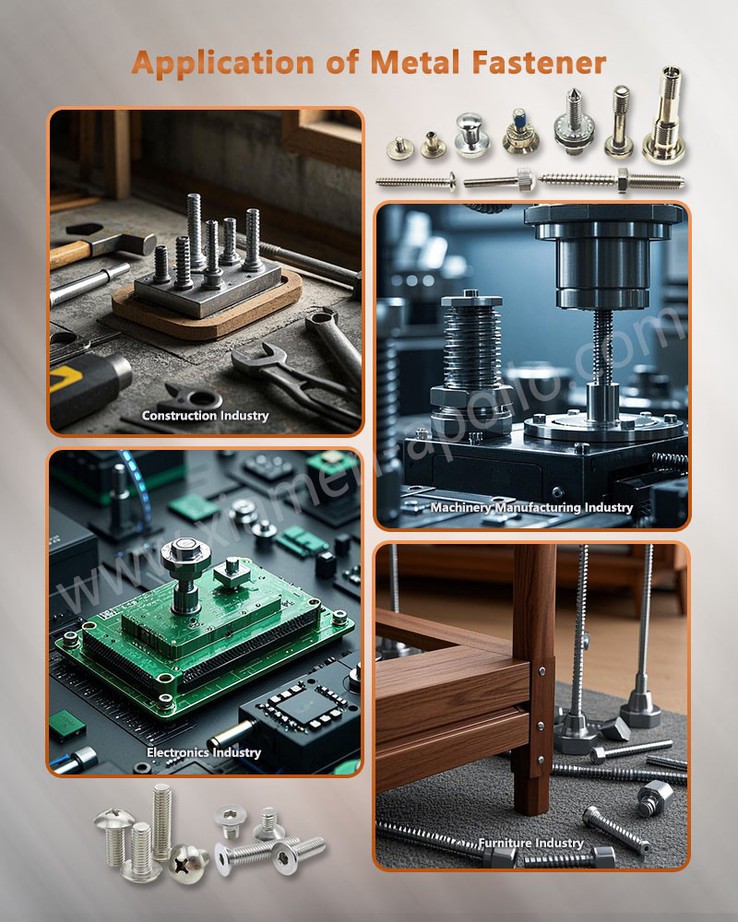
While reducing the number of processes, enterprises often worry about whether the quality of fastening will decline. In fact, high-quality Self-Engaging Drilling Screw for Tappings have undergone strict material and mechanical performance tests, and meet international standards in terms of pull-out resistance, anti-loosening, and corrosion resistance. For example, conducting batch inspections under the IATF16949 quality management system can ensure that the torque, hardness, and size of each batch of screws are within a stable range, and are suitable for long-term assembly operations.
Thread-Forming Screws can enhance the stability of the connection in automated assembly, avoiding structural defects caused by inconsistent tapping or improper manual tightening, thereby improving the safety level of the product.
In the highly competitive manufacturing environment, every second of optimization in the assembly process can lead to significant cost differences. Self-Piercing Screws, with their multiple advantages such as simplifying the process, matching automation, reducing reliance on manual labor, and ensuring stable quality, have become an important tool for enhancing production line efficiency. And when this tool is combined with an intelligent supply chain platform, its advantages will be further amplified.
about us
The Thread-Cutting Screw specially designed for automated assembly lines features precise thread cutting and stable material. It perfectly suits robot tightening and multi-station high-speed assembly. It can precisely match various substrates such as metals, plastics, and composite materials. It has excellent torque consistency, meets anti-loosening and anti-pulling performance standards, and can further simplify processes, reduce inventory, and stabilize product quality rates. This enables the realization of cost reduction and efficiency improvement in automated assembly.
Please feel free to contact us at any time for consultation, sample request, and bulk order to customize an efficient fastening solution for your production line.
contact us